
Last updated November 14, 2026
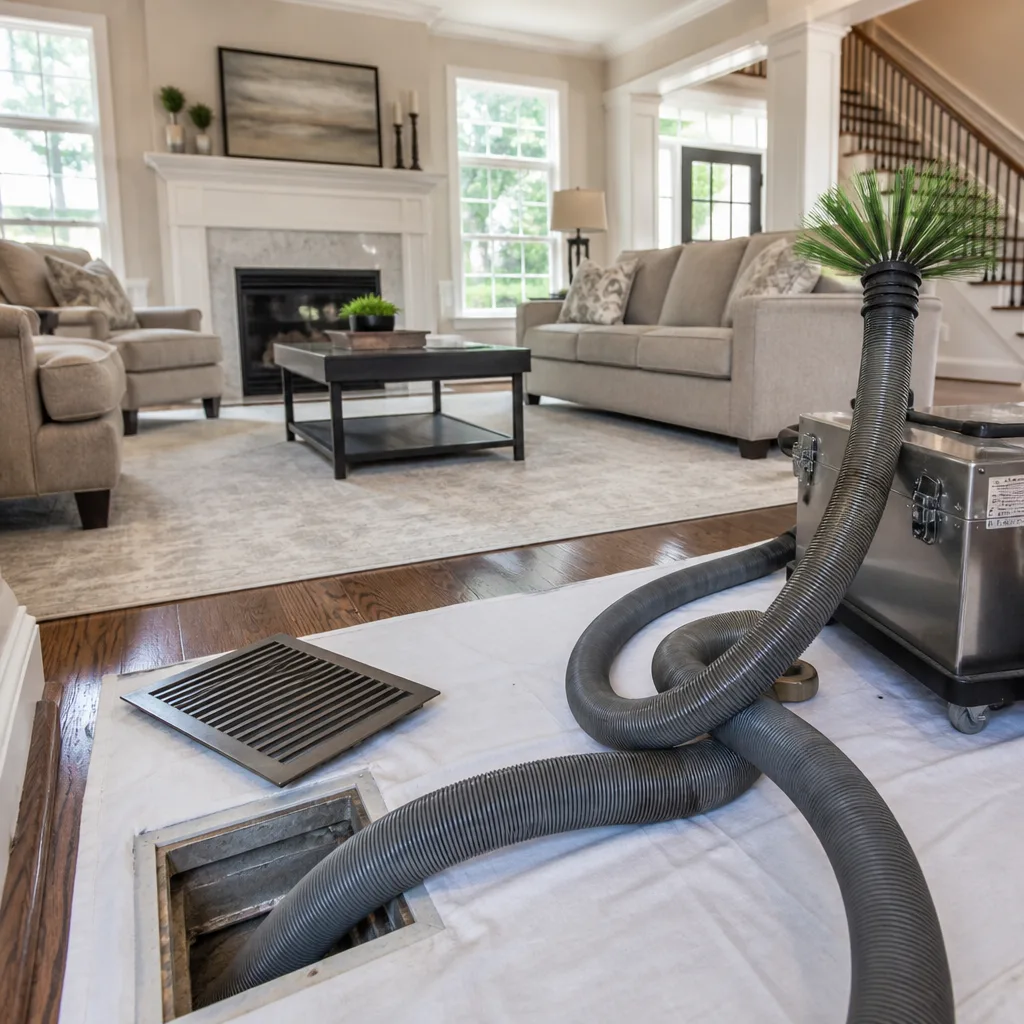 Whole-home duct cleaning
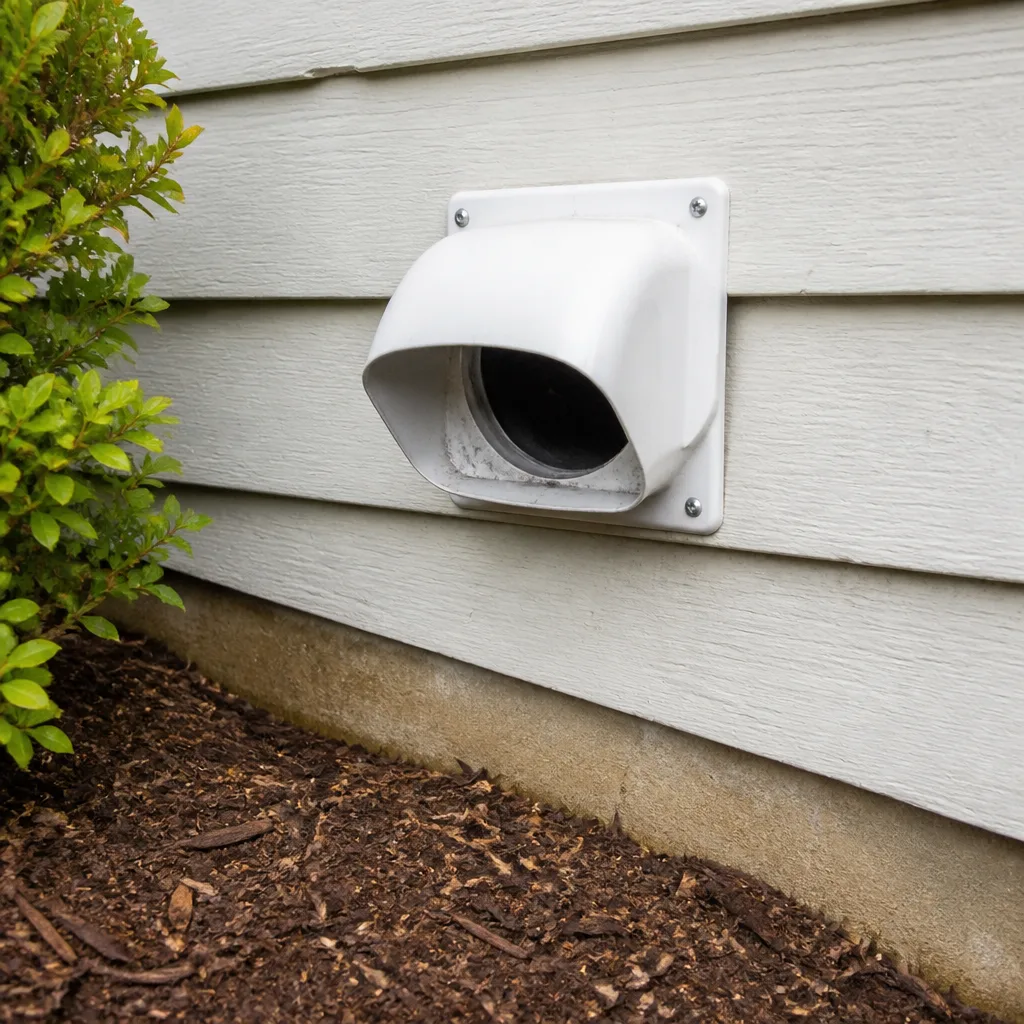 Dryer vent cleaning
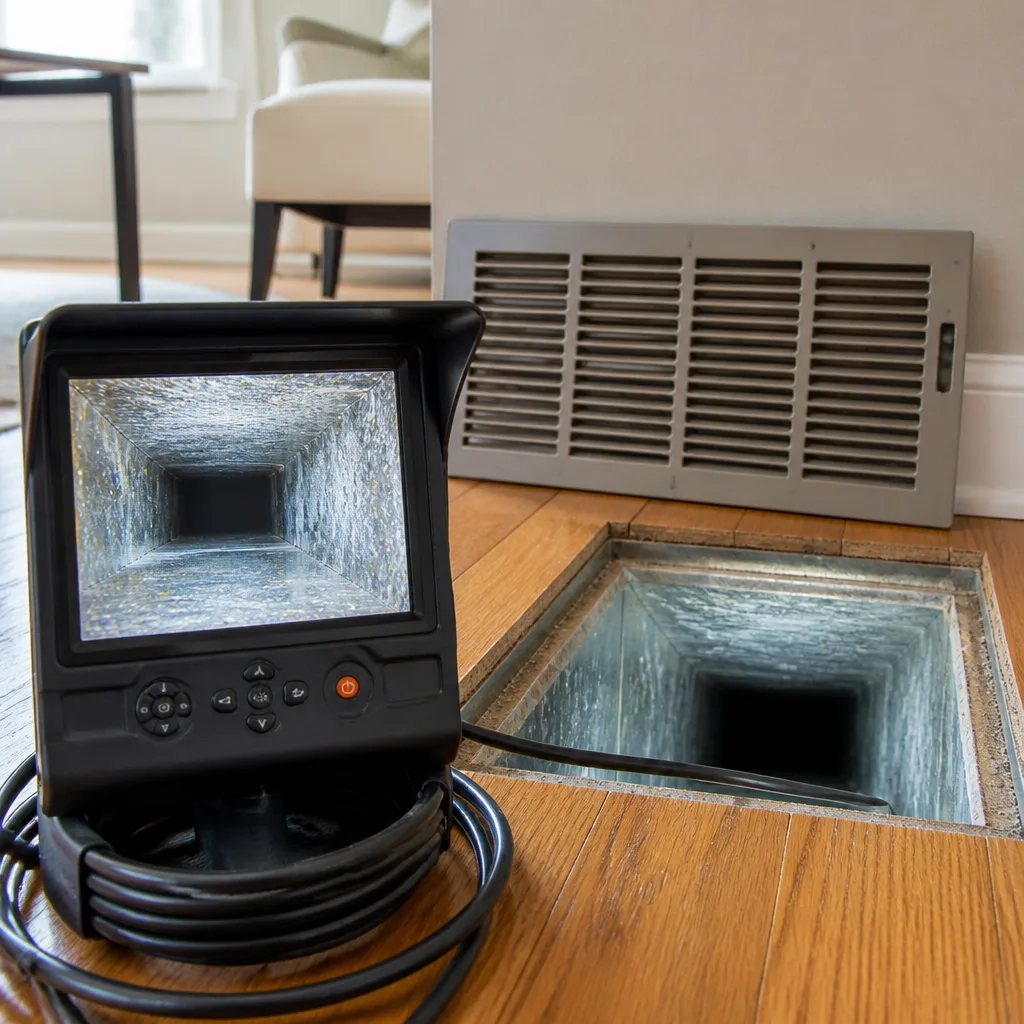 Camera inspection
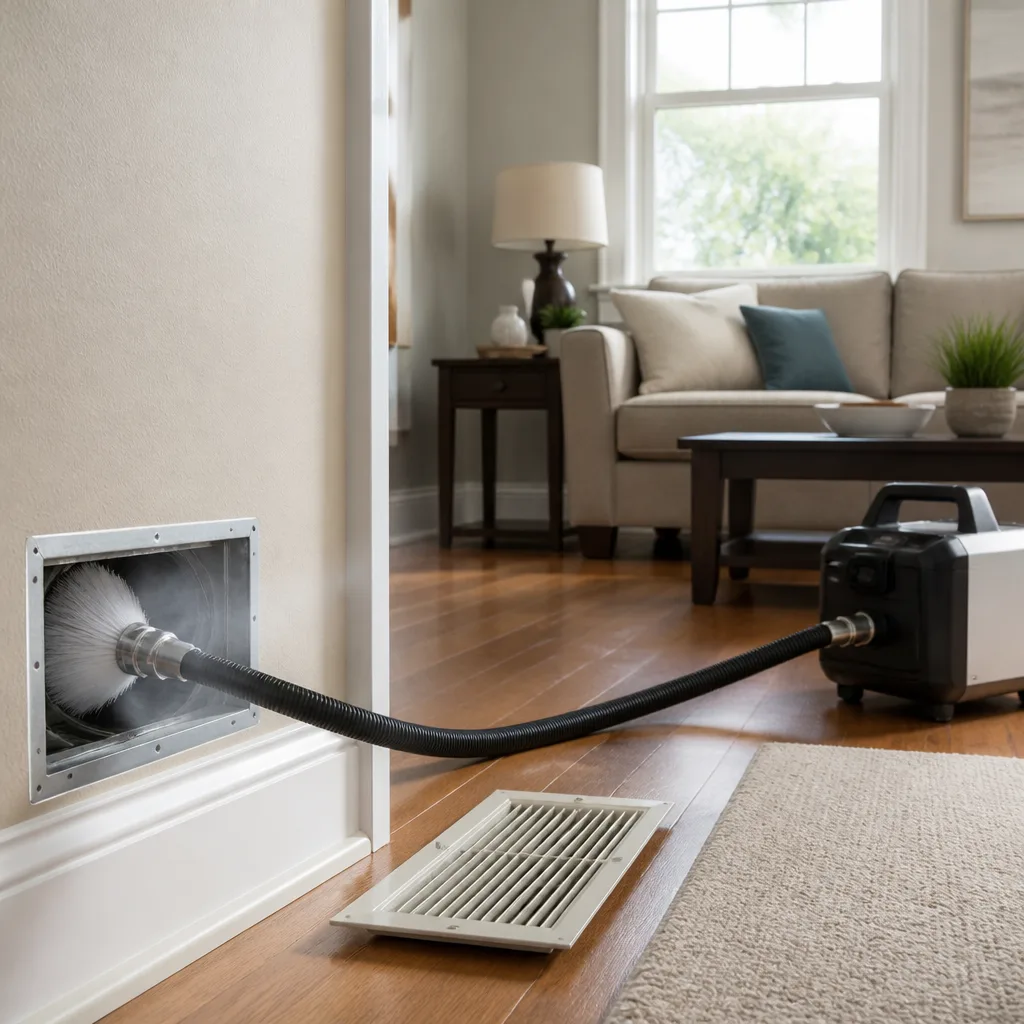 Sanitizing & deodorizing
Whole-system duct and dryer vent check with before-and-after photos - you see exactly what came out of your vents
That "$99 whole-house special" is a bait ad - the real number appears once they are in your hallway, or the "clean" is a shop-vac at the register. We photograph the inside of your ducts before and after instead.
Seasonal Air Duct Cleaning Care for Spring Valley: Year-Round Homeowner’s Guide
Most duct cleaning advice you’ll find online was written for a house with four distinct seasons and a furnace that runs half the year. Spring Valley doesn’t work that way. Here, the air conditioner often carries the load for nine months, the furnace gets a short and intense shift, and the single biggest contamination event of the year might be a July dust storm rather than a winter start-up. Cleaning “in spring before cooling season” misses the real stress points. In this guide we’ll walk through the maintenance calendar that actually fits Spring Valley, what to inspect month by month, and how to keep a log that tells you something useful about your ducts instead of just noting the date you last called someone.
Quick Answer
In Spring Valley, air duct care should follow cooling demand and dust events, not the national spring-and-fall reminder. The highest-stakes window is April through May, before 100°F days lock in any existing problems; filter checks should peak during monsoon and dust storm season from July through September; and duct repair and sealing work fits best in winter, when runtime drops and access is simplest. A duct system in a Spring Valley home generally needs a full professional cleaning every few years, or sooner if you’ve been through a major dust event or a renovation.
Styles & brands we work with
- Whole-home duct cleaning
- Dryer vent cleaning
- Camera inspection
- Sanitizing & deodorizing
Table of Contents
- Why National Duct Advice Doesn’t Fit Spring Valley
- Before Summer: The April–May Inspection Window That Matters Most
- Monsoon and Dust Storm Season: July Through September
- The Fall Transition: First Heat Cycle and What That Smell Means
- Winter: The Best Window for Duct Repair and Sealing
- How to Build a Spring Valley Maintenance Log
- What You Can Check Yourself vs. What Needs Equipment
- What Seasonal Duct Care Costs in Spring Valley
Why National Duct Advice Doesn’t Fit Spring Valley
A lot of advice assumes your HVAC system rests. Yours mostly doesn’t. When the air conditioner runs through most of the calendar, the ducts are under constant negative pressure and gentle airflow, which is exactly the condition that pulls fine dust into every seam, register boot and return grille. That constant draw is a different kind of wear than the seasonal on-and-off of a cold-climate house. Contamination builds more evenly here, and it builds quietly because the system never really goes dormant.
The second thing national advice ignores is the dust storm. Spring Valley sits in a basin where high winds lift fine desert particulate, and a well-sealed house still takes some of it in. Your return duct is the front door for that particulate. When the air handler pulls air back for filtration, whatever got past the filter and settled in the return is sitting right where the blower will pick it up again on the next cycle. A single event can load a return duct more than months of ordinary use.
Here’s the practical translation. Instead of “clean in spring and fall,” the Spring Valley calendar looks like this:
- April–May: inspection and pre-summer cleaning before demand peaks
- June: peak cooling begins; filters hold the line
- July–September: dust event response; filter checks after every major storm
- October–November: first heat cycle; watch for odors and evaluate what the summer revealed
- December–February: repair, sealing and duct integrity work
- March: the quiet reset before the cycle restarts
That’s five or six useful checkpoints a year, not a quarterly reminder. If you live in a newer master-planned community off the southern valley edge or an older pocket closer in, the timing shifts by weeks, but the sequence holds. And the sequence is what matters. Air duct cleaning in Spring Valley is less about a date on the calendar and more about what your system has just been through.
Before Summer: The April–May Inspection Window That Matters Most
April and May are the highest-stakes weeks of the Spring Valley year for duct work. Once daytime highs settle into triple digits, everything inside the system gets locked into place: a small leak stays a small leak, dust that should have been pulled out gets baked onto surfaces, and airflow problems get masked by a compressor that’s working hard enough to keep up anyway. At that point you’re reacting. In April and May, you can still prevent.
Here’s how to use the window. Work through these steps in order:
- Change or upgrade the filter first. A filter that’s been in place through the cooling shoulder season is already loaded. A clean filter with a proper MERV rating for your system sets a baseline you can actually read later.
- Walk every return and supply. Note the registers with visible dust streaks, weak flow, or a whistling sound. Those are the ones a technician should look at first.
- Check the return grille and the plenum behind it. If you can see matted dust or a dark film on the visible duct interior, that’s a signal worth acting on before summer.
- Have the coil and the ducts inspected together. One inspection, one visit, one picture of the whole air-handling system. The ducts carry the air; the coil conditions it. They fail as a system.
- Schedule cleaning if the inspection calls for it. Do it now, not in July. A clean system running at peak demand cools better and works less.
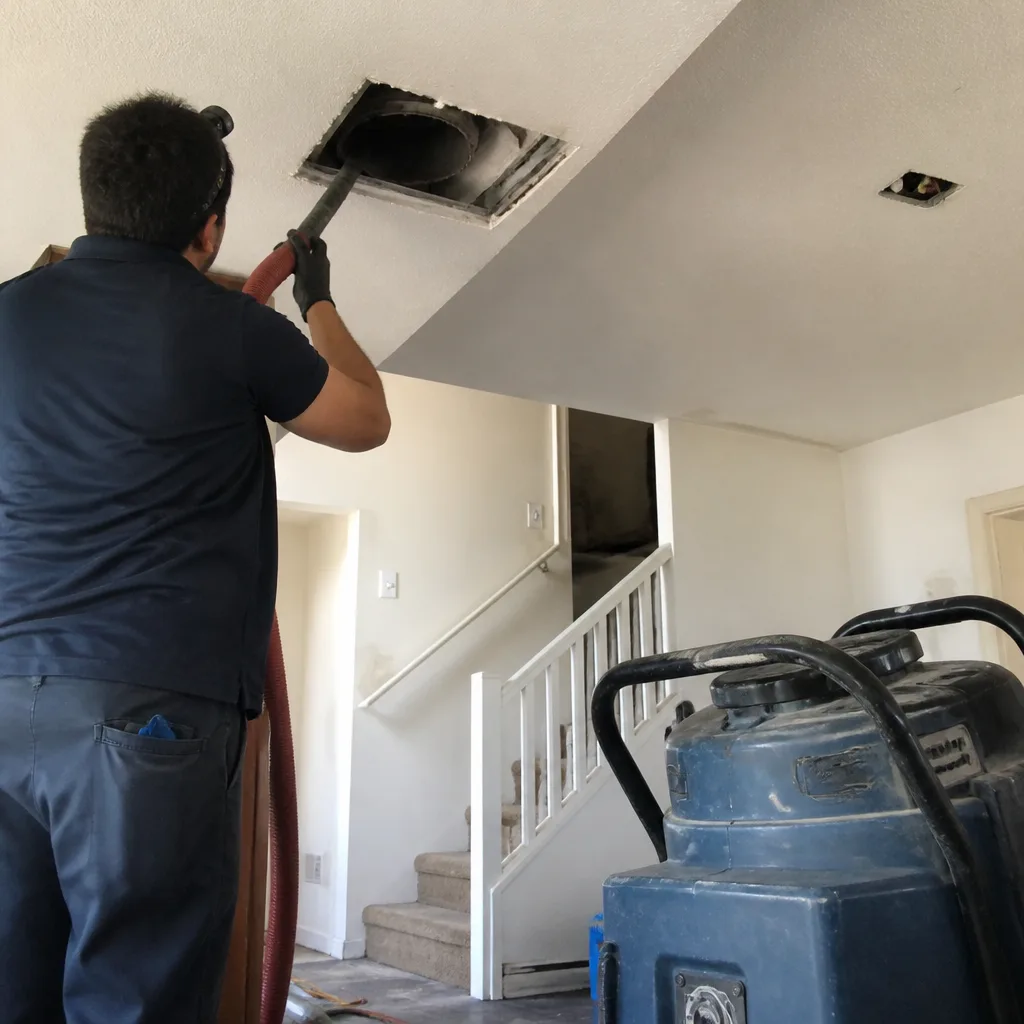
One reason we push this window hard: whoever you hire should be using equipment that actually removes debris, not just agitates it. We run air duct cleaning with a Rotobrush rotary brush system for lined and metal ductwork and Nikro high-powered negative-pressure units to hold the whole system under vacuum while we work. Negative pressure with HEPA capture means the dust leaves the house instead of getting displaced into the living space while you’re standing there watching. If a company shows up in April and can’t tell you what their capture equipment is, that’s your answer.
We also work with Honeywell and Aprilaire filtration and air-quality systems, which matters more than it sounds. The April inspection shouldn’t just be about ducts. It should include how your filter housing, humidity control and airflow all fit together, because a filter upgrade that outpaces your blower can do more harm than good. Getting that right before summer is the whole point of the window.
Monsoon and Dust Storm Season: July Through September
This is the stretch that separates a Spring Valley homeowner with a real maintenance plan from one who’s just following a reminder app. Sustained high winds here lift fine desert particulate, and even a tightly built house takes in some of it. What matters is where it lands: on your filter, in the return, on the coil face, and inside the supply runs if the filter is already loaded and bypassing.
During an active dust season, filter replacement frequency goes up. On a 1-inch filter during a heavy event cycle, checking every couple of weeks is not excessive. On a thicker media filter in a Honeywell or Aprilaire housing, you can extend that, but you still want to pull it and look rather than wait for a date on the calendar. A loaded filter doesn’t just restrict flow. It stops capturing and starts bypassing, which pushes particulate straight toward the coil.
After any major dust event, do a quick inspection loop:
- Pull the return grille and look for fresh accumulation you didn’t have last month
- Check whether the filter frame is sealing tightly against the housing; a gap lets unfiltered air slip past
- Look at the coil face if it’s accessible, or have it checked if you suspect the filter was compromised
- Listen for new noise at supply registers, which can mean a partially blocked run
- Note anything unusual in your log with a date and a short description
We’ve seen the pattern enough times to trust it: a system that was fine in June develops weak flow to one or two rooms by August, and the cause traces back to a return that took on a load of dust and never got addressed. This is where professional-grade equipment earns its keep. Abatement Technologies HEPA filtration on-site is the reason we can capture what we pull during a post-storm cleaning instead of pushing it back into the rooms. That matters most exactly when the air outside has just been at its worst.
If the dust season has been heavy enough that you’ve replaced the filter several times or you’re seeing dust streaks at registers you didn’t see in spring, call for an inspection. You can reach us at (866) 724-9559. We answer 24/7. Fast dispatch from 7am to 7pm, Sunday through Friday.
The Fall Transition: First Heat Cycle and What That Smell Means
October and November bring the annual switch from cooling-dominant to heat-dominant operation, and the first heat cycle of the season is a genuinely useful diagnostic. When the furnace comes on after months of sitting, it burns off accumulated dust on the heat exchanger and in the plenum. Some smell is normal. It’s the same principle as a toaster warming up after a long break. A faint, dry odor that fades within a short runtime and doesn’t come back is not a problem.
What’s not normal, and what’s worth investigating:
- A smell that persists. If the odor keeps returning on every heat cycle for days, the accumulation is more than surface dust, or something is burning repeatedly. That’s a call.
- A metallic or burning-rubber smell. This can indicate a mechanical or electrical issue, not a dust issue. Leave the system off and have it looked at. This is not a duct cleaning problem, and it should not be treated as one.
- Musty or damp odor. Suggests moisture is present somewhere in the system. Worth investigating before it becomes a bigger issue.
- Dust puffing from registers on start-up. A small visible puff is common. A sustained release that continues after the system has run for a while points to a loaded supply run.
Fall is also when you review what the summer told you. If August revealed weak flow to the back bedrooms, or if the post-storm inspection flagged a return that needed attention, this is the window to act on it before winter. Cleaning done now means you start the next cooling season clean instead of starting it behind.
For homeowners in Spring Valley who use a Honeywell or Aprilaire humidification or air-quality control, fall is the natural time to check how that side of the system is performing as the operation shifts. We work with both systems and can tell you whether what you’re seeing is expected or something to address.
Winter: The Best Window for Duct Repair and Sealing
Winter in Spring Valley is the quiet season for ducts, and that’s exactly why it’s the best time for air duct repair. Runtime drops. The system is running less, so contamination accumulates more slowly. Access is simplest. And most importantly, problems that were found during the cooling season can be fixed while the system is not under peak load.
What typically needs attention at this point in the year?
- Disconnected or separated duct sections, especially in flex runs under the house or in attic spaces
- Leaking seams and joints where the tape or mastic has failed
- Crushed or kinked sections where the duct has lost its shape over time or been compressed by other work
- Damaged or missing register boots where the duct meets the opening in the floor or wall
- Return plenum connections that have loosened and are pulling unfiltered air
Here’s the thing about leaks and disconnections: they don’t just waste conditioned air. They change the pressure balance the whole system was designed around, which can pull dust in from unconditioned spaces and push it through supply runs that should be clean. A disconnected flex run in an attic or crawl space is a direct path for whatever is out there. Repairing it is often more valuable than cleaning on top of a problem.
This is where the distinction between cleaning and repair really shows. A lot of duct cleaning companies clean what they find and then leave. We offer Air Duct Repair as a named service, so when we find damage during a cleaning, we can address it in the same service window instead of telling you to book a second contractor. We clean it. If we find damage, we fix it. That’s the standard we work to in Spring Valley all year, but winter is when it does the most good.
One safety note, because it matters and because we won’t pretend it doesn’t: don’t go crawling into a hot attic or a crawl space to check duct connections yourself. Attic temperatures are dangerous, and flex duct connections are easy to damage further with improper handling. If you suspect a problem, have it looked at by someone with the training and equipment to work safely. That’s a firm line for us.
How to Build a Spring Valley Maintenance Log
Most maintenance logs record dates. Yours should record conditions. A log that says “cleaned ducts, March 3” tells you almost nothing useful a year later. A log that says what you saw, what the weather had just done, and what the system was doing at the time tells you what to expect next time and gives any technician a real starting point. In a place where dust events and cooling demand drive contamination far more than the season label, conditions are the only data that mean anything.
Here’s a format that works. Keep it simple, in a notebook, a note on your phone, or a spreadsheet.
For every entry, record:
- Date and approximate time
- What triggered the entry (routine check, after a dust event, first heat cycle, filter change)
- Filter condition when you pulled it: light, moderate, heavy, or bypassing
- Any visible dust at registers or returns, and which ones
- Flow observations: any rooms weak, any rooms strong, any changes since last entry
- Any odor and whether it persisted or faded
- Noise observations: new whistle, rattle or hum
- What you did about it
What the log lets you do:
- See how filter life actually varies across the year, so you can stop guessing at replacement intervals
- Establish your own personal dust-event baseline so you know what a heavy season looks like for your house
- Notice when one winter’s conditions are different from last winter’s, before a problem becomes a repair
- Hand a technician a real picture of the system’s behavior instead of a one-line history
- Decide whether cleaning should be on a two-year rhythm or needs to be tighter for your specific house
One thing to write down every time: what the system was doing. Window units, a whole-home system with a failed zone, a house with a new owner and an unknown history, an older home in an established Spring Valley neighborhood with original duct runs. The context changes what “normal” means. A log with context is worth ten logs without it.
Property managers tracking multiple units will find this especially useful, because it turns a scattered set of service records into a comparable picture across a portfolio. The same log format works whether you’re tracking one house or many. If you’re managing several properties in Spring Valley, having a single consistent format is worth the discipline it takes to start.
What You Can Check Yourself vs. What Needs Equipment
A lot of duct care you can do yourself, and should. The line is where it gets into the duct interior, into the system under pressure, or into a space you shouldn’t be in. Here’s a clean division.
What you can check yourself, safely:
- Filter condition and filter housing seal
- Visible dust at supply and return registers
- Airflow at each register (a tissue held at the register gives you a simple strength reading)
- Odor observations, especially the first heat cycle of fall
- Noise at registers and at the air handler
- Any visible damage at the grille: bent fins, loose screws, gaps at the frame
- What your outdoor conditions look like on a dust-event day, since it changes what to expect inside
What needs professional equipment and training:
- Cleaning the duct interior. Consumer vacuums and improvised brushes stir up debris without capturing it, which leaves your indoor air worse during the job than before. Professional-grade equipment, not improvised tools, is the whole point.
- Cleaning the coil. Coils are delicate and easy to damage with the wrong cleaner or pressure.
- Inspecting or repairing duct connections in attics, crawl spaces or wall cavities.
- Assessing whether the system’s pressure balance is being compromised by leaks or disconnections.
- Any work involving the air handler’s electrical components.
A word on electrical. If any part of the work touches the air handler’s wiring or control board, that’s a trained technician’s job, full stop. Wiring and panel work carries real risk of shock, fire and equipment damage, and it’s not something we or anyone else should walk a homeowner through over the phone. A duct specialist who tells you otherwise is telling you something about their standards.
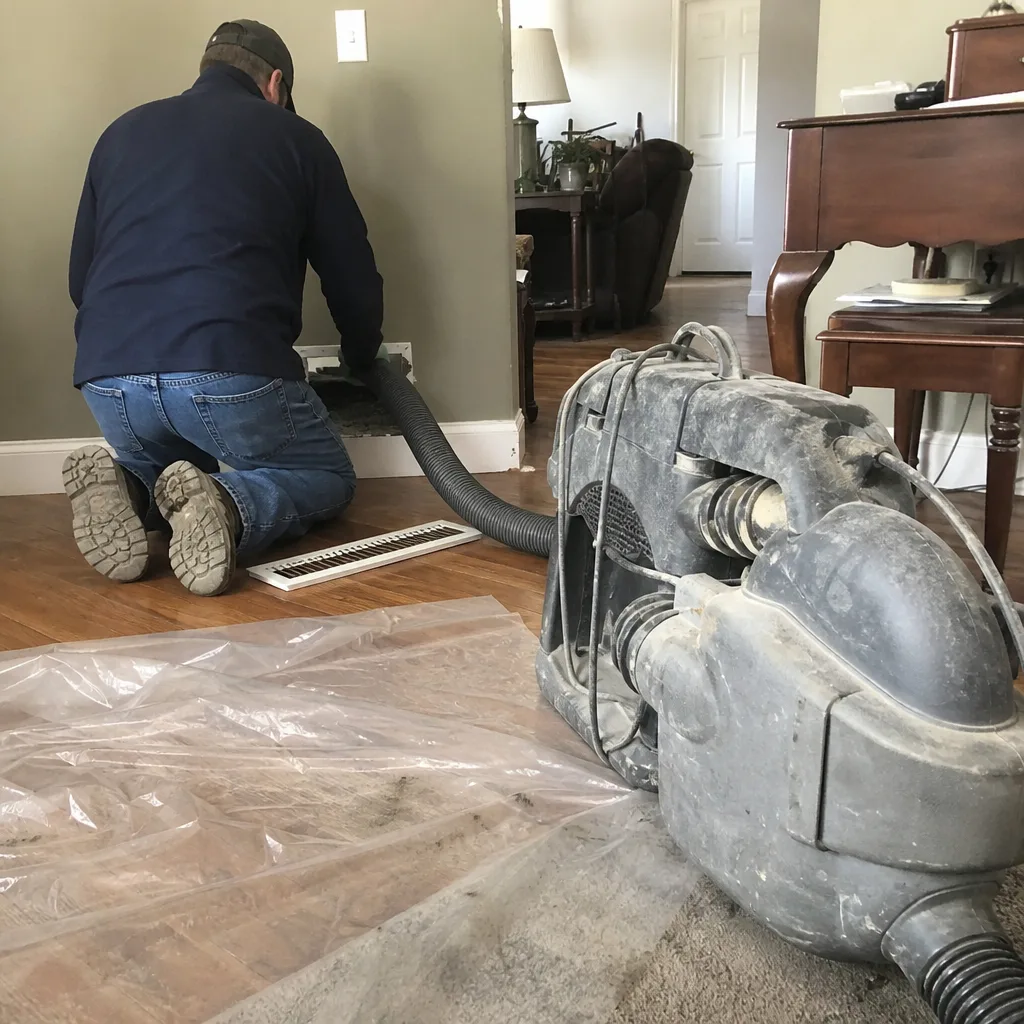
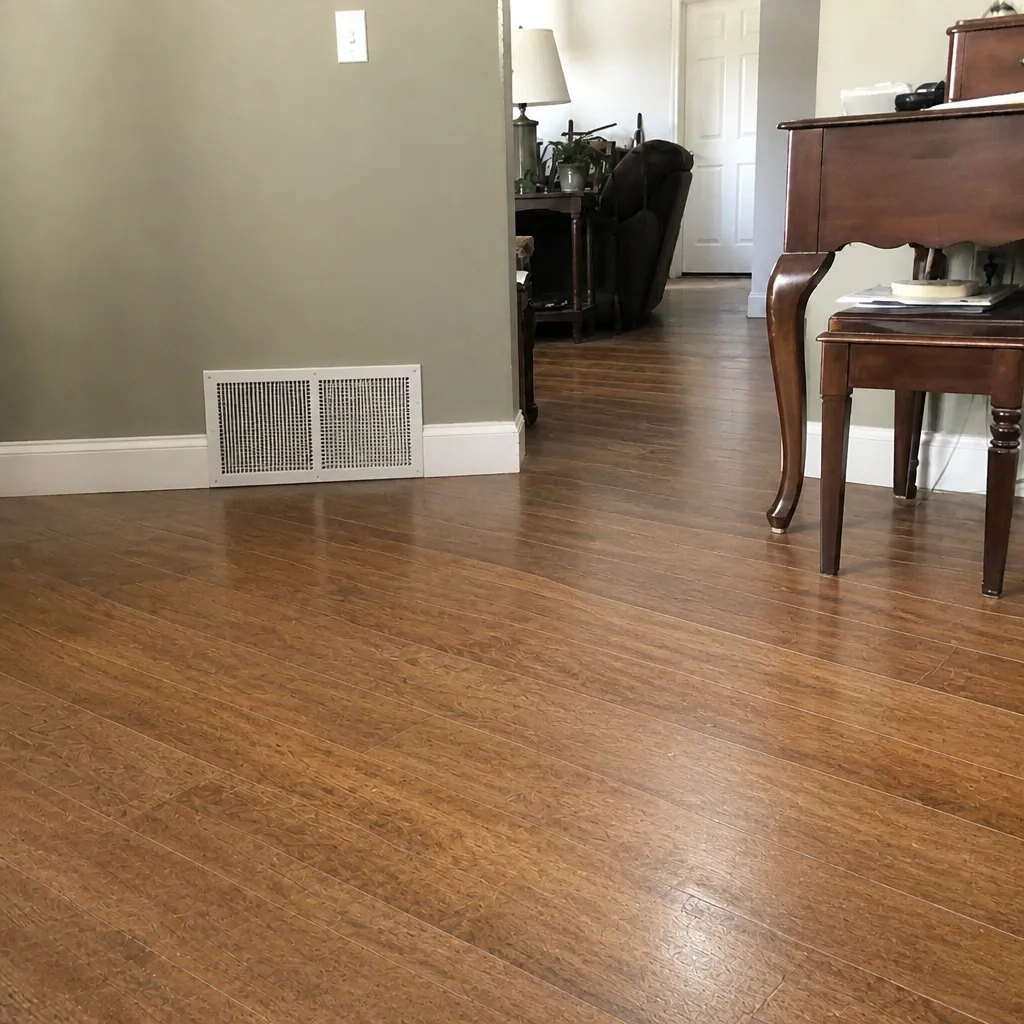
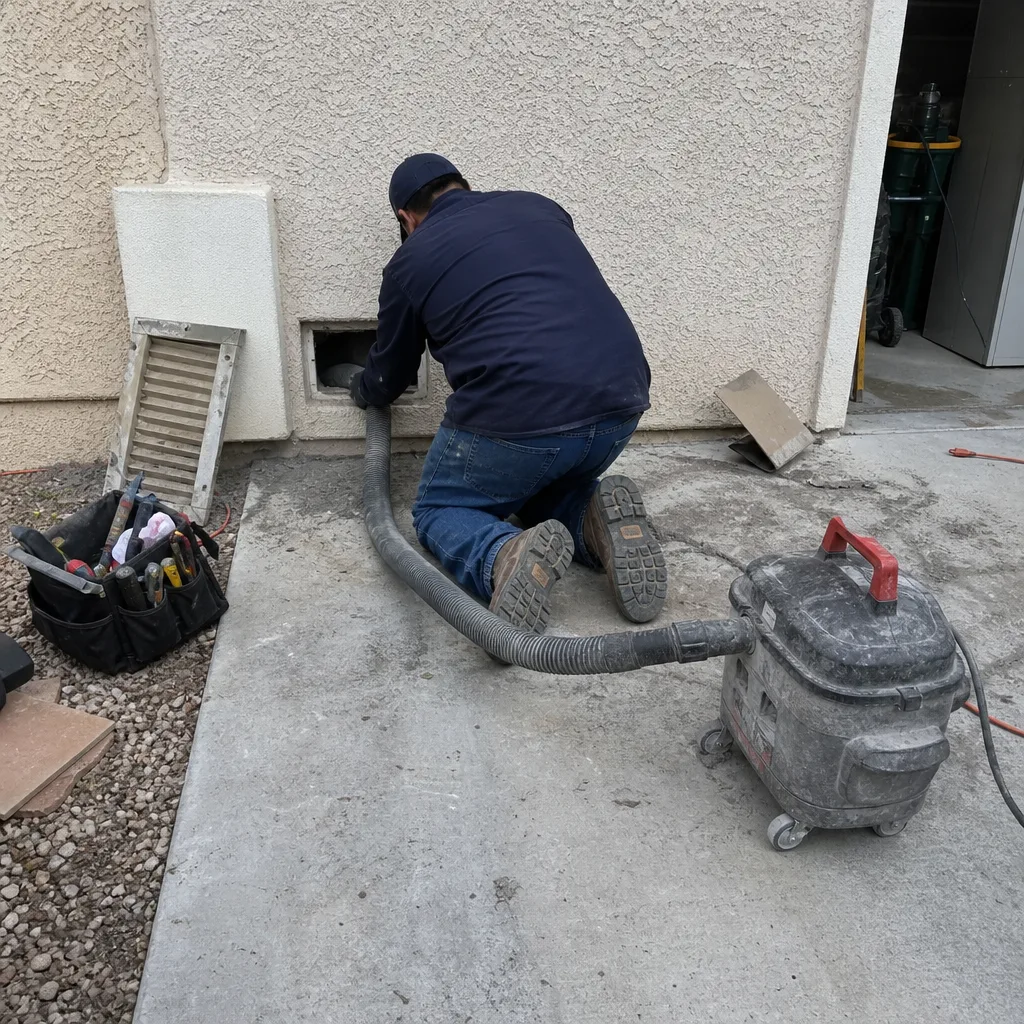
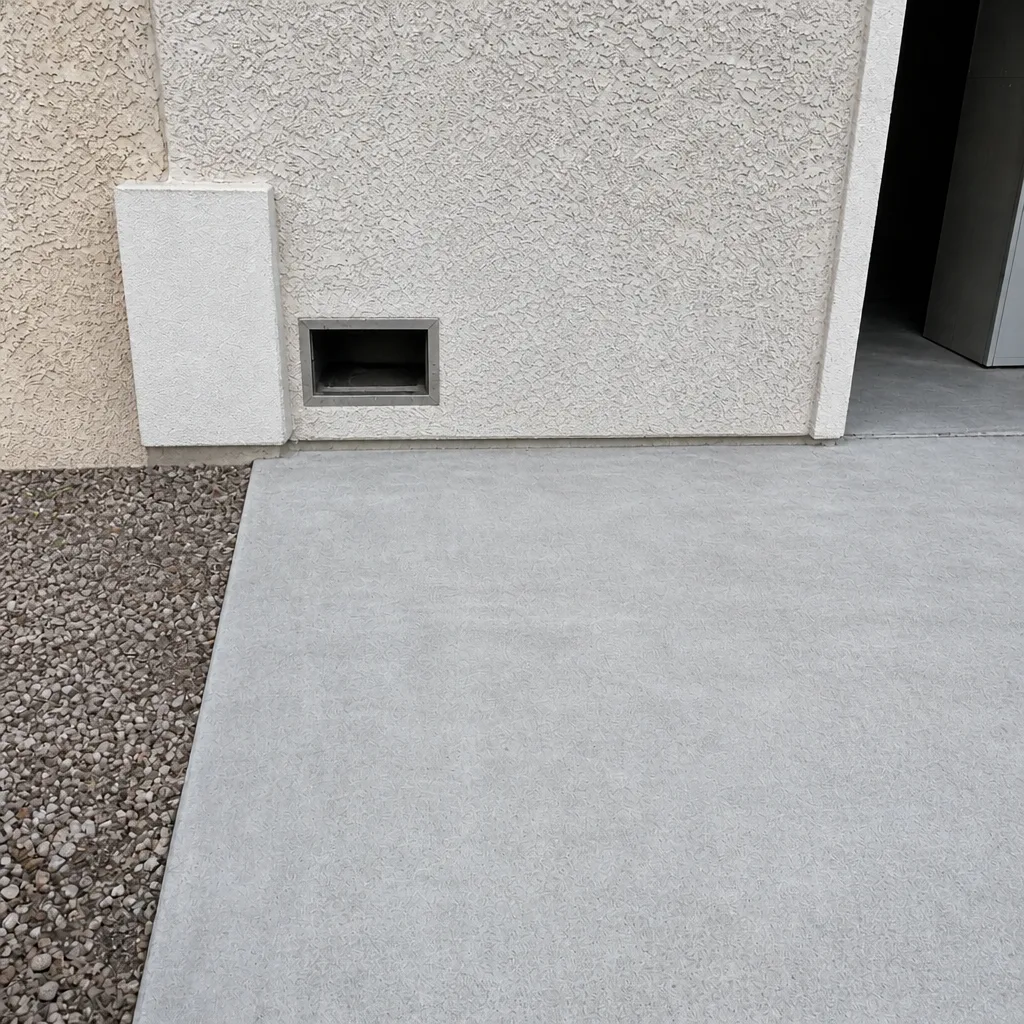
What you should be able to expect from a professional is this: they show you what they found, they explain it in plain language, and they can act on it. When we finish a cleaning in Spring Valley, we can show you before-and-after photos of your own ducts, not stock images. You should know what was pulled out and what was left in good shape.
What Seasonal Duct Care Costs in Spring Valley
We won’t quote you a teaser number, because the industry’s bait-and-switch problem is exactly what a teaser number creates. What we will do is tell you how we price and what to watch for so you can evaluate quotes from anyone, ours included.
We price per system, by a written estimate agreed before work starts. Not per vent. Not with a coupon that turns into a larger invoice once the technician is on site. The written estimate sets the final price, and the estimate is free. In Spring Valley, what you’re paying for is the equipment and the time: a Rotobrush rotary brush system, Nikro negative-pressure vacuum, and Abatement Technologies HEPA filtration on-site for capture during the cleaning. That’s the reason a professional job costs more than a shop vac and an hour of labor.
Here’s the honest framing for comparing quotes:
- A very low quote often means less coverage of the system, less equipment, or a crew that’s going to discover “extra” costs once the van is open
- A per-vent price sounds simple but rarely reflects the actual scope of a whole-system job
- A written estimate that specifies what will be cleaned and how it will be captured is the only quote worth comparing on
If a company won’t put numbers in writing before they start, the number they give you on the phone isn’t the number you’ll end up paying. We’d rather be honest about that than pretend our price is the same as everyone’s. Our estimate is free and it’s the price you’ll pay.
When you’re deciding whether it’s time, ask yourself what the system has been through. A heavy dust season, a renovation, a move into a house with an unknown duct history, or signs of weak flow to a specific room all point to a job worth doing. A house that’s been clean, well filtered, and quiet may simply need inspection. Fair pricing starts with knowing what needs to happen, not with a line on a coupon.
Common Mistakes to Avoid
- Following the spring-and-fall advice from a cold-climate site. Spring Valley’s system doesn’t rest on that schedule. Cleaning in April before cooling locks in is far more valuable than cleaning in October because a reminder app said so.
- Skipping the post-dust-event inspection. A heavy dust season can load a return faster than months of ordinary use. If you only inspect on the annual calendar, you’ll miss the events that actually mattered.
- Turning up the filter and not checking the blower. A thick filter with an undersized air handler restricts flow and can create more problems than it solves. Match the filter to the system, including Honeywell or Aprilaire housings, and check what the flow actually looks like at the registers.
- Assuming a smell on the first heat cycle means something is wrong. Some burn-off odor is normal. A smell that persists, or that smells metallic or like rubber, is not, and should be treated as an electrical or mechanical question, not a duct question.
- Cleaning over a disconnected duct. If a flex run has separated, cleaning on top of it without repair means the system will be pulling dust from wherever it’s connected to. Find damage, fix it, then clean.
- Hiring on price alone. The low quote is often low for a reason you’ll find out about during the job. Ask what equipment will be used to capture debris, whether before-and-after photos will be provided, and whether the quote is per system or per vent.
- Pulling a filter and putting it back without checking the seal. A filter that doesn’t seat tightly in its housing bypasses. That’s a direct path for particulate toward the coil, and it defeats the point of the filter you just bought.
See the difference
 Before
 After
 Before
 After
 Before
 After
When to Call a Professional
Some signs say “check it yourself.” Others say “call someone with the equipment.” Call for an inspection if you’ve been through a heavy dust season, if a renovation or a move left you with an unknown duct history, if a room has lost flow you used to have, or if you’re seeing visible dust at returns that you didn’t see a few months ago. Call if the first heat cycle of the year releases an odor that persists, and call immediately if the smell is metallic or like burning rubber, with the system off, because that’s an HVAC safety issue before it’s a duct issue. And call if you don’t know when your ducts were last cleaned, or whether they’ve ever been.
Highpoint Duct Cleaning offers free estimates in Spring Valley. Call (866) 724-9559. We answer 24/7. Fast dispatch from 7am to 7pm, Sunday through Friday. We clean it, and if we find damage, we fix it.
Frequently Asked Questions
Most Spring Valley homes fall into a two-to-three-year cycle for full professional cleaning, but the local climate reshapes that. Heavy dust events, high cooling demand through most of the year, recent renovations, or a house with an unknown duct history all shorten the interval. A spring inspection is the best way to decide whether you’re on a longer cycle or need to tighten up.
April and May are the highest-stakes window, yes, because once 100°F days settle in, existing problems get locked in. But the question is less “which season” and more “what has the system been through.” A post-dust-event cleaning in August can matter more than a routine spring one, and winter is the best window for repair and sealing. These are separate jobs that happen on separate schedules.
Some burn-off odor is normal on the first heat cycle of the season, and a faint dry smell that fades is not a problem. What’s not normal is an odor that keeps returning, a damp or musty smell, or a metallic or burning-rubber smell. Those point to a problem worth investigating, and a metallic or burning smell should have the system off until it’s been checked.
You can check it. Pulling the return grille to look for dust buildup is fine, and it’s a useful part of a maintenance log. Cleaning the interior of the duct system is a different job that needs real capture equipment, because consumer vacuums and improvised brushes agitate contaminants without holding them. That leaves the air in your home worse during the job, not better.
We price per system by a written estimate agreed before work starts, and the estimate is free, so we won’t hand you a number here that assumes a scope we haven’t seen. What we will say is that a very low quoted price tends to mean less coverage or less equipment, and that a quote you can compare should specify what will be cleaned and how it will be captured. Call (866) 724-9559 for an exact quote.
Before-and-after photos of your own ducts are the simplest answer, and any company confident in its work should be willing to provide them. Ask upfront. We provide them on every job. If cutting open a section of duct isn’t happening, the photo record is what you have, so it’s worth asking before you book anyone, not after.
The Bottom Line
The Spring Valley duct calendar runs on cooling demand and dust events, not on the national reminder. Use April and May to inspect and clean before the triple digits lock in problems, step up filter checks through the dust season from July to September, watch the first heat cycle in fall for a persistent odor, and use winter for duct repair and sealing while runtime is low. Build a log that records conditions, not just dates, and decide whether you need cleaning or repair based on what the system has actually been through. That’s a plan that fits this valley. And when a professional visit is the next step, call us at (866) 724-9559. Explore more about what we do in Spring Valley, our dryer vent cleaning, and Highpoint Duct Cleaning. We answer 24/7. Fast dispatch from 7am to 7pm, Sunday through Friday.
Written by the team at Highpoint Duct Cleaning.