
Last updated November 14, 2026
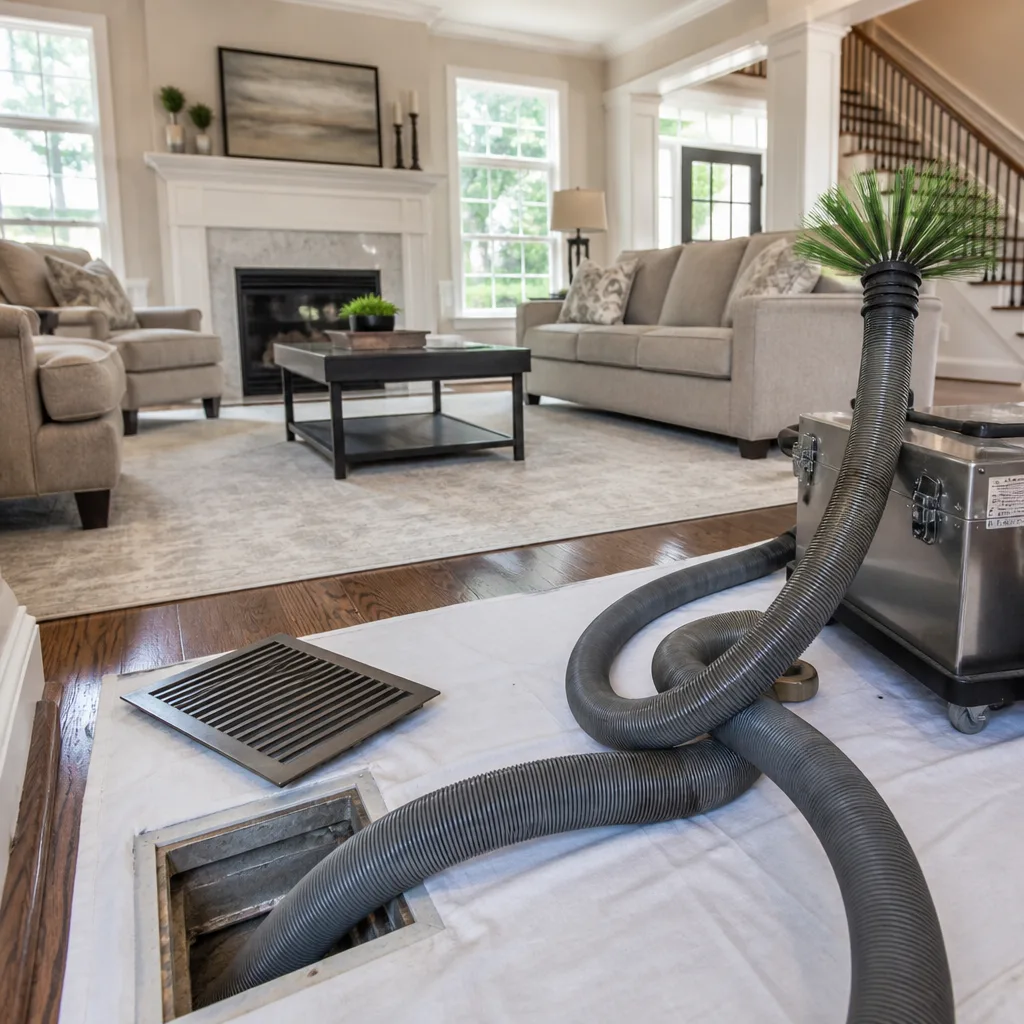 Whole-home duct cleaning
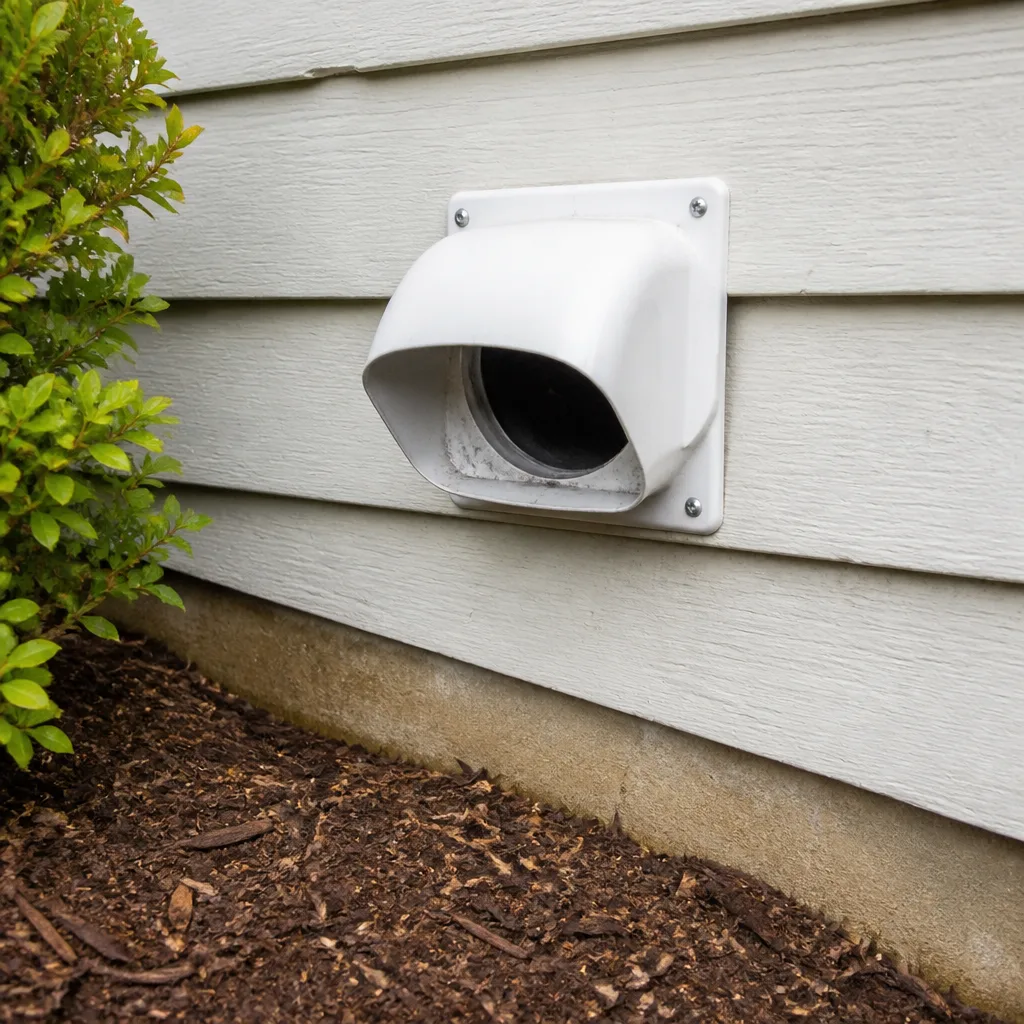 Dryer vent cleaning
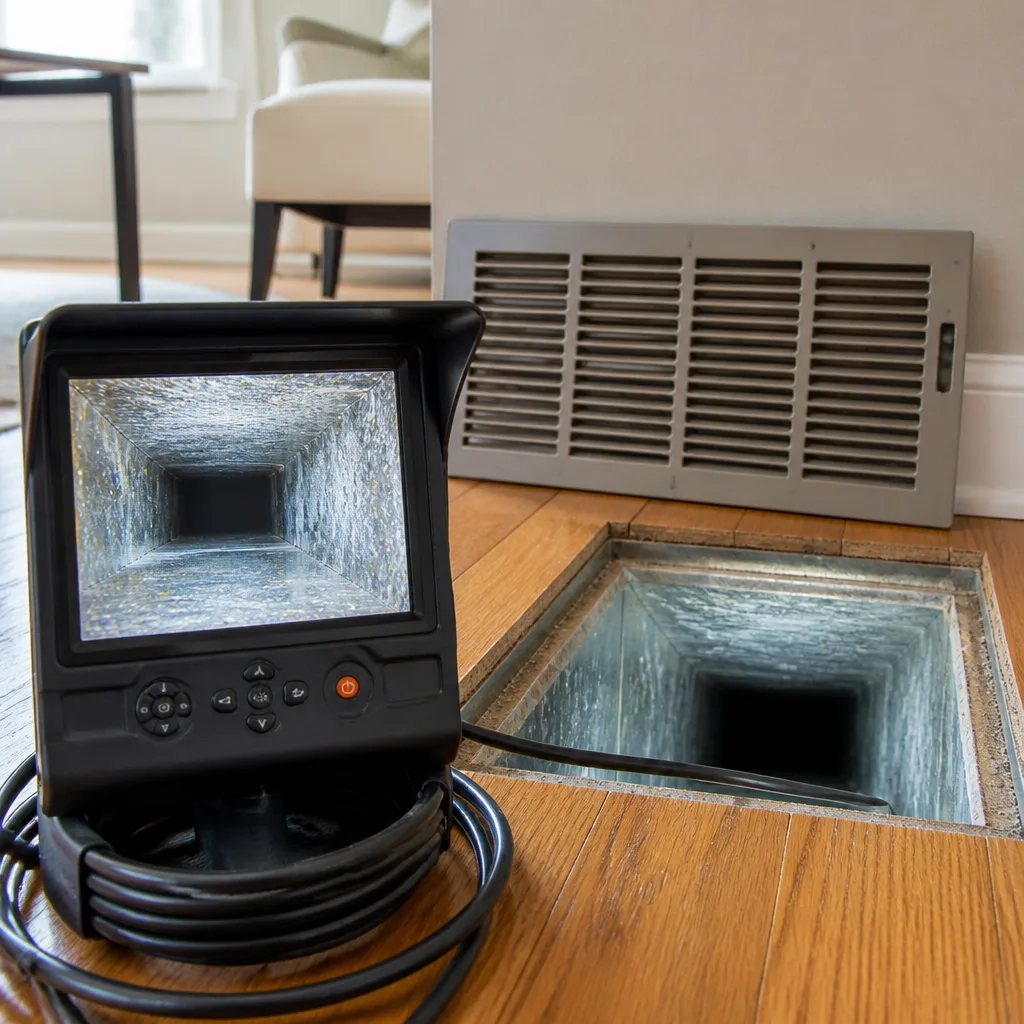 Camera inspection
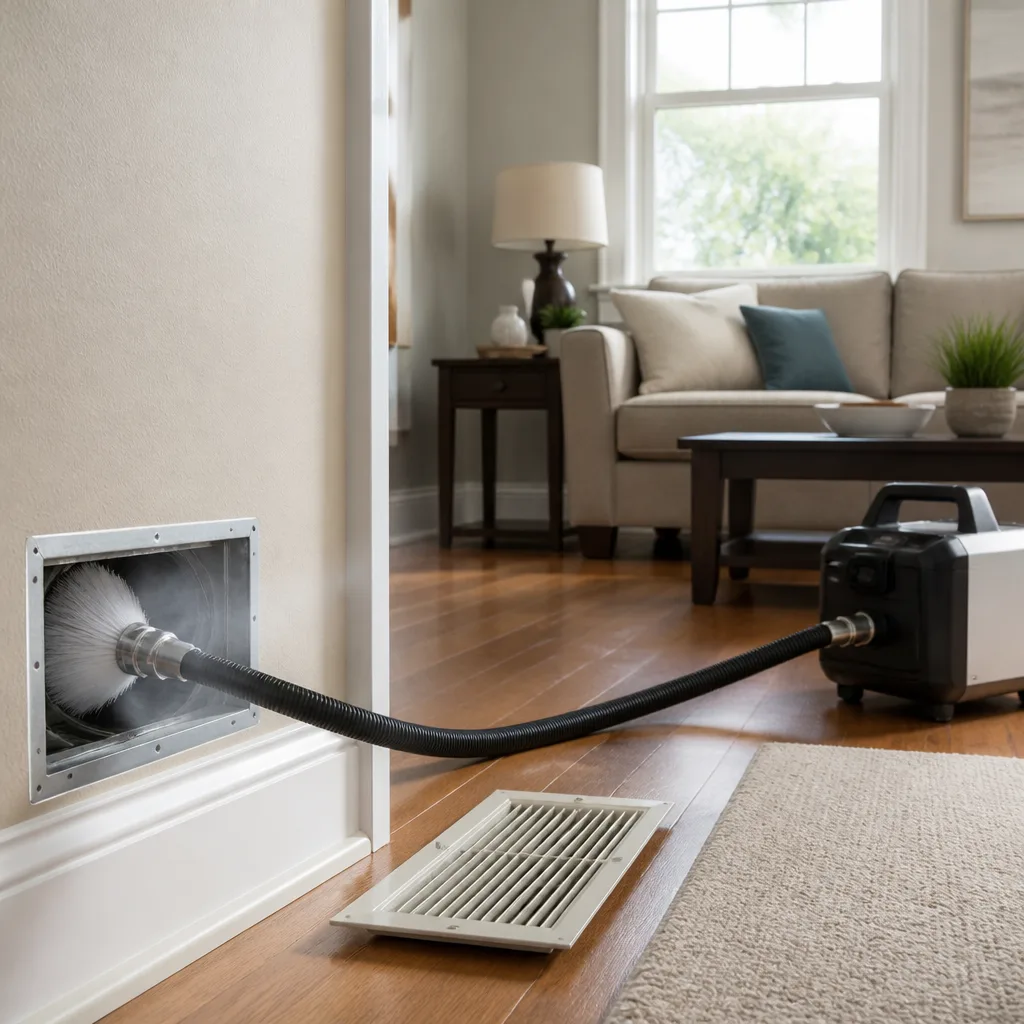 Sanitizing & deodorizing
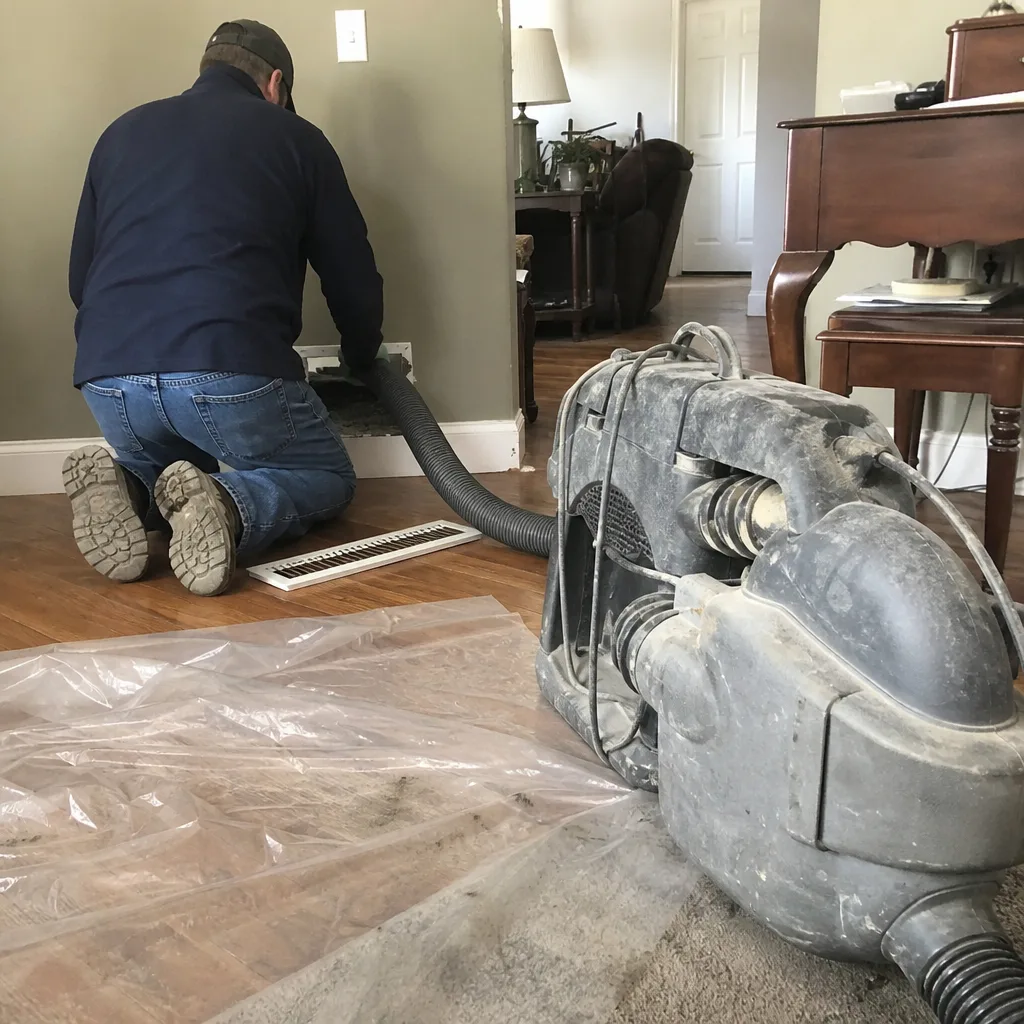
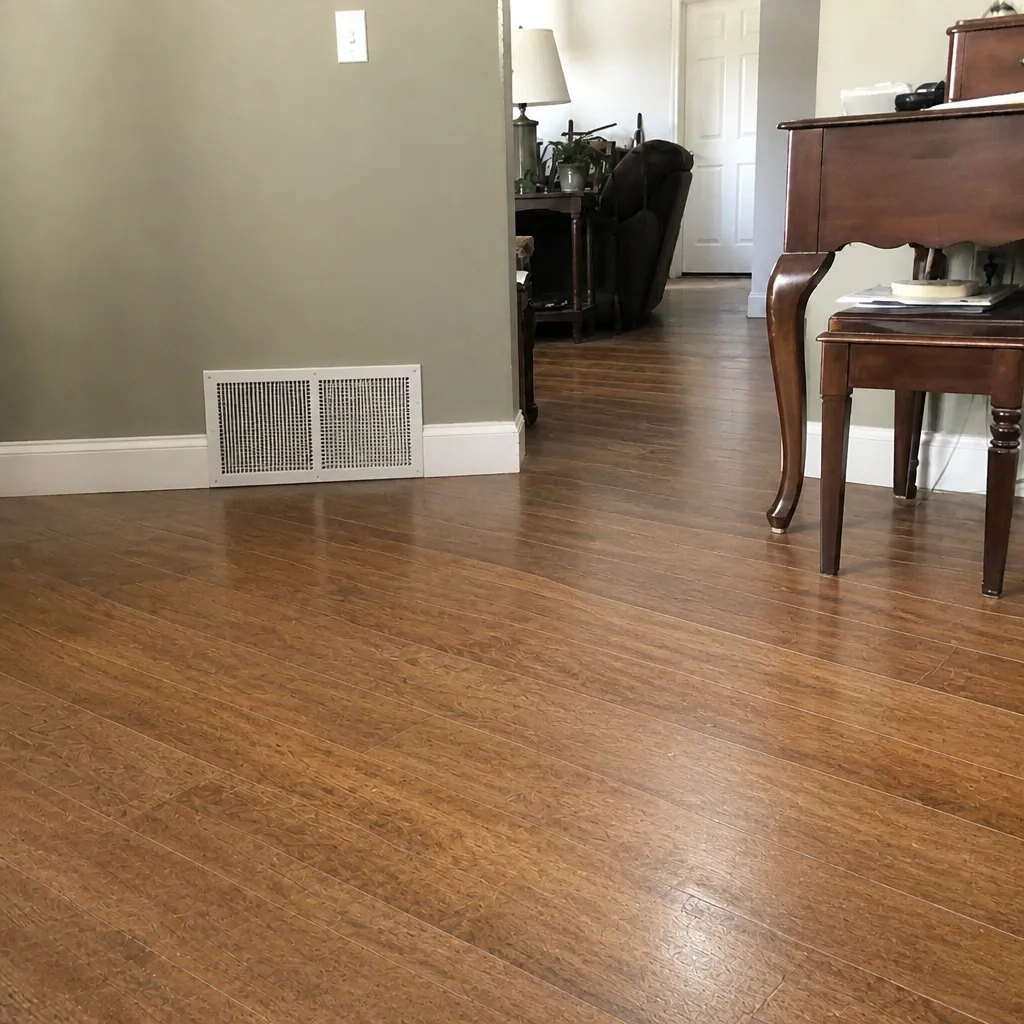
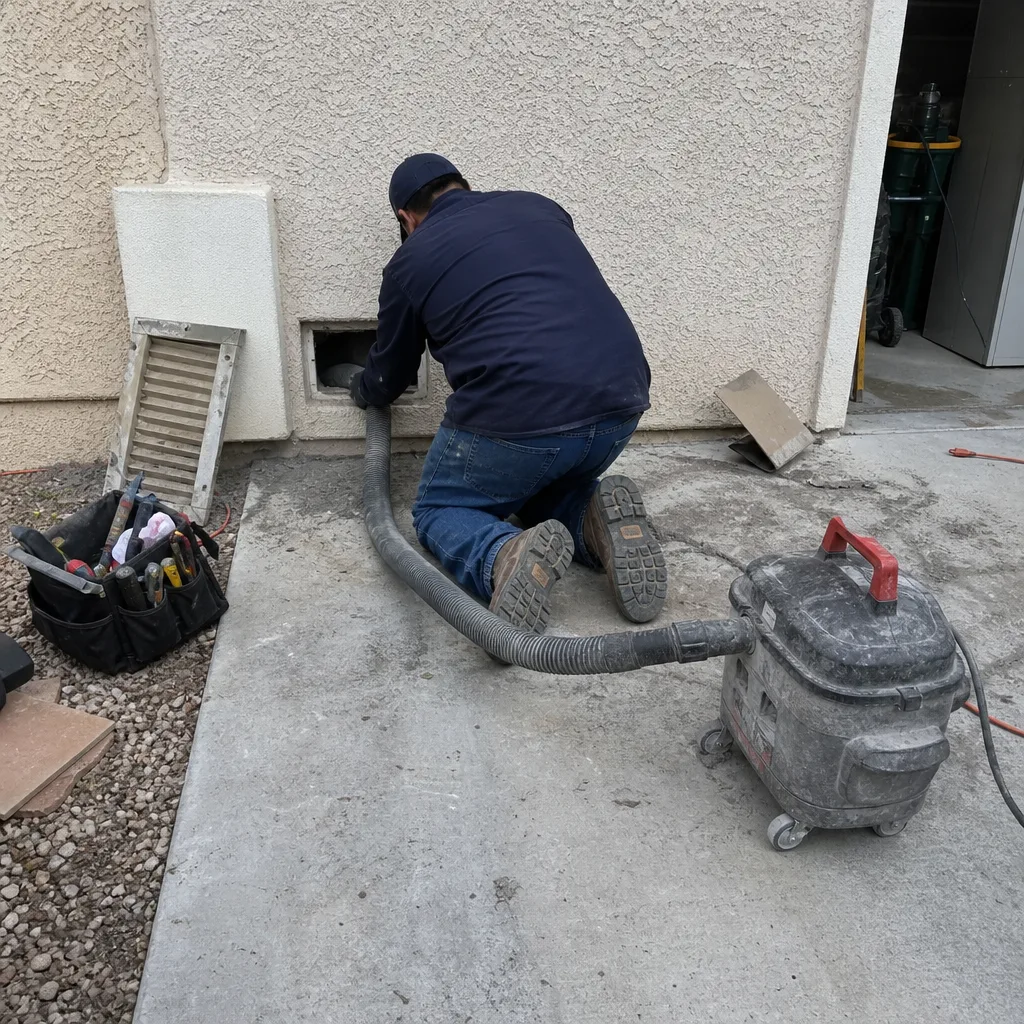
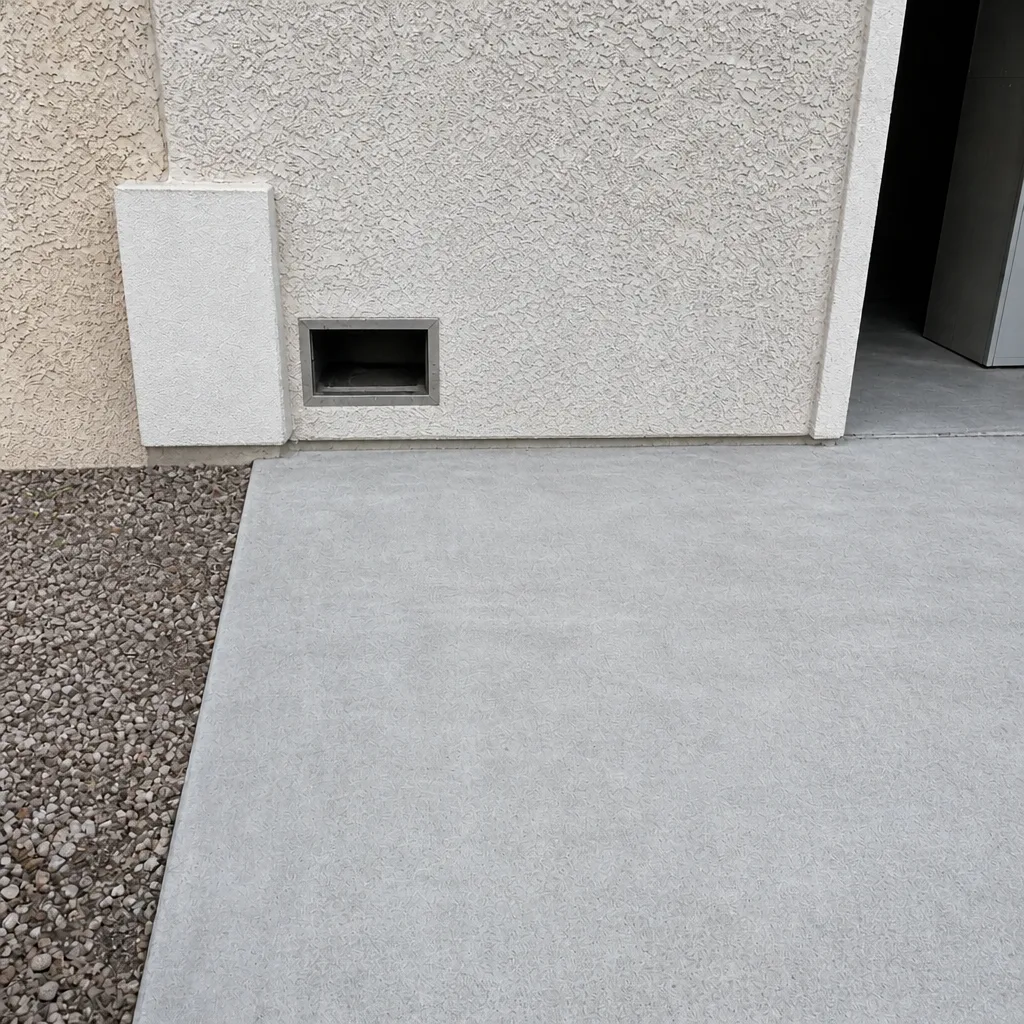
Whole-system duct and dryer vent check with before-and-after photos - you see exactly what came out of your vents
That "$99 whole-house special" is a bait ad - the real number appears once they are in your hallway, or the "clean" is a shop-vac at the register. We photograph the inside of your ducts before and after instead.
Air Duct Cleaning Maintenance Checklist for Spring Valley Homeowners
Changing your filter every 90 days is on every generic duct checklist you’ll find. In Spring Valley, that calendar is close to useless. A single haboob rolling through the valley can load a filter in a month, and once that filter saturates, the fine dust it can’t hold anymore goes straight past it and settles inside the ductwork. The calendar doesn’t know about last Tuesday’s windstorm. This guide is built around what you can actually see and measure in your own home: what to check at your registers, how to read airflow changes without special tools, and which findings mean “add it to the list” versus “call today.”
Quick Answer
A practical air duct maintenance checklist for a Spring Valley home means checking filters and registers monthly, inspecting the whole system within 48 hours of any major dust storm, and booking a professional cleaning and inspection on condition rather than on a fixed calendar date. The desert environment here loads ductwork faster than most national maintenance schedules assume, so observation beats a reminder on your phone every time.
Styles & brands we work with
- Whole-home duct cleaning
- Dryer vent cleaning
- Camera inspection
- Sanitizing & deodorizing
Table of Contents
- Why Spring Valley Ducts Age Differently
- The 48-Hour Post-Dust-Storm Protocol
- Reading Static Pressure Drop Without Special Tools
- What Supply Registers Tell You: Color, Texture, Pattern
- Monthly Homeowner Tasks vs. Annual Technician Touchpoints
- Red-Flag Conditions That Mean Call Today
- What a Professional Cleaning Actually Involves
- Common Mistakes to Avoid
Why Spring Valley Ducts Age Differently
Spring Valley sits in the Las Vegas Valley, and the air here carries a particular mix: fine mineral dust from the surrounding desert, particulate from construction as neighborhoods build out, and seasonal pollen from landscaping that gets irrigated year-round. That combination behaves differently in ductwork than the humid, organic-heavy air of wetter climates. Desert dust is abrasive and fine. It doesn’t clump and stay put the way damp debris does. It migrates.
When a filter loads up, air takes the path of least resistance. In a well-sealed system that path is through the filter media. In a system with gaps at the filter frame, loose plenum connections, or unsealed joints, the path becomes the cracks. Dust that bypasses the filter deposits on duct walls, on the blower wheel, and on the evaporator coil. Once it’s there, normal operation keeps it circulating in small amounts every time the system runs. That’s the mechanism behind the “dusty house that’s always dusty no matter how much I clean” complaint we hear in Spring Valley.
Homes here also run their air handlers hard for long stretches of the year. Continuous operation moves more air through the system than a mild-climate home would see, which means more dust captured per month and more opportunities for a saturated filter to pass debris downstream. The practical takeaway: your maintenance rhythm should track your runtime and your dust events, not the seasons on a wall calendar in another state.
There’s a second factor specific to the valley’s housing stock. Many Spring Valley homes have flex duct runs in attics that reach high temperatures during summer. Heat cycling causes flex duct to sag, kink, and pull at connections over time. A sagging run restricts airflow and creates a low spot where dust accumulates faster than in a straight, well-supported section. When we inspect a Spring Valley attic, we’re not just looking at what’s in the duct; we’re looking at how the duct is supported and whether the run has lost its shape.
The 48-Hour Post-Dust-Storm Protocol
After a major wind event in Spring Valley, the 48-hour window matters. Dust that has just entered the system is still loose and can be captured by a fresh filter or pulled out by a professional cleaning. Dust that sits and gets cycled through the system repeatedly works deeper into the duct lining and becomes harder to remove cleanly. Here’s what to do within two days of a serious haboob or sustained high-wind event.
- Check the filter first. Pull it and hold it up to light. If you can’t see light through the media, replace it. After a heavy dust event, a filter that was fine a week ago can be effectively spent.
- Inspect every supply register. Wipe the grille with a light-colored cloth. Streaking dust on the cloth is normal filter loading. A gritty, sand-textured film, or a heavy concentration in one corner of the grille, tells you debris is reaching the register from inside the duct, not just settling from the room.
- Check the return-air grille. The return pulls the largest volume of air, so it takes the brunt. Look for dust shadows or a visible accumulation on the grille face and inside the throat behind it.
- Run the system and listen. After the filter is fresh, run the air handler. A new whistle, a rougher hum, or a longer time to reach temperature can indicate a restriction somewhere in the system after the storm.
- Look at the attic or crawlspace duct connections if accessible safely from a stable surface. Loose joints and pulled connections are the failure points that let dust bypass the filter entirely. Never climb unsteady attic framing or enter a crawlspace you can’t move through safely. Call a professional instead.
If two or more of those checks show a problem, that’s the point to schedule an inspection. If all five look clean, note it and move on. The checklist is not a reason to spend money; it’s a filter for when spending money is actually warranted.
Reading Static Pressure Drop Without Special Tools
Static pressure drop is the resistance air meets as it travels through your system. You can’t measure the number without a manometer, but you can read the symptom clearly with nothing more than your ears, your hand, and a timer. The symptom is a system that used to move air easily and now doesn’t. Here’s how to check it as a homeowner.
- Feel the airflow at a register you know well. Hold your hand a few inches from a supply register you’ve stood near for years. If the flow feels noticeably weaker than a month ago, restriction is building somewhere upstream.
- Time the temperature swing. Note how long the system takes to bring a room to setpoint. A system that used to cool a bedroom quickly and now struggles is telling you its effective airflow has dropped, often from filter loading or duct restriction.
- Listen to the blower register. A blower that sounds labored or has developed a new hum or rattle may be pushing against higher pressure than it was designed for. A whistling return grille is another classic sign the return side is starved.
- Watch for the “hot room” pattern. When one or two rooms consistently run warm while others are fine, the duct feeding them is likely restricted, kinked, or disconnected. In Spring Valley attics, kinked flex runs are one of the most common culprits we find.
Static pressure rise itself is telling you something is wrong, not always that the duct is dirty. A saturated filter causes the same symptom as a clogged duct. That’s why the order matters: replace the filter first, then re-check. If the symptoms clear, you’ve caught the problem early. If they persist with a fresh filter, the restriction is downstream and needs a proper inspection.
The professional version of this check uses a manometer to measure pressure drop precisely across the filter, the coil, and the duct runs. That’s how we isolate whether a problem is at the filter, the coil, or a specific duct section. The homeowner version isn’t a substitute for the measurement. It’s an early warning that gives you a reason to schedule one.
What Supply Registers Tell You: Color, Texture, Pattern
A glance at your supply registers can tell you a lot if you know what to compare. The mistake most people make is lumping all buildup together. Filter loading, normal room dust, and internal duct debris each leave a different visual signature. Here’s how to tell them apart.
- Color. Grayish or brownish film is typical household dust and normal filter loading. Black soot, rust-colored staining, or greenish film are not normal and point to something specific going on inside the system.
- Texture. Soft, powdery film on the grille is dust that settled from the room. Gritty, sand-like film that feels rough to the touch is desert particulate that’s traveled through the duct and stuck to the grille face. Stringy, cobweb-like material at the edges suggests insect activity or debris bridging in the duct.
- Pattern. Even buildup across the whole grille is normal room dust. Heavy buildup concentrated in one corner, along one edge, or facing a specific direction tells you the airstream coming out of that register is loaded with debris. A bright clean stripe next to a dust-dark stripe points to a leak, kink, or disconnected section directing air unevenly.
- Flow direction. Look at where the dust builds on a register that feeds a closed room versus an open one. If dust accumulates more heavily on the register closest to the air handler than on the far ones, the loading is happening upstream and there’s more where that came from.
Take photos of any register that looks off and note the date. A before-and-after record makes a real difference when you’re deciding whether it’s time to schedule service. It’s also exactly what a good technician will photograph on the job, and it’s the kind of documented reasoning that lets you verify the work actually happened rather than taking a “trust us” on the phone. When you’re ready to see what a proper inspection finds, our air duct cleaning team works from the same evidence at every register and joint.
Monthly Homeowner Tasks vs. Annual Technician Touchpoints
One of the reasons duct maintenance gets tangled is that homeowner tasks and technician tasks get blended into one list. They’re different jobs with different tools. Keeping them separate makes both more doable. Here’s the split.
Monthly homeowner tasks
- Check and replace the filter as needed. In Spring Valley, check it more often than a 90-day rule suggests. After any dust event, check it immediately.
- Wipe down supply and return grilles with a lightly dampened cloth to remove surface dust.
- Run the system and note any change in airflow, sound, or how quickly rooms reach setpoint.
- Check for airborne dust after the system starts up. A visible puff of dust at a register is a strong signal.
- Look for condensation, moisture, or staining around registers and at the air handler, especially during the cooling season when humidity in the return can spike.
Annual technician touchpoints
- Full visual inspection of accessible duct runs, joints, and connections.
- Static pressure measurement across the filter, coil, and duct runs to actually quantify restriction.
- Blower wheel and coil inspection for dust buildup that a homeowner can’t see.
- Airflow balance check at each register to confirm each room is getting the supply it needs.
- Filter of the system itself – the frameless return-air catch, plenum, and air handler cabinet.
- Documentation of findings with photos and a plain-English summary of what needs attention now, and what can wait.
The monthly list is what you can do for free. The annual list is what requires professional-grade equipment and a trained eye. If you’re due for the second list, we can bring the full Highpoint Duct Cleaning equipment stack to your home, including Abatement Technologies HEPA capture units that pull contaminants out of the airstream instead of pushing them into your living room. That matters more here than in most markets, because there’s so much fine particulate to capture.
Red-Flag Conditions That Mean Call Today
Most findings belong on the “schedule it” list. A few don’t. These are the conditions where delaying a call costs you more than the call.
- Odor after system startup. If the system smells musty, sour, or like a dirty sock when it kicks on, moisture and microbial growth are likely present somewhere in the system. That’s a remediation-tier finding, not a routine cleaning.
- Visible debris at registers. If you can see dust, lint, or debris actually blowing out of a register, the system is actively distributing contamination. Stop using it as little as the weather allows and get an inspection.
- Uneven room temperatures. One room that has never been right is worth a look. One room that’s newly warm when it used to be comfortable is a red flag for a disconnected or restricted duct run.
- Lint smell or visible lint at the dryer vent. If you notice lint at the outdoor dryer vent or the dryer takes two cycles to dry a load, that’s a fire-safety finding and not a duct-cleaning convenience issue. Our dryer vent cleaning team treats it that way.
- Visible duct damage. A crushed flex run, a disconnected joint, or a duct section hanging loose in the attic is an airflow and contamination problem at once. Our air duct repair service exists for exactly this case, because cleaning around a broken duct doesn’t solve anything.
- Recurring filter collapse or rapid filter loading. If a fresh filter loads in a week, something upstream is dumping debris faster than a filter can take it.
What a Professional Cleaning Actually Involves
When we talk to homeowners in Spring Valley, we often hear about quotes that range from a small flat fee to a few hundred dollars for the same square footage. The gap isn’t marketing. It’s equipment and process. Here’s what a professional-grade job includes, so you can spot the difference.
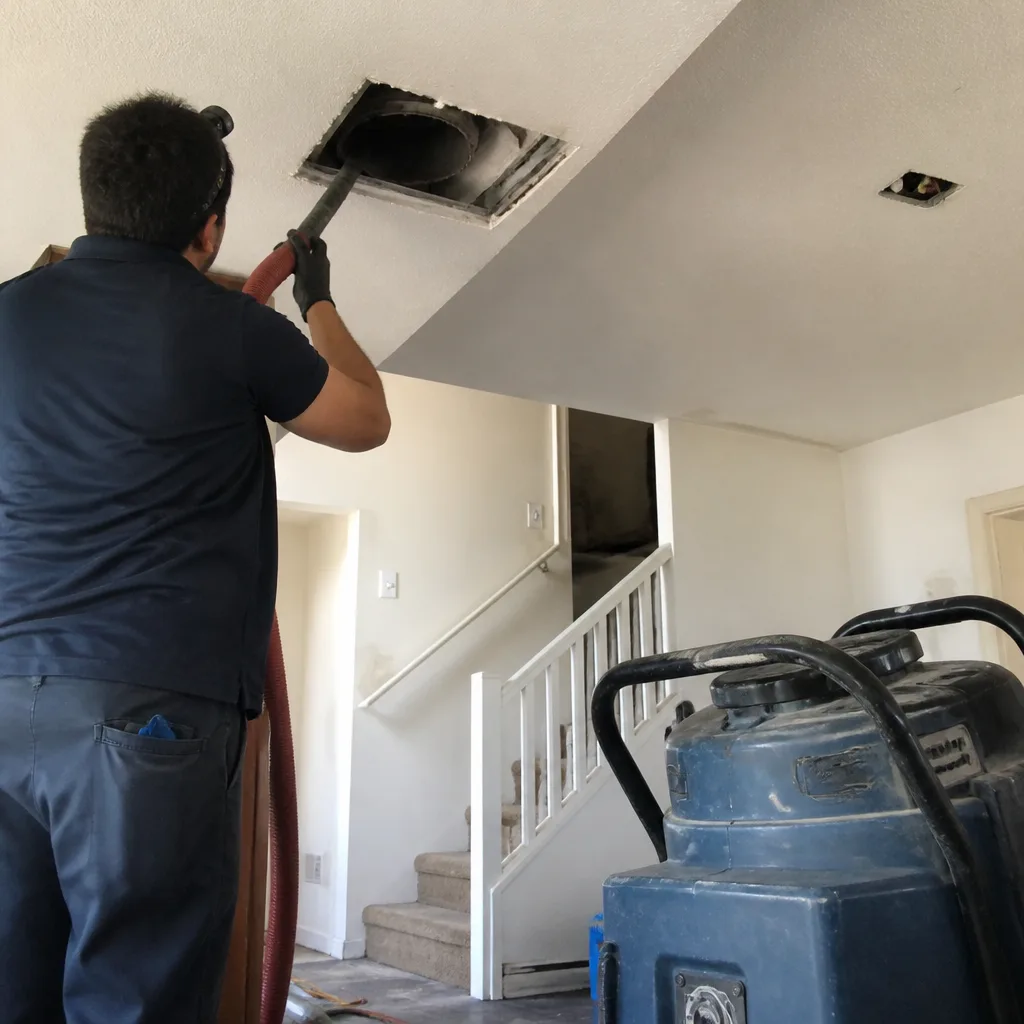
- Negative pressure and HEPA capture. A proper setup pulls the system into negative pressure so debris is captured, not just loosened. The Abatement Technologies HEPA units we deploy capture particles down to a fraction of a micron. A shop vac doesn’t.
- Rotary agitation of the duct walls. The Rotobrush rotary brush system is the industry benchmark for breaking loose debris that’s adhered to lined and metal duct. Straight-line vacuuming doesn’t touch what’s bonded to the wall.
- High-powered vacuum extraction. Nikro units provide the sustained suction to pull loosened material out of long runs, including the run to the far end of the house.
- System-wide inspection, not just the ducts. A proper job checks the blower wheel, the coil, the filter frame, and every accessible joint. This is also where familiarity with Honeywell and Aprilaire air-quality systems comes in, because filtration and humidity are part of the same picture as the ducts.
- Repair on the same visit. If we find a kinked or disconnected run, we can address it in the same service window. That’s what we mean by “we clean it, and if we find damage, we fix it.” No second contractor, no reschedule.
- Documentation. Before-and-after photos of the customer’s own ducts, taken at identified points. You should be able to see what was done, not just be told.
Guardsman protective treatments are available as an added step after cleaning for homeowners who want an extra layer of protection. It’s an option, not a required upsell, and we’ll tell you plainly whether it’s worth it for your system. We run one flat price per system, agreed in a written estimate before work starts. No per-vent pricing games, no surprise line items after the technician is on site. The written estimate sets the final price.
Common Mistakes to Avoid
- Sticking to a 90-day filter rule in Spring Valley. The calendar doesn’t know about last week’s haboob. Check the filter monthly here and after every major dust event; it may need replacing well before any schedule says so.
- Skipping the return-air side. Homeowners check supply registers and ignore the return. The return carries the most air and the most contamination. Look at it every time.
- Confusing surface dust with internal debris. Wiping the register doesn’t clean the duct behind it. A clean-looking grille can still sit on a dirty run. Look at the color, texture, and pattern, not just whether the grille looks dusty.
- Calling a “cheap” cleaning before confirming the equipment. A low bid that arrives with a shop vac and no HEPA capture takes dust and redistributes it. Ask what they bring before you schedule.
- Assuming duct damage is a separate job. If a technician cleans around a kinked or disconnected run, the airflow and contamination problem is still there. Ask upfront whether repair is available in the same visit.
- Ignoring dryer vent lint as a “duct cleaning” issue. It’s a fire-safety issue. If the dryer takes two cycles or you see lint at the outdoor vent, treat it like a red flag, not a maintenance chore.
- Scheduling by guesswork instead of observation. The best maintenance decision in Spring Valley is driven by what you see and measure, not by a reminder on your phone. Note what’s normal so you can spot what isn’t.
See the difference
 Before
 After
 Before
 After
 Before
 After
When to Call a Professional
If any of the red flags above are present, call us today. If you’re seeing dust accumulation at registers faster than you’d expect, or your system’s airflow has changed noticeably, it’s worth an inspection rather than more time with the vacuum. If you’re moving into a Spring Valley home and don’t know the duct history, a professional cleaning establishes the baseline. If you’re managing a rental property, a documented inspection protects both the system and the tenant relationship. Highpoint Duct Cleaning offers free estimates in Spring Valley. Call (866) 724-9559. We answer 24/7. Fast dispatch from 7am to 7pm. Estimates are free, and the written estimate sets the final price.
Frequently Asked Questions
Most Spring Valley homes benefit from a professional cleaning and inspection on a condition-based schedule, which usually works out to every few years, but with a dust-storm check after every major wind event. The desert environment loads the system faster than humid climates, so a fixed three-year calendar is less useful than checking the registers and filter monthly and scheduling when the checks show a problem.
Yes, checking it within 48 hours of a major wind event is the single highest-value habit in a Spring Valley home. Dust that’s just entered the system is still loose and easy to capture; dust that’s cycled repeatedly works deeper into the duct lining. A quick check-and-replace after a haboob costs very little and prevents the start of a longer buildup.
The equipment and the process. A cheap quote typically arrives with consumer-grade vacuums and no true HEPA capture, so debris gets loosened and redistributed. A professional job uses negative pressure, HEPA filtration, rotary agitation, and a system-wide inspection. Ask what equipment the company brings before you book. Call (866) 724-9559 for an exact quote on our service. Estimates are free.
Often, yes. If we find a kinked flex run, a disconnected joint, or a damaged section during the cleaning, we can address it in the same service window instead of rescheduling a second contractor. The Spring Valley attics we see most often have flex runs that have sagged or pulled at connections, so this is a common finding here.
They shouldn’t. We run one flat price per system, agreed in a written estimate before work starts, with no per-vent pricing. If something new turns up during the job, we stop and talk to you about it before doing anything that changes the price. The written estimate sets the final price.
A fresh filter that doesn’t clear the symptoms is the clearest sign. If the system still feels weak, still runs dusty, or rooms still heat unevenly after a new filter, the restriction is downstream in the ductwork or at the connector joints. That’s the point to schedule an inspection rather than replacing another filter.
The Bottom Line
The calendars you find online were written for mild climates. Spring Valley is different: fine mineral dust, hot attic runs, and wind events that load filters in weeks rather than months. Build your maintenance checklist around what you can see at your registers and feel at your air handler, and inspect the whole system after every major dust storm. Keep the monthly homeowner tasks and the annual technician tasks separate so neither gets skipped. If a red flag shows up, book the inspection rather than running the system another month. Our technicians have up to 9 years of experience, and our equipment is genuinely professional-grade. Call (866) 724-9559 whenever you’re ready. We answer 24/7. Fast dispatch from 7am to 7pm.
Written by the team at Highpoint Duct Cleaning.