
Last updated November 14, 2026
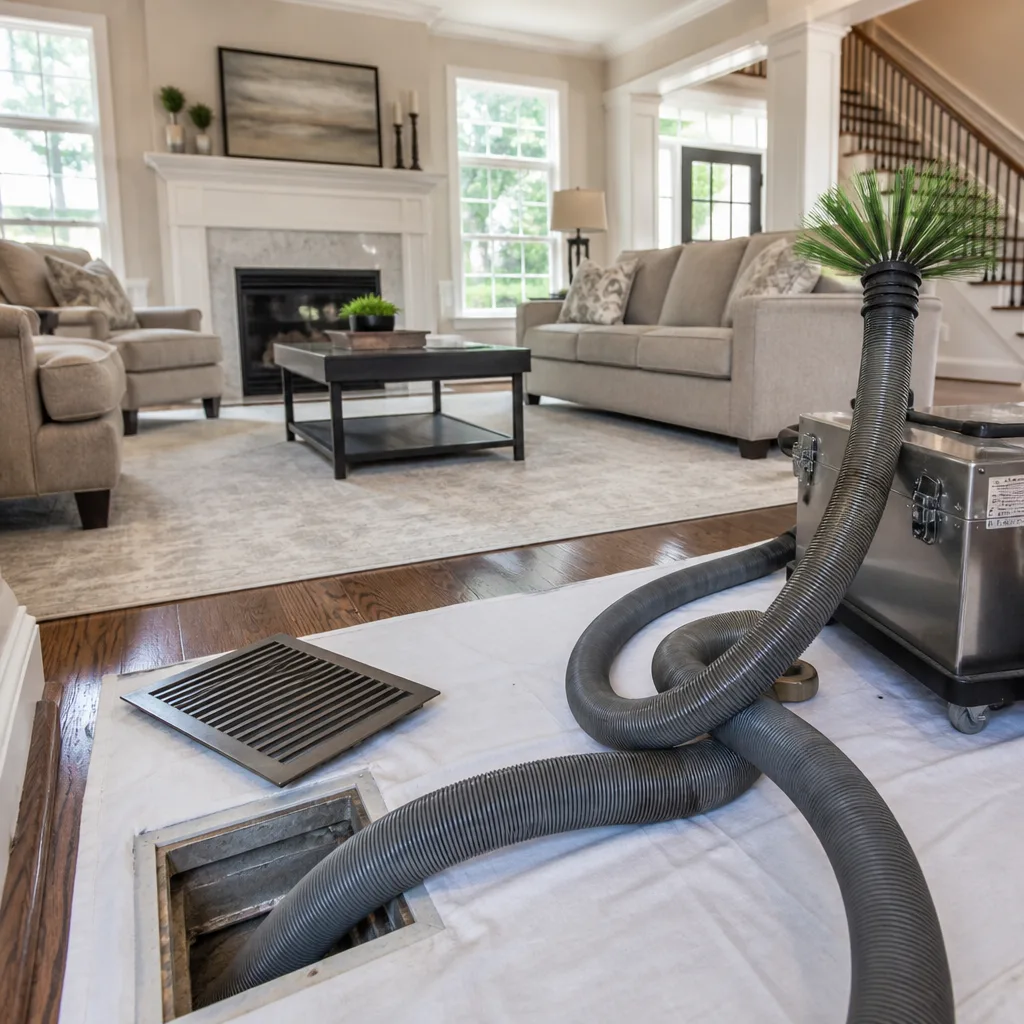 Whole-home duct cleaning
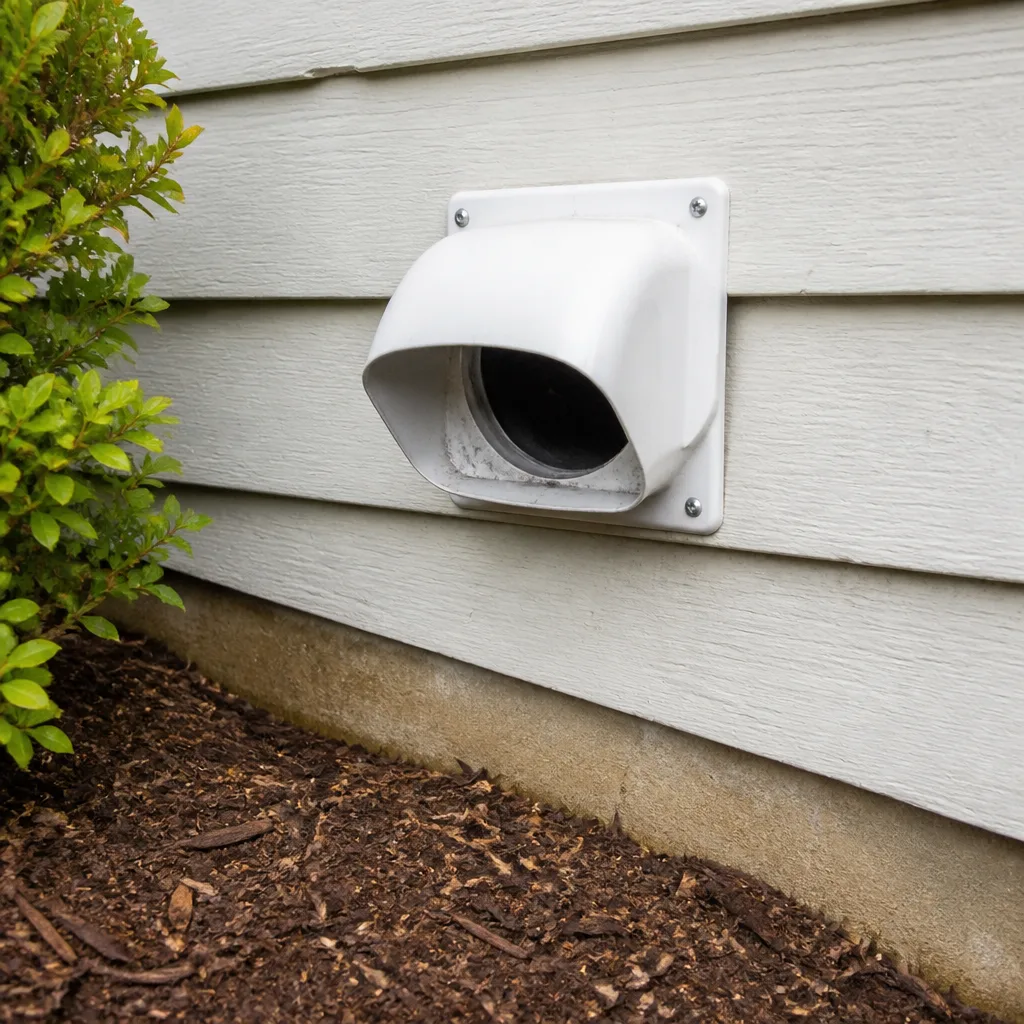 Dryer vent cleaning
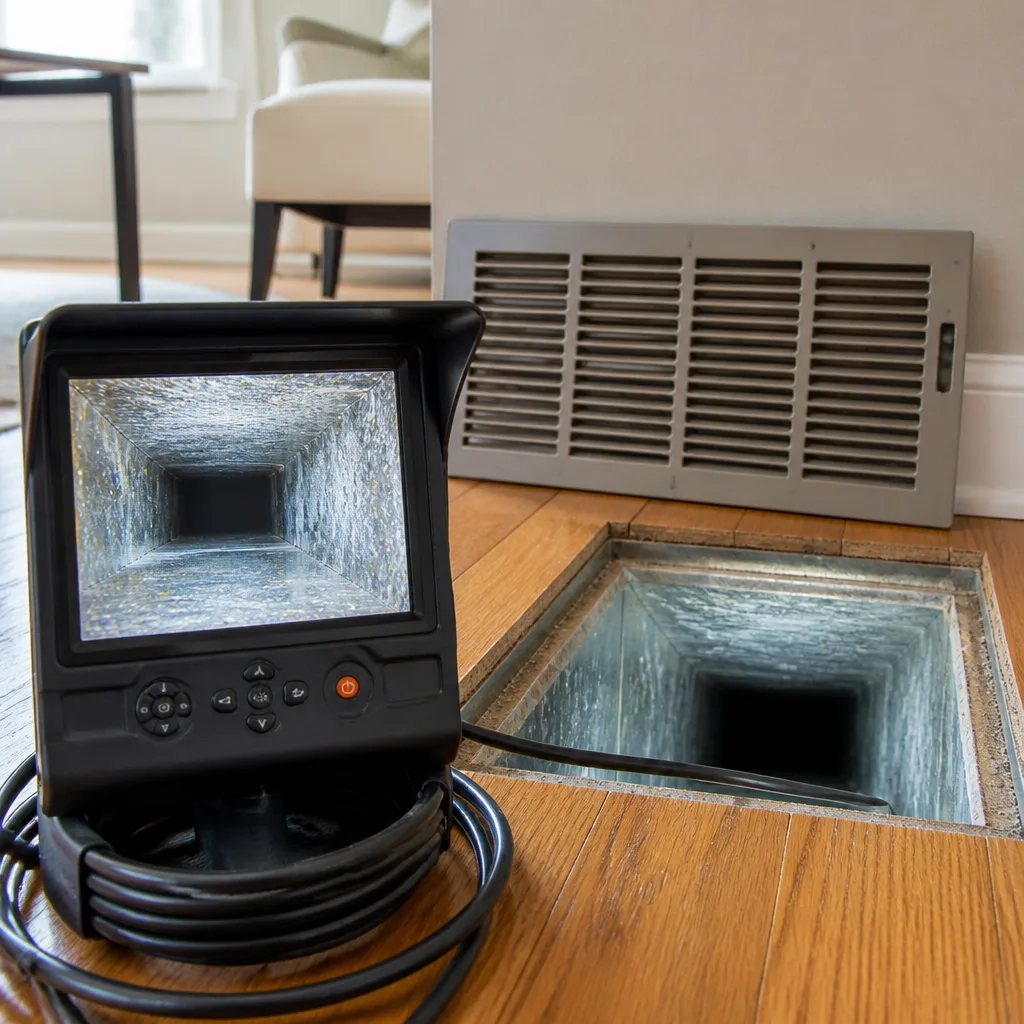 Camera inspection
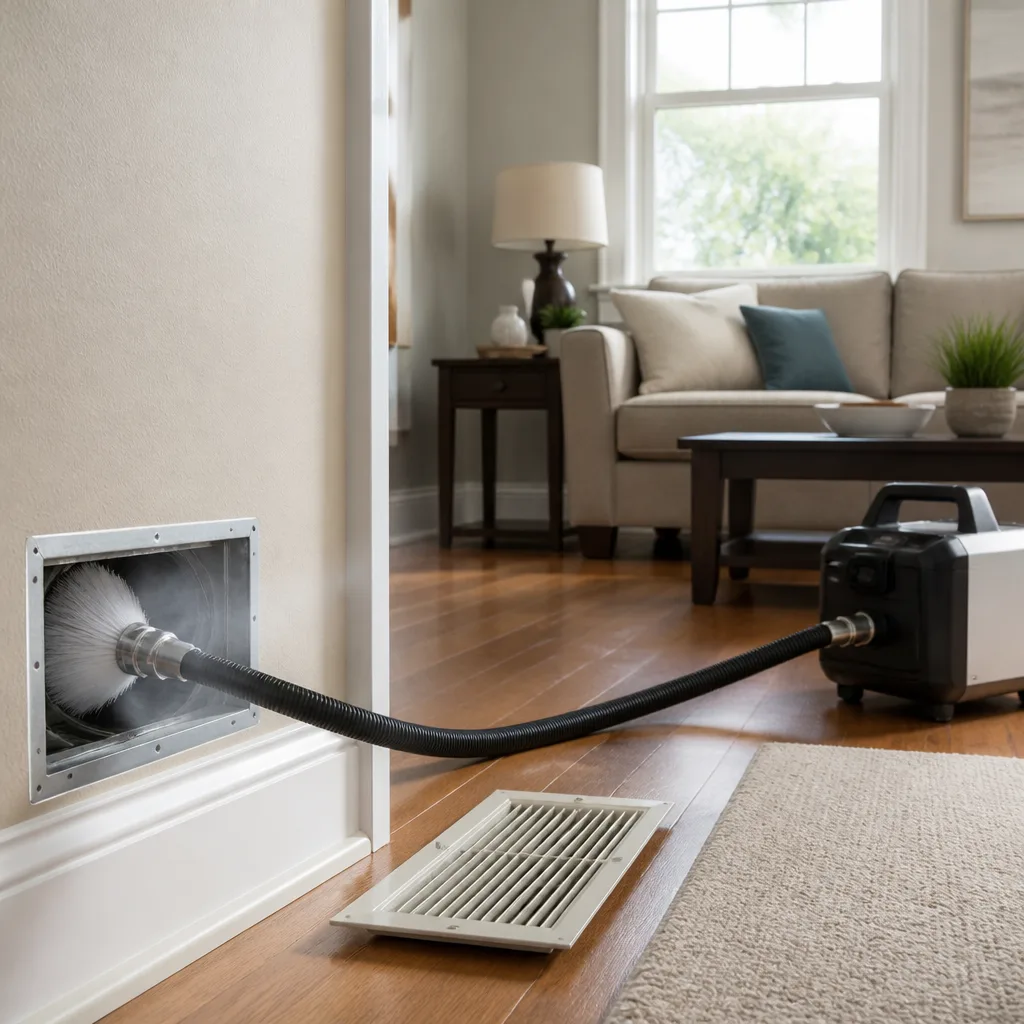 Sanitizing & deodorizing
Whole-system duct and dryer vent check with before-and-after photos - you see exactly what came out of your vents
That "$99 whole-house special" is a bait ad - the real number appears once they are in your hallway, or the "clean" is a shop-vac at the register. We photograph the inside of your ducts before and after instead.
Air Duct Cleaning Permits, Codes & Inspections in Spring Valley, NV: What You Need to Know
Most homeowners get a duct cleaning quote and never think about permits. That changes when they list the house. A home inspector flags unsealed or improperly reconnected duct work in the attic, the buyer’s agent asks for the permit record, and there isn’t one, because the technician who “repaired” the ducts never pulled a mechanical permit. The cleaning itself is almost never the problem. The repair work that a thorough inspection uncovers often is, and the regulatory line between the two is where Spring Valley homeowners get surprised. This guide maps exactly where that line sits for your address, what triggers a permit, what doesn’t, and how to tell whether the contractor in front of you knows the difference.
Quick Answer
In Spring Valley, routine air duct cleaning is treated as maintenance and does not require a permit. Duct repair that alters, replaces, or reconnects duct runs generally falls under mechanical permit requirements enforced by Clark County or the City of Las Vegas, depending on your address. Always verify jurisdiction and permit scope with the authority having jurisdiction before work starts, and get the answer in writing from your contractor.
Styles & brands we work with
- Whole-home duct cleaning
- Dryer vent cleaning
- Camera inspection
- Sanitizing & deodorizing
Table of Contents
- Which Authority Covers Your Spring Valley Address?
- What Triggers a Mechanical Permit vs. What Counts as Maintenance
- How Nevada’s Residential Code Applies to Duct Sealing Materials
- What Happens When Unpermitted Duct Work Shows Up on a Home Inspection
- How to Ask a Duct Contractor About Permits
- Why Spring Valley’s Climate Makes Duct Integrity Matter More
- What a Proper Permit-Ready Duct Job Looks Like
Which Authority Covers Your Spring Valley Address?
Spring Valley is an unincorporated community in Clark County, which means the answer to “who issues the permit” depends entirely on where your house sits relative to city boundaries. Some Spring Valley addresses fall under Clark County’s building department. Others fall within the City of Las Vegas jurisdiction. A few sit close enough to the lines around Enterprise or Paradise that a homeowner assumes one authority and discovers later it was the other. This matters because the permit application, the inspection schedule, and the records search all run through different offices.
Here’s how to determine which authority covers you:
- Start with your address on the county assessor’s parcel lookup. The jurisdiction field on your parcel record usually identifies the issuing authority.
- Check your original building permit history. If your home was built under Clark County permits, future mechanical work on that structure typically stays with Clark County.
- Call the building department directly. Ask them to confirm the jurisdiction for your specific parcel before any repair scope is drafted.
- Write the answer down. Note the date, the person you spoke with, and the department. If a dispute arises at resale, that note has value.
In our experience, the confusion isn’t malicious on anyone’s part. Contractors who work across the valley routinely apply the wrong jurisdiction to a Spring Valley address because the community name doesn’t map cleanly to a single permitting office. A contractor who knows to verify before quoting a repair scope is a contractor who understands the regulatory landscape here. One who shrugs and says “it’s all Clark County” hasn’t done the homework.
If you’re not sure where to start, the Spring Valley service page walks through the practical steps for local homeowners. The permitting question is separate from the service question, but both begin with the same address check.
What Triggers a Mechanical Permit vs. What Counts as Maintenance
This is the distinction most homeowners never hear explained clearly. Cleaning is maintenance. Repair that changes the system is construction. The two sit on opposite sides of the permit line, and the line is not always obvious to someone who isn’t reading the code every week.
Typically maintenance, no permit required:
- Routine cleaning of duct interiors using rotary brush or negative-pressure equipment
- Replacing supply and return registers or grilles without altering the duct opening
- Sealing accessible joints and seams with code-compliant mastic or tape where no duct section is removed or replaced
- Replacing filters and filter media
- Inspecting duct runs with a camera to identify damage
Typically triggers a mechanical permit:
- Replacing a section of rigid or flex duct that has been crushed, disconnected, or torn
- Adding, removing, or relocating a duct run or register
- Altering the size or configuration of a trunk line
- Reconnecting ducts that have separated at a boot, collar, or plenum
- Any repair that changes airflow characteristics of the system as designed
Most homeowners discover their duct problem during a cleaning, not before it. A Rotobrush pass comes back with debris that shouldn’t be there, the technician traces it to a disconnected run in the attic, and the conversation shifts from cleaning to repair. That’s the moment the permit question matters. A contractor whose answer is “we’ll just reconnect it” is a contractor who has decided the permit isn’t necessary. In our experience, that decision is theirs to explain to the inspector later.
Our air duct cleaning work is scoped as maintenance and doesn’t require a permit in ordinary cases. When our technicians find damage, we look at what the repair involves before we tell you what it needs. That’s the whole point of having repair capability in-house: we can tell you the scope before the answer becomes a surprise.
How Nevada’s Residential Code Applies to Duct Sealing Materials
Nevada’s residential building code is built on the International Mechanical Code, and the mechanical code cares deeply about duct sealing. Not for bureaucratic reasons. Sealed ducts control where air goes. Leaky ducts in a hot climate push conditioned air into the attic, and that air pressure imbalance pulls unconditioned air back into the living space through any gap it can find. The code provisions around duct sealing exist because the system performance depends on it.
Here’s what homeowners usually don’t know: not all sealing products in a hardware store meet code for duct applications.
- Mastic sealants rated for duct use are the standard for rigid duct joints. They’re applied wet and cure into a permanent seal.
- UL 181-rated tapes are approved for flexible and rigid duct work. Generic “duct tape” is not, despite the name.
- Foil-backed butyl tapes are common for flex duct connections but must carry the appropriate listing.
- Cloth-backed utility tape is not a duct sealant under any code reference, though it appears on far too many DIY and cut-rate repairs.
When an inspector sees cloth-backed tape wrapped around a duct joint during a home inspection, the observation goes on the report as an unapproved repair method. That flags to the buyer, the lender, and the appraiser. The remedy is to open the joint, clean off the failed tape, and reseal with an approved method. The duct work that was “fixed” is now unfixed, and it’s a line item on the closing statement.
Our technicians use sealing materials from the approved categories as a matter of practice. It’s an unglamorous detail that determines whether the work will hold up to a code review. Professional-grade equipment applies to the whole job, not just the vacuum hose. That includes the sealing method that goes back on the joint.
What Happens When Unpermitted Duct Work Shows Up on a Home Inspection
Home inspectors look at duct work. Not always closely, but when they do, unpermitted repairs tend to show themselves. A mismatched duct section in the attic. Flex duct hung from a nail instead of a hanger. A taped joint where the tape has failed. Any of these can prompt the inspector to note that repair work was performed without a permit on record.
The consequences break down along a predictable sequence:
- The finding goes on the inspection report. The buyer sees it and asks for documentation.
- The seller has no permit record to produce. A permit search comes back empty, which confirms the finding.
- The buyer requests remediation. Depending on the market and the repair scope, the request may be to open a permit retroactively or to redo the work with a permitted contractor.
- The seller pays to correct work that was already paid for once. When the work is opened for correction, the cost of the original repair and the cost of the correction are both borne by the seller.
- The closing timeline compresses. Mechanical inspections have their own scheduling cycle, and a repair that’s discovered three weeks before closing turns into a scramble.
We’re not litigators and we don’t offer legal advice. What we can say from experience is that duct repairs we find during Spring Valley property inspections are almost always the kind that should have been permitted, and almost never are. The pattern is consistent enough to be predictable. Sellers who had a duct technician out for a “quick fix” are often the ones who pay for it twice.
Buyers benefit from asking one direct question at inspection: “Was any of this duct work permitted?” If the seller doesn’t know, a records search with the correct jurisdiction settles it.
How to Ask a Duct Contractor About Permits
This is the single most useful question a Spring Valley homeowner can bring to a duct repair conversation. The way the contractor answers tells you more than the price quote ever will.
Ask: “Does the repair scope you’re proposing require a mechanical permit for my address, and would you be pulling it?”
Qualified answers sound like this:
- “Let me confirm the jurisdiction for your parcel before I answer that.”
- “Based on what we’re seeing, that’s a section replacement. That likely requires a permit, and here’s what the process looks like.”
- “This is a maintenance-level seal, so no permit. If we find more once we’re in there, we’ll stop and reassess before doing anything else.”
Disqualifying answers sound like this:
- “We never pull permits.” This one should end the conversation. It means the contractor has made a standing decision to skip the regulatory process regardless of scope, and you inherit the consequence of that decision at resale.
- “You don’t need a permit for duct work.” That’s only true for maintenance. If your repair involves replacing duct sections, it’s not maintenance.
- “It’s not that serious.” Duct repairs aren’t serious until they show up on an inspection report. Then they are.
Here’s what separates a serious answer from a quick one: a serious contractor will offer to get the answer in writing. Not because you asked, but because they know the scope of the job determines whether the answer is yes or no, and they want it documented. If your contractor tells you in plain terms what the repair involves, whether it falls on the maintenance side or the construction side, and what your jurisdiction requires, you have a contractor who will stand behind the work in a month. If the answer is vague or gets dismissed, you don’t.
Also worth asking: “If this repair later turns out to need a permit, what happens?” The right answer is that the contractor stops, files the permit, and resumes. The wrong answer is anything that suggests the work will proceed and the paperwork will be figured out later. That’s the answer that produces unpermitted duct work.
Why Spring Valley’s Climate Makes Duct Integrity Matter More
Spring Valley sits in the Mojave Desert, and the local climate puts pressure on duct systems that milder climates don’t. Summer highs routinely push past 100 degrees, which means the air handling system runs long, hard cycles across a wide temperature differential. Duct joints that leak 5% of total airflow in a mild climate leak the same 5% here into an attic that’s hotter than the living space. Every unit of cooled air that escapes through a failed joint pulls replacement air in through whatever gap is closest. In a spring or winter wind event, that pull can bring attic dust and debris back into the return side of the system.
Spring Valley’s housing stock amplifies the effect. Homes here commonly route ducts through attic spaces where summer temperatures stay high for most of the day. Flex duct in a hot attic ages faster than flex duct in a conditioned space. Joints dry out. Tape fails. Mastic cracks over time in the thermal cycling. These aren’t dramatic failures, just slow ones. They don’t announce themselves until enough leakage adds up to a comfort complaint or until an inspector finds the joint in the attic.
There’s also a seasonal wind pattern worth knowing. Spring and early winter bring dusty air into the valley, and homes with poor duct integrity pull that dust through the system rather than filtering it out at the return. A properly sealed system with a functioning filter is the barrier. A system with a disconnected run and a failing filter is a direct path. Our dryer vent cleaning appointments in Spring Valley often turn up the same phenomenon in the dryer duct: dust and lint building against a joint that no longer seals. Same cause, different duct.
What a Proper Permit-Ready Duct Job Looks Like
For a repair that requires a mechanical permit, the process breaks down into clear stages. Knowing them helps you recognize a contractor who handles the regulatory side properly and one who doesn’t.
- Inspection first, scope second. Before any repair scope is quoted, a camera or visual inspection establishes what the actual damage is. Rotobrush equipment handles the cleaning pass; the resultant condition determines the repair path.
- Jurisdiction confirmation. The contractor confirms your address against the correct issuing authority, Clark County or City of Las Vegas.
- Permit application. The permit is filed before work begins. A permit filed after the fact is a different process with different consequences.
- Scope execution. The repair work proceeds under the permit, typically with the same negative-pressure, HEPA capture setup used for cleaning. Abatement Technologies HEPA units capture contaminants during the repair so they don’t migrate into the living space.
- Inspection scheduling. The issuing authority inspects the completed work. The contractor coordinates this.
- Permit finalization. Records are closed out with the jurisdiction and remain searchable for future buyers, lenders, and inspectors.
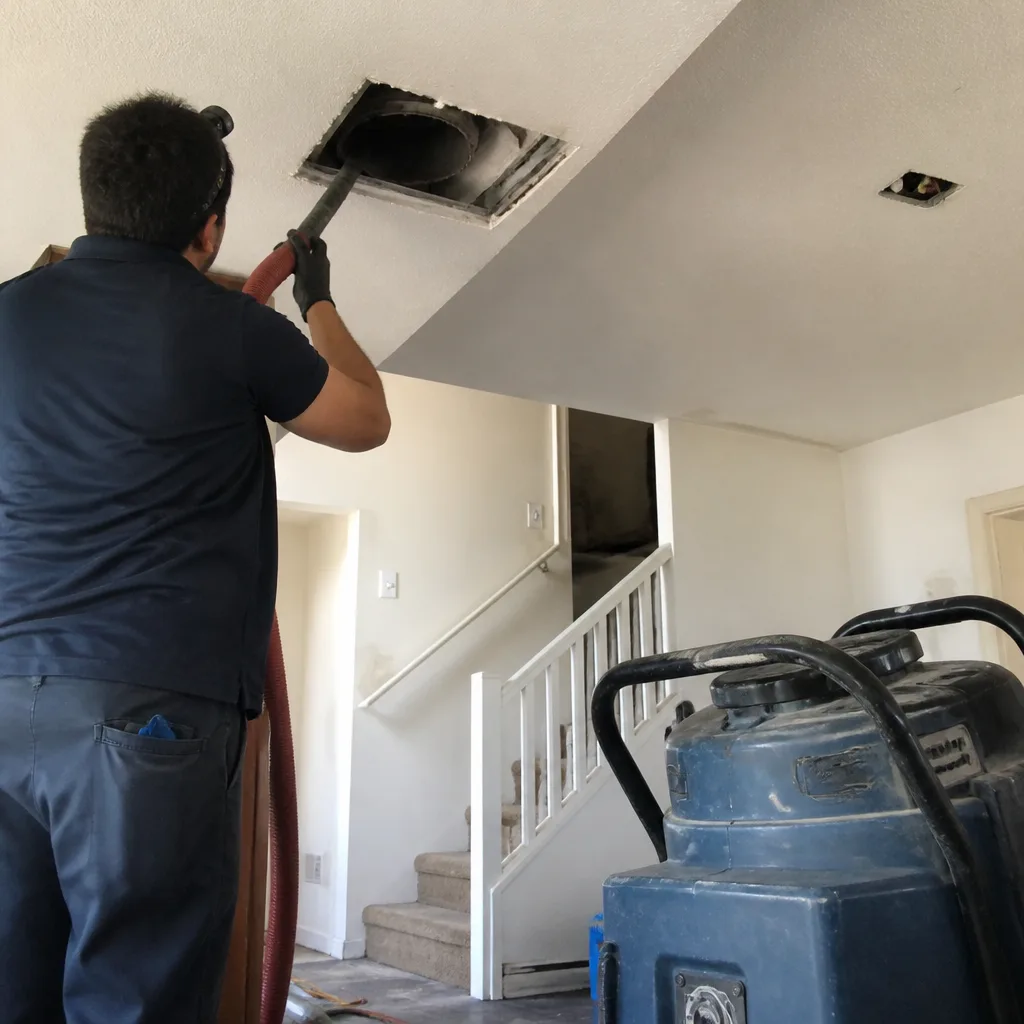
For work that falls on the maintenance side, the process is simpler but the standard is the same. Professional-grade equipment, negative pressure, HEPA capture, and a documented condition report before and after. Our Highpoint Duct Cleaning standard treats every duct job as a system evaluation, whether or not the permit step is involved, because the repair question doesn’t wait for a cleaning to finish. And when a repair is needed, our in-house Air Duct Repair capability means the same crew can do the work within the same service window, rather than passing it to a second contractor who may or may not agree the permit is required.
Common Mistakes to Avoid
- Assuming the community name tells you the jurisdiction. Spring Valley is unincorporated, and addresses inside it fall under different permitting authorities. Verify your parcel before you assume. A contractor who doesn’t check hasn’t done the first step.
- Treating repair work as maintenance to save the permit process. When the duct section is replaced, it’s construction, not maintenance. Deciding to skip the permit to save a filing cycle creates a resale liability that dwarfs the original cost.
- Letting a contractor seal a joint with cloth tape. It’s not an approved method under the mechanical code, and it will be flagged on inspection. Ask what the sealing product is and whether it’s rated for duct use.
- Skipping the repair because the cleaning quote looked cheaper. Cleaning is one half of the job. If the cleaning reveals damage, the repair has to be addressed, and a contractor who can’t do the repair is telling you half the story.
- Not asking the permit question until after the work is done. By then the answer is either “yes, the permit is filed” or a remediation path. Ask first.
- Ignoring the dusty-season exposure. Spring Valley’s wind events push dust into homes with leaking ducts. If your return filter clogs repeatedly, duct integrity is worth checking before assuming the filter is the problem.
- Believing “we never pull permits” is a sign of confidence. It’s a sign of choosing the easy route regardless of scope. Duct repair that skips permitting is duct repair that will follow you to a home inspection.
See the difference
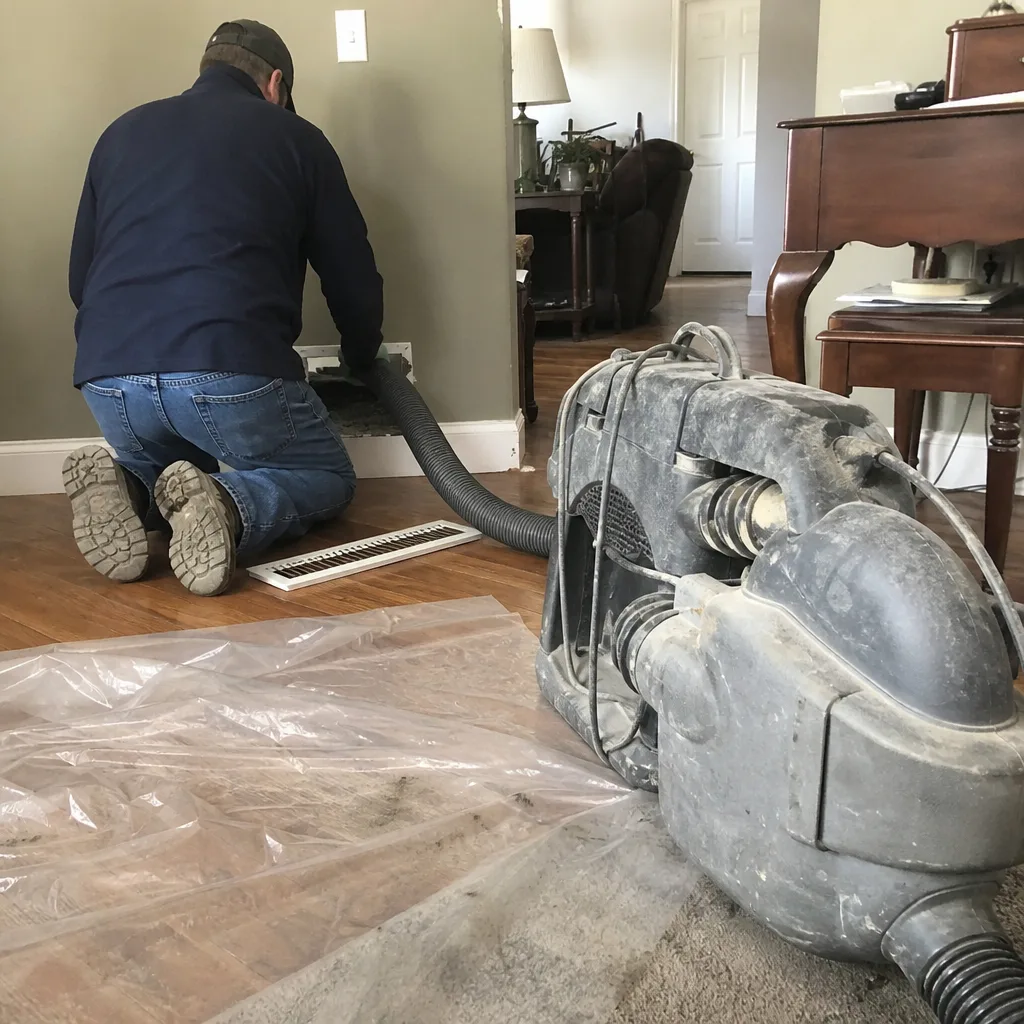 Before
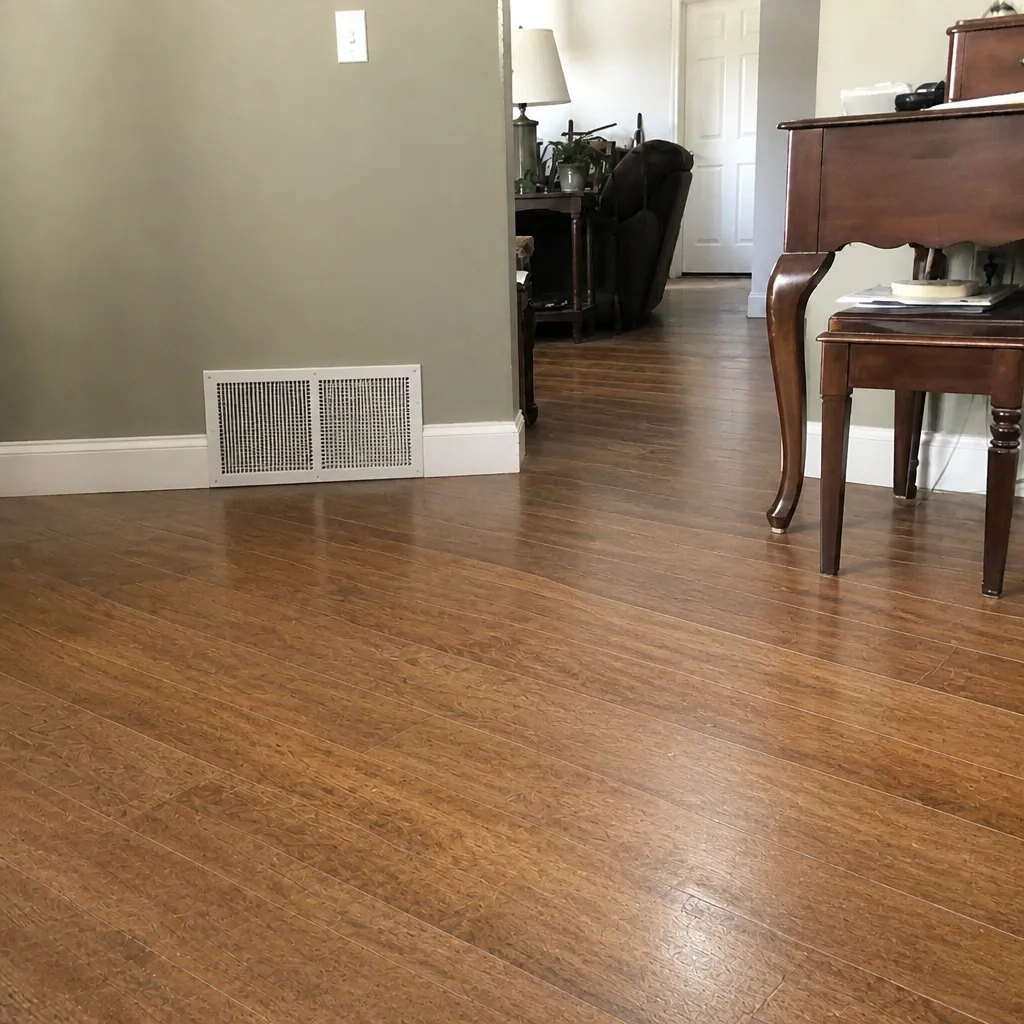 After
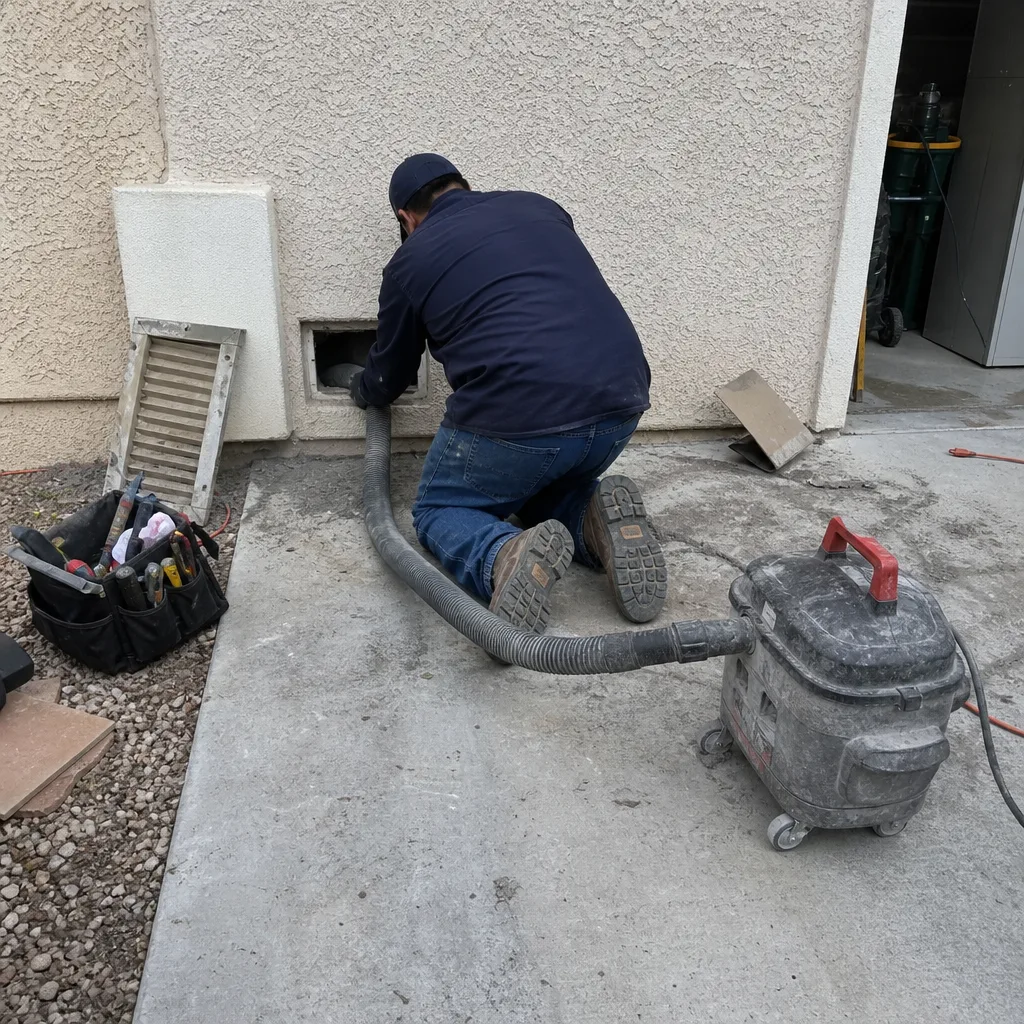 Before
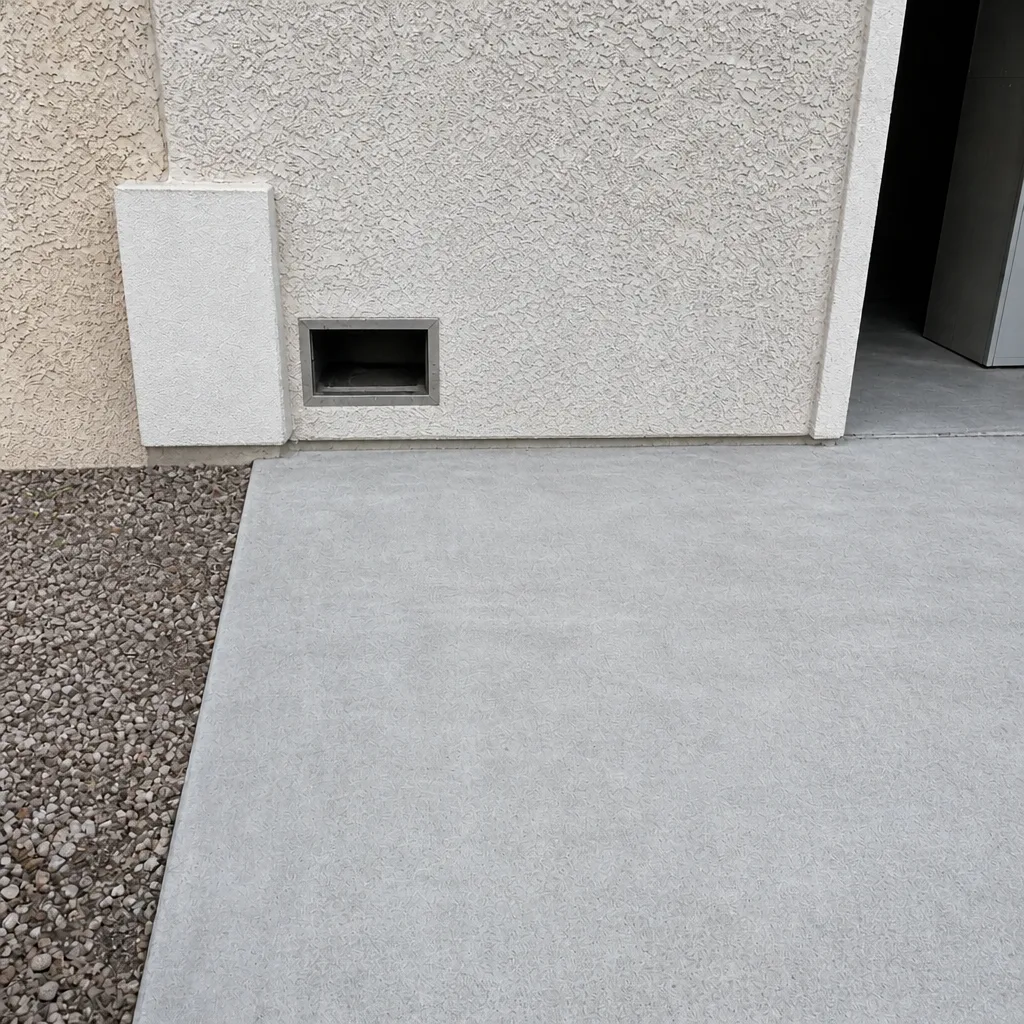 After
 Before
 After
When to Call a Professional
Call a professional if you’re buying or selling a Spring Valley property and want duct work checked for permit records, if a home inspector has flagged duct work as unpermitted or unapproved, if your cleaning appointment reveals damage to a duct run, or if you’re uncertain whether the repair scope being quoted falls under the mechanical permit requirement. Repeated filter clogging, uneven room temperatures, or visible tape failures at duct joints are also worth a professional inspection. Highpoint Duct Cleaning offers free estimates in Spring Valley. Call (866) 724-9559 and we’ll walk through the scope with you. We answer 24/7, with fast dispatch from 7am to 7pm, Sunday through Friday.
Frequently Asked Questions
No. Routine air duct cleaning is treated as maintenance and doesn’t require a permit in Spring Valley. The permit question applies to repair work, not cleaning. If a technician proposes duct replacement, addition, or relocation during your cleaning, that scope may require a mechanical permit depending on your jurisdiction. Call (866) 724-9559 for an exact quote and a scope review – estimates are free.
It depends on your parcel. Spring Valley is unincorporated, and some addresses fall under Clark County while others fall within City of Las Vegas jurisdiction. The parcel record from the county assessor typically identifies the issuing authority, and a call to the building department for your address settles it. Verify before any repair scope is drafted.
Any repair that alters the duct system. Replacing duct sections, adding or removing runs, relocating registers, or reconnecting disconnected ducts generally trigger a mechanical permit. Sealing accessible joints and cleaning interiors are maintenance and typically don’t. If you’re unsure which side of the line your repair falls on, ask the contractor to walk you through the scope, and consider that the answer may require a permit for your specific address.
Yes, often. Home inspectors flag unpermitted duct work, and the finding goes on the report. The seller typically bears the cost of correcting the work and dealing with any remediation the buyer requests. In a compressed closing timeline, mechanical inspection scheduling becomes a separate issue. Getting the permit pulled during the original repair costs far less than managing the finding at resale.
Approved materials typically include mastic sealants rated for duct use, UL 181-rated tapes, and foil-backed tapes with the appropriate listing. Cloth-backed utility tape is not an approved duct sealant, even though it appears on many DIY and cut-rate repairs. If you’re hiring a repair, ask what the sealing product is. If the answer is generic “duct tape”, that’s a red flag. Call (866) 724-9559 to talk through your repair scope – estimates are free.
Ask directly whether the repair scope they’re proposing requires a mechanical permit for your address, and whether they’d pull it. A qualified contractor will confirm the jurisdiction before answering and offer to put the scope answer in writing. A contractor whose answer is “we never pull permits” has chosen to skip the regulatory process regardless of scope, and the consequence of that choice follows you to the inspection report.
The Bottom Line
Duct cleaning in Spring Valley is maintenance. Duct repair is construction. The line between them determines whether a mechanical permit is required, and that determination depends on your address, your jurisdiction, and the specific scope of the repair. The biggest exposure isn’t the permit cost itself, it’s what happens when the permit isn’t pulled and the work surfaces on a home inspection at sale. Verify your jurisdiction before any repair scope is quoted. Ask what sealing material will be used. Disqualify any contractor whose answer to “would you pull a permit” is a flat no. Our technicians have up to 9 years of experience and use professional-grade Rotobrush, Nikro, and Abatement Technologies equipment on every job, whether the permit question applies or not.
If you’re ready to get a clear scope for your Spring Valley home, call (866) 724-9559 for a free estimate. We answer 24/7, with fast dispatch from 7am to 7pm, Sunday through Friday.
Written by the team at Highpoint Duct Cleaning.