
Last updated November 14, 2026
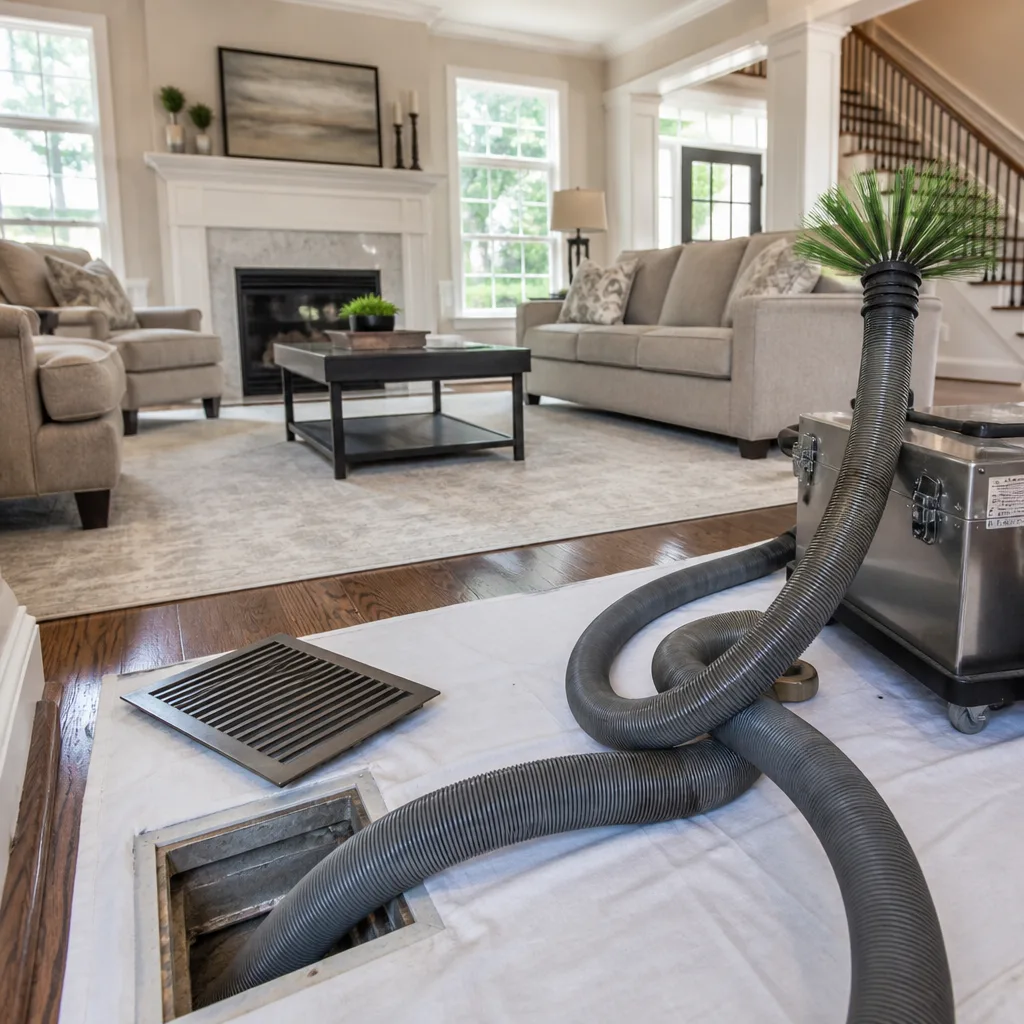 Whole-home duct cleaning
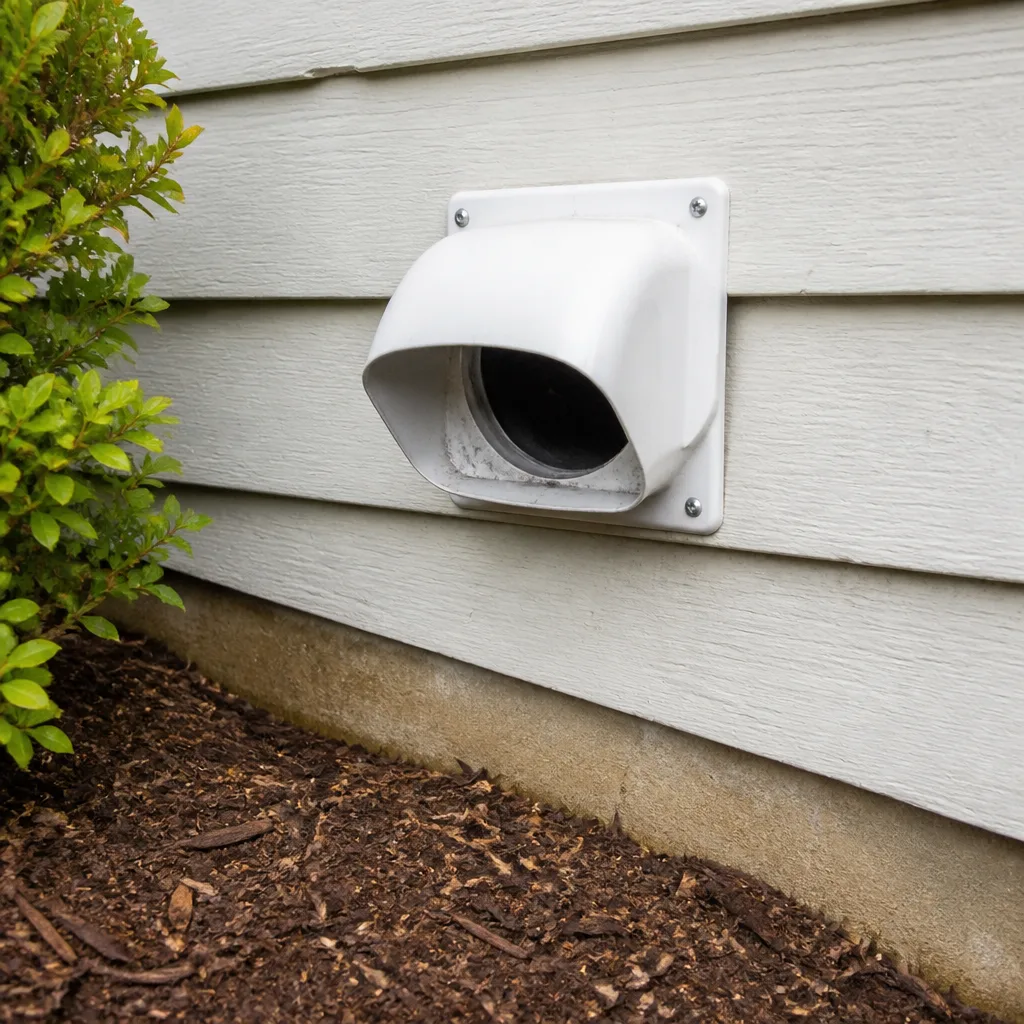 Dryer vent cleaning
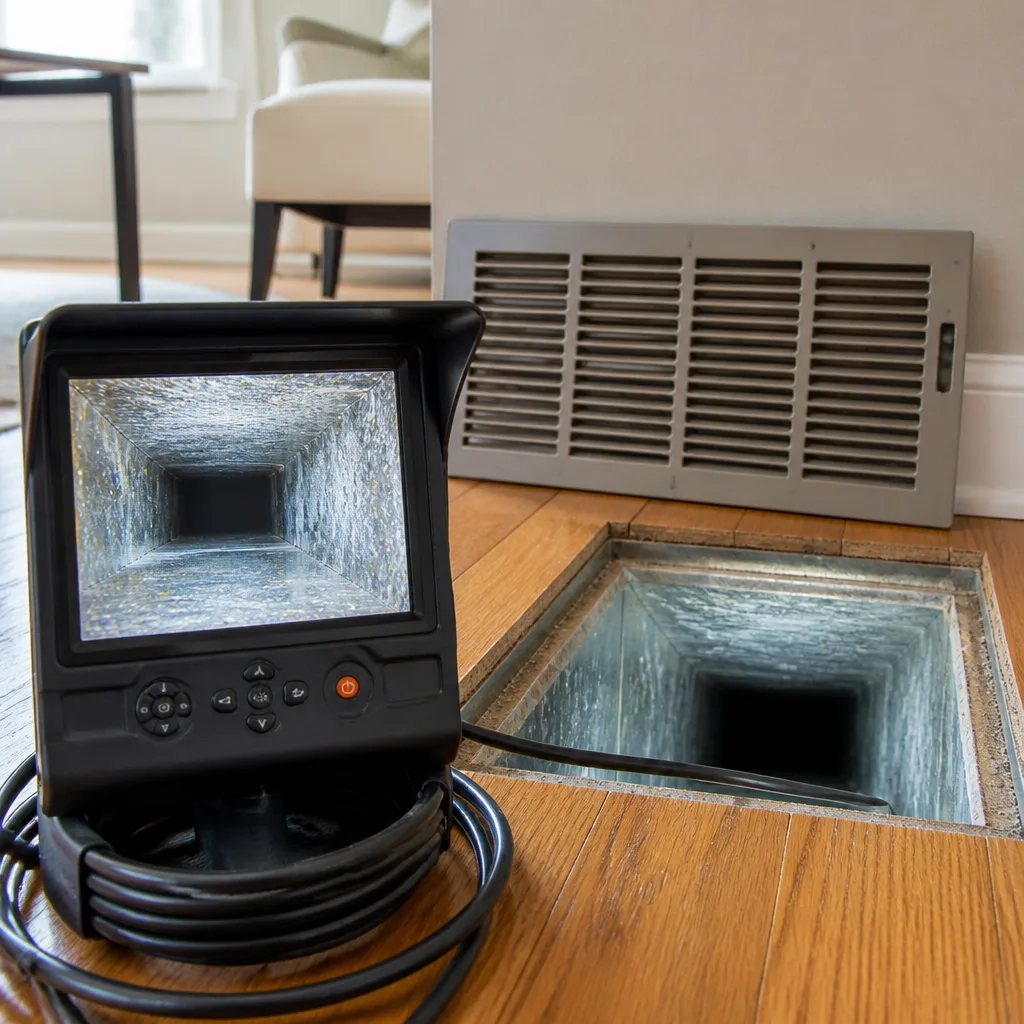 Camera inspection
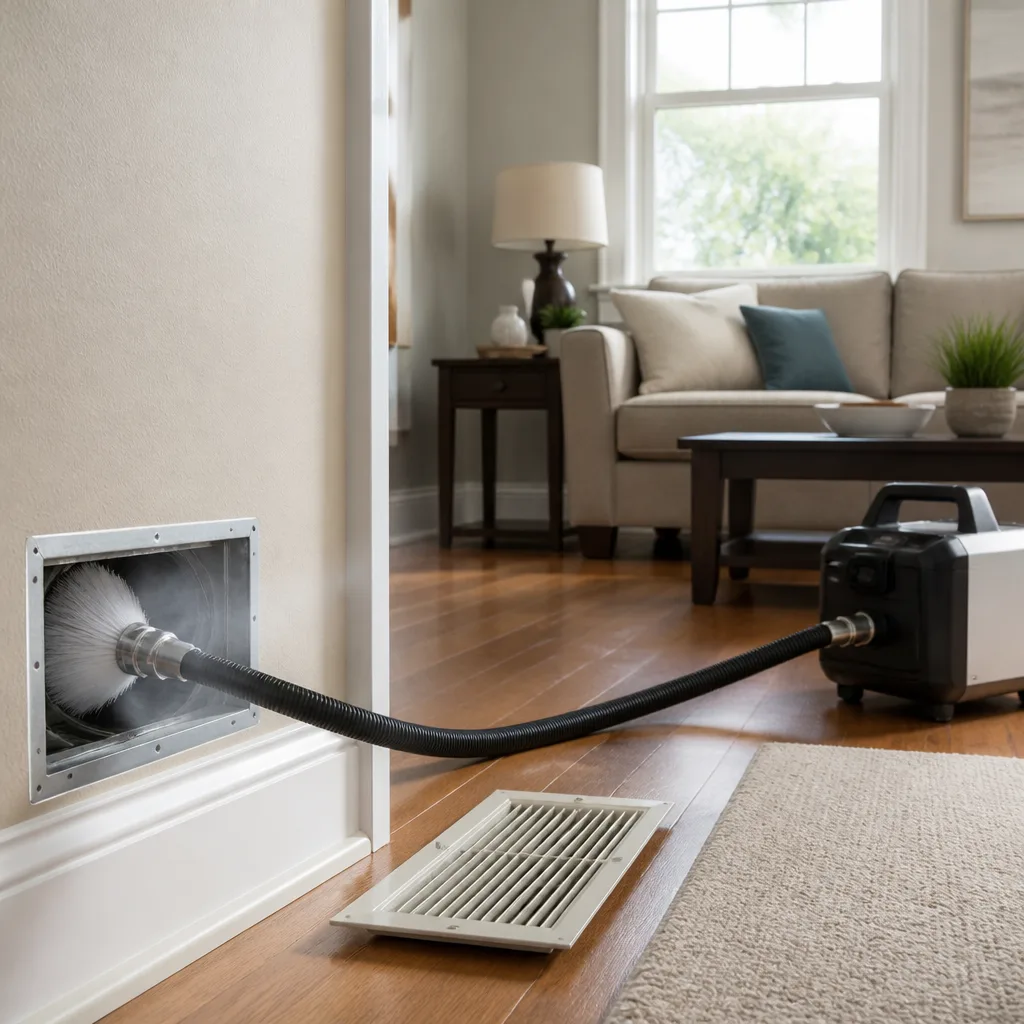 Sanitizing & deodorizing
Whole-system duct and dryer vent check with before-and-after photos - you see exactly what came out of your vents
That "$99 whole-house special" is a bait ad - the real number appears once they are in your hallway, or the "clean" is a shop-vac at the register. We photograph the inside of your ducts before and after instead.
Air Duct Cleaning Emergency Preparedness Guide for Spring Valley Homes
Most Spring Valley homeowners have a plan for a power outage and a case of bottled water in the garage. Almost none of them have a plan for the duct system after the events that actually compromise it. Haboobs roll through the valley and push fine caliche dust into every gap, roof leaks drip quietly onto flex duct in the attic, and rodents find their way into return runs during the cooler months. The contamination event is usually over before anyone notices it started. What you do in the first few hours after determines whether your ducts need a cleaning or a repair. This guide walks you through the protocols for each of those scenarios. It’s specific to Spring Valley, and it’s built to be useful even if you never call us.
Quick Answer
If your home has just been through a dust storm, water intrusion, rodent activity, or smoke event, the right response depends on which one it is: shut the system down and check the filter immediately after a dust storm, keep the system off and call for inspection after any water contacts the ducts, exclude rodents before cleaning anything, and expect liner replacement rather than cleaning after heavy smoke exposure. Getting the sequence right prevents contamination from being spread through the house. In Spring Valley, dust storms are the most common trigger, and the first hour matters most.
Styles & brands we work with
- Whole-home duct cleaning
- Dryer vent cleaning
- Camera inspection
- Sanitizing & deodorizing
Table of Contents
- The Post-Haboob Protocol: What to Do in the First Hour
- Water Intrusion: What Happens to Your Duct Liner After a Leak
- Rodent Intrusion: Active vs. Historical Evidence and the Right Sequence
- Fire and Smoke Events: When Cleaning Is Enough and When It Isn’t
- Building a Pre-Event Baseline Before You Need One
- Why Equipment Determines Whether a Post-Event Cleaning Works
- Seasonal Readiness Calendar for Spring Valley Homes
The Post-Haboob Protocol: What to Do in the First Hour
After a severe haboob, a Spring Valley home’s return-air system can pull fine caliche particulate directly into the duct interior for hours before anyone realizes the filter is saturated. Dust storms here don’t produce gentle, even loading. They deliver pulses of fine, alkaline sediment that coat surfaces and settle into every low point in the duct run. A standard filter catches some of it, but once the filter loads, the remaining particulate travels straight to the blower, the evaporator coil, and the duct interior. The event is over long before the homeowner knows it started.
Here’s the sequence we recommend for the first hour after a significant dust event:
- Turn the system off at the thermostat. Not to fan-only, not to auto. Off. Every minute the fan runs is another minute it pulls dust through a saturated filter.
- Check the filter before you do anything else. If it’s visibly grey, caked, or you can’t see light through it, it’s done. Replace it before restarting the system, never after.
- Inspect the return-air grilles in each room. Look for visible dust trails, dark streaks around the frame, or a fine film on the grille face. If dust is on the outside of the grille, it’s inside the return boot too.
- Listen at each return with the system off. Whistling or a soft rush at one return that’s louder than the others can indicate a partially disconnected flex run. Any noise that sounds like air moving when the system is off is a red flag.
- Check supply registers for uneven airflow after you restart the system. One register blowing noticeably weaker than the others often points to a collapsed or disconnected run, not a dirty filter.
What you’re looking for at the return grilles is the difference between ordinary surface dust and storm intrusion. Ordinary dust wipes off. Storm intrusion leaves a grayish-orange film on the grille face and a line of sediment at the bottom edge of the opening. If you see the second pattern, the return boot and the run behind it almost certainly need professional attention. Keeping the system off until you’ve checked is the single most important step. Restarting on a loaded filter distributes the dust through the whole house before you’ve had a chance to stop it.
Water Intrusion: What Happens to Your Duct Liner After a Leak
Water and ductwork are a bad combination, and in Spring Valley the intrusion almost always comes from above. A summer monsoon cell, a failed attic fan, or a roof valley that backs up during a fast downpour can dump water onto flex duct in a matter of minutes. The damage isn’t obvious from the living space. You may notice a musty smell, a slight increase in humidity, or nothing at all until the problem is well advanced.
Most modern residential duct runs here use flex duct with an internal liner that is either fiberglass or a foil-and-fiberglass composite, wrapped in a plastic jacket. Once water gets inside that jacket, the liner acts like a sponge. It holds moisture against the interior surface, and in a closed attic with warm daytime temperatures, that’s exactly the conditions needed for biological growth. The lining breaks down, the insulation loses its R-value, and the jacket sags and separates.
The timeline matters. In desert humidity, active wet duct liner can begin supporting visible growth within a matter of days, not weeks. The attic stays warm after a storm, and warm, wet, still air is the worst case. This is why the advice after any confirmed water contact is the same: keep the system off until an inspector has looked at the run.
What to do:
- Turn the system off and leave it off. Running the fan pushes humid air into the living space and spreads spores.
- Identify the source and stop it. A roofer or plumber handles the leak, not a duct contractor.
- Look for sagging flex runs, water stains on the jacket, and condensation on the vapor barrier.
- Call for inspection before you turn the system back on. A visual inspection of the duct interior with a camera is the only reliable way to know whether the liner is compromised or just the jacket.
Cleaning alone won’t fix wet liner. If the liner has been saturated, it needs replacement. We offer air duct repair specifically because this is a scenario cleaning-only contractors can’t solve. They can clean a duct, but they can’t replace a saturated section. Getting the right diagnosis before cleaning is what saves the run.
Rodent Intrusion: Active vs. Historical Evidence and the Right Sequence
Rodents don’t need much of an invitation. In Spring Valley, pack rats and field mice commonly find their way into attics through gaps at roof penetrations, soffit vents that have lost their screen, and gaps where the roofline meets the block wall. Once inside, flex duct is a natural target: it’s warm, it’s sheltered, and the jacket is easy to chew. A single entry point can compromise several feet of run.
The single most common mistake we see after a rodent intrusion is cleaning the ducts without excluding the animals first. If you clean with active rodents still in the attic, you’ll have the same problem within weeks. Cleaning alone is never sufficient. The correct sequence is exclusion, then cleaning, then repair of any damaged sections.
Here’s what to look for, and what each pattern means:
- Fresh droppings, rub marks, and grease trails along attic framing and duct hangers indicate active use. Assume the animal is still there.
- Chew marks with bright, sharp edges on the flex jacket are recent. Jacket plastic oxidizes and dulls over time, so fresh bites stand out.
- Old droppings, faded dust, and dried, dull chew edges point to historical activity that is likely no longer active.
- Nesting material pushed into the return boot (shredded insulation, plant fibers, cardboard) is a sign of active use and needs removal before any cleaning.
- A strong, persistent ammonia smell near the air handler or a return grille often means recent urine contamination inside the run.
The right sequence:
- Exclude the animals. A licensed pest professional identifies entry points and seals them. This is not a duct contractor’s job, and it should happen before anything else.
- Remove nesting material and visible debris from the attic face of the duct and the return boots.
- Clean the duct interior with equipment designed to agitate and extract, not a shop vac. We use a professional-grade Rotobrush rotary brush system for exactly this reason, along with a Nikro negative-pressure unit to keep contaminants captured rather than airborne.
- Repair or replace any run that has been chewed through or pinched. A run with a hole in the jacket loses significant conditioned air and pulls attic air into the supply.
- Verify with a camera walk-through. Any contractor who can’t show you the inside of the duct after cleaning hasn’t given you proof.
If you’re not sure whether the activity is active or historical, treat it as active. Re-cleaning is inexpensive compared to the cost of letting a rodent problem run for another season.
Fire and Smoke Events: When Cleaning Is Enough and When It Isn’t
Smoke behaves very differently from dust. It’s a gas-and-particle mixture that moves with air pressure, not gravity. In a house fire or a nearby structure fire, smoke travels into duct systems through return grilles, gaps in the air handler cabinet, and any negative pressure the running system was creating at the time. It deposits on every surface the airstream touched, and it penetrates into liner material rather than sitting on top of it.
What cleaning can remove:
- Surface soot and smoke residue on metal ductwork, including galvanized trunk lines and metal boots.
- Loose particulate that hasn’t bonded to the liner.
- Visible deposits on register faces, grilles, and the interior of the air handler cabinet (when the cabinet is part of the scope).
What cleaning cannot remove:
- Smoke odor that has chemically bonded to fiberglass liner. Once the liner is saturated, cleaning removes surface residue but not the odor source.
- Soot that has penetrated into the porous surface of flexible duct liner or duct board.
- Char or heat damage to duct material, which requires replacement, not cleaning.
- Smoke that has traveled into attic insulation or wall cavities, which is outside duct scope entirely.
The honest answer after a significant smoke event is that some percentage of the duct system in a Spring Valley home will likely need replacement rather than cleaning. The percentage depends on how much of the run is flex duct with liner versus rigid metal, how long the system ran during the event, and how close the fire was to the return path. If a contractor tells you cleaning will solve everything without looking at the liner condition, get a second opinion. Our approach on smoke events is to inspect with the same rigor we’d apply to a post-remediation job, using Abatement Technologies HEPA equipment during the work so captured soot stays captured.
Building a Pre-Event Baseline Before You Need One
The single most valuable thing you can do before an emergency is document the condition of your duct system when it’s healthy. A camera walk-through and a written record of the duct layout, material type, and run lengths give any contractor – and any insurance adjuster – a starting point. Without it, the conversation after an event is a judgment call. With it, the conversation is a comparison.
Here’s what a useful baseline includes:
- A camera inspection of each major trunk and branch run, saved as photos or video with labels for each run.
- Written record of duct material type per section (flex, metal, duct board) and approximate run lengths.
- The date and model of your filter and your air handler.
- Any pre-existing damage or known weak points (a sagging run, a suspect return connection, an attic section above the garage).
- Photos of the exterior roof and soffit areas closest to duct runs, since water intrusion almost always enters from the roofline.
Why this matters after an event: an insurance adjuster needs to distinguish pre-existing wear from storm damage. A documented baseline does that objectively. The same baseline also lets a technician know what “normal” looked like and what specifically changed. We’ve seen claims move faster and diagnoses land more accurately when the homeowner could produce a baseline inspection. If you’re a property manager responsible for several units in Spring Valley, a baseline on each one is worth having on file before fire or flood season.
In our experience, most homeowners wait until they have a problem to think about documentation. The ones who plan ahead are the ones who have the smoothest claim experience when something happens.
Why Equipment Determines Whether a Post-Event Cleaning Works
Equipment is where post-event duct cleaning splits into two entirely different outcomes. A shop vac and a spinning brush can remove loose surface dust. It cannot remove fine caliche particulate from the low points of a duct run, and it cannot capture soot that is being disturbed into the air. Worse, a poorly-set-up attempt at cleaning can redistribute contamination into the living space, which is exactly what you’re trying to avoid.
What a post-event job actually requires:
- A rotary agitation tool designed for duct interiors. Brushes that fit the duct profile without damaging the liner, backed by enough airflow to move the loosened debris toward collection. We run a Rotobrush system because it’s purpose-built for this rather than adapted from another trade.
- A negative-pressure vacuum sized to the system. The vacuum holds the duct under negative pressure so debris moves toward the collection point rather than into the room. Nikro high-powered vacuum units do this reliably.
- HEPA filtration at the collection point. Negative pressure without HEPA capture just relocates the problem. Abatement Technologies HEPA units are the standard for contaminant capture in situations where the dust or soot itself is a concern.
- A camera system for verification. A contractor who doesn’t show you the inside of the duct before and after hasn’t given you proof of the work.
- Repair capability. A disconnected flex run discovered mid-job is common after a dust storm or a rodent event. If the contractor can’t repair it, you’ll be given a list and left to find someone else. We offer Air Duct Repair specifically so the problem is fixed in the same visit.
One more piece: if your home has a whole-home air-quality system, the technician needs to understand how it interacts with the ducts. Honeywell and Aprilaire filtration and humidity components are part of the air-handling picture, and cleaning or repairs need to take them into account. Post-event cleaning done in isolation from the air-quality system is not the same job as cleaning done in context. That’s why our process language is “negative pressure, HEPA capture” and not “we blow the dust out.” One captures, the other relocates.
If you want to know more about what a standard cleaning involves, see our air duct cleaning page. If your event has likely damaged flexible duct, head to the repair page instead. If you’re not sure which one you need, call us and we’ll help you figure it out before scheduling anything.
Seasonal Readiness Calendar for Spring Valley Homes
Spring Valley’s hazard calendar is predictable on a seasonal scale even when individual events aren’t. Monsoon season runs through the summer, dust storms are most common in late spring and early summer, rodent activity picks up when the overnight temperatures drop, and roof leaks tend to surface after the first good hard rain. Planning a check before each of those windows opens is more useful than a scramble after.
A simple annual sequence:
- Late spring, before dust storm season. Replace the HVAC filter, check return grilles for existing dust, and confirm the attic access panel and roof penetrations are sealed. This is the best time to schedule a baseline camera inspection if you don’t have one.
- Early summer, as monsoon season begins. Check the roof and the attic for signs of water intrusion. Look for staining on flex duct jacket, sagging runs, and condensation on the vapor barrier. Address any roof issues before the first big storm.
- Late fall, as overnight temperatures drop. Walk the attic looking for rodent signs: droppings, rub marks, nesting material, chew marks on flex jacket. Seal any entry points you can identify, and call for a pest professional for any you can’t.
- After any confirmed event (dust, water, rodent, smoke). Follow the relevant protocol above and schedule an inspection before restarting the system. Same-day service is often possible; the phone line is answered at whatever hour you discover the problem.
If your home uses a dryer vent that runs through the attic, add that to the same walk-through, since post-storm checks and dryer vent checks happen in the same area of the attic. Our dryer vent cleaning service covers that separately, but the timing overlaps naturally.
Common Mistakes to Avoid
- Running the system after a dust storm before checking the filter. Once the filter is saturated, the fan distributes dust throughout the house. Turn the system off first, then check.
- Turning the system back on after a water intrusion without an inspection. Warm, wet attics are exactly what liner damage needs to grow. The system should stay off until the run has been inspected.
- Cleaning ducts while rodents are still active in the attic. Cleaning without exclusion is a temporary fix at best. Seal first, clean second, repair anything that’s been chewed through.
- Assuming cleaning will remove smoke odor from saturated liner. Once liner is chemically saturated, no amount of agitation gets the odor out. Replacement is the honest answer.
- Hiring the contractor with the cheapest post-event cleaning quote. A shop vac and a brush can make the ducts look better on the outside while distributing contaminant into the living space. Ask what equipment they’re using and whether it includes HEPA capture and negative pressure.
- Skipping the camera verification after the work. If a contractor can’t show you before-and-after footage from inside your own ducts, you have no way to know the work was done. Before-and-after photos aren’t an extra, they’re a standard of proof.
- Cleaning a duct system with damaged runs and not repairing them. A chewed or disconnected flex run will re-contaminate the system within weeks. Cleaning without repair in that situation wastes the cleaning.
See the difference
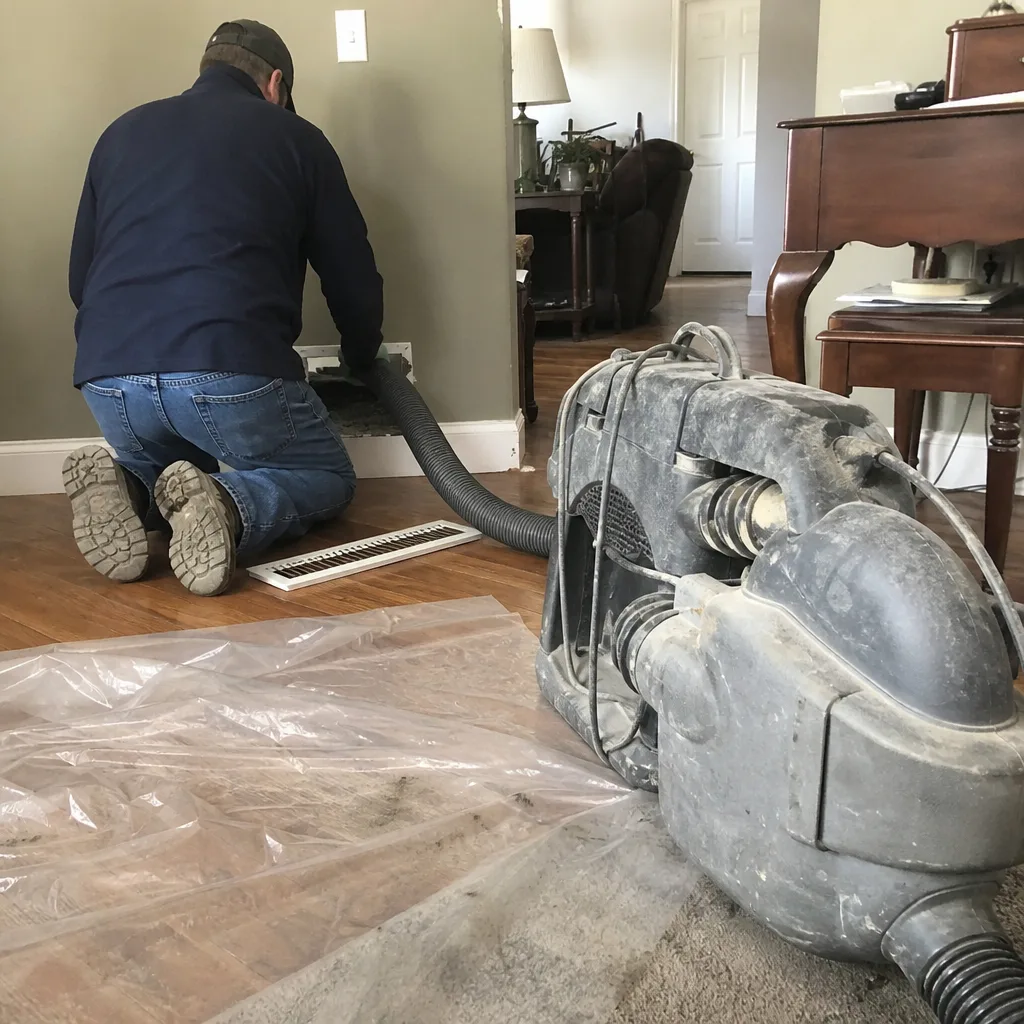 Before
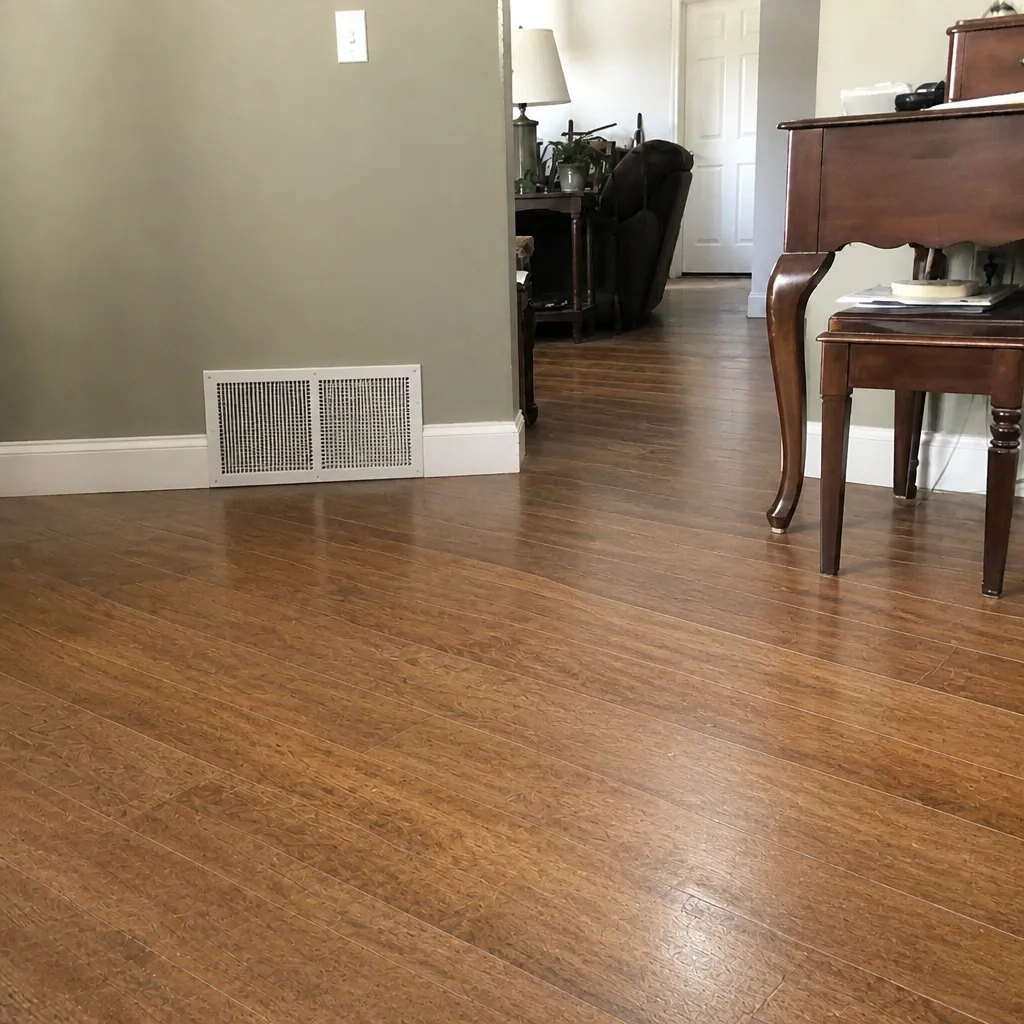 After
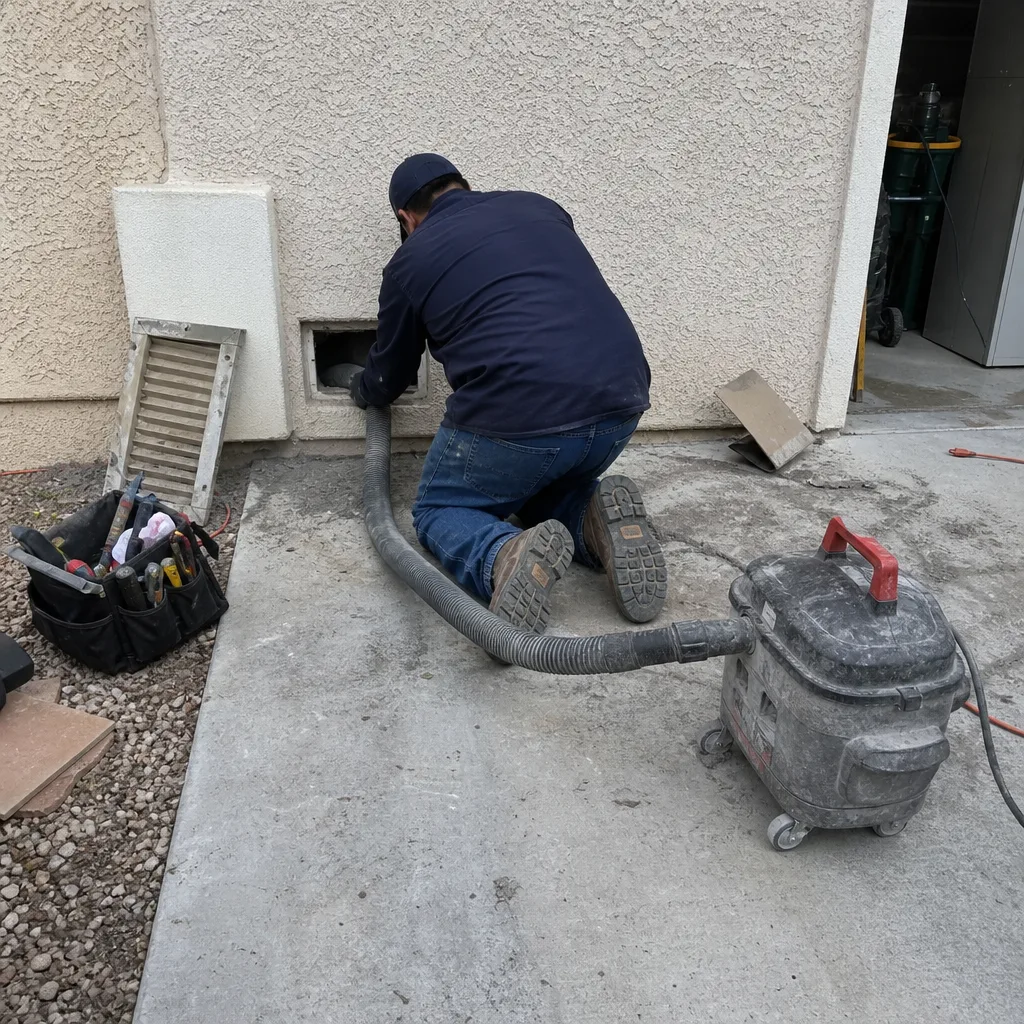 Before
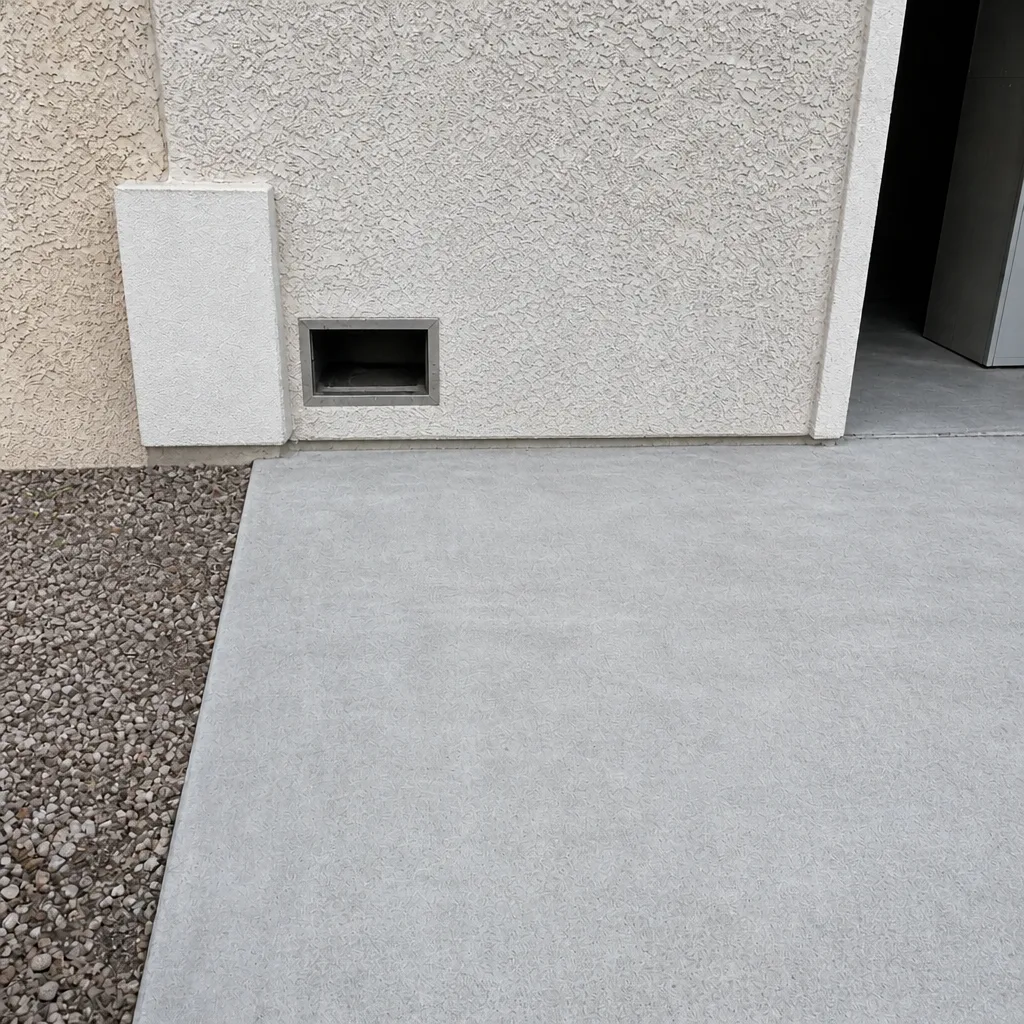 After
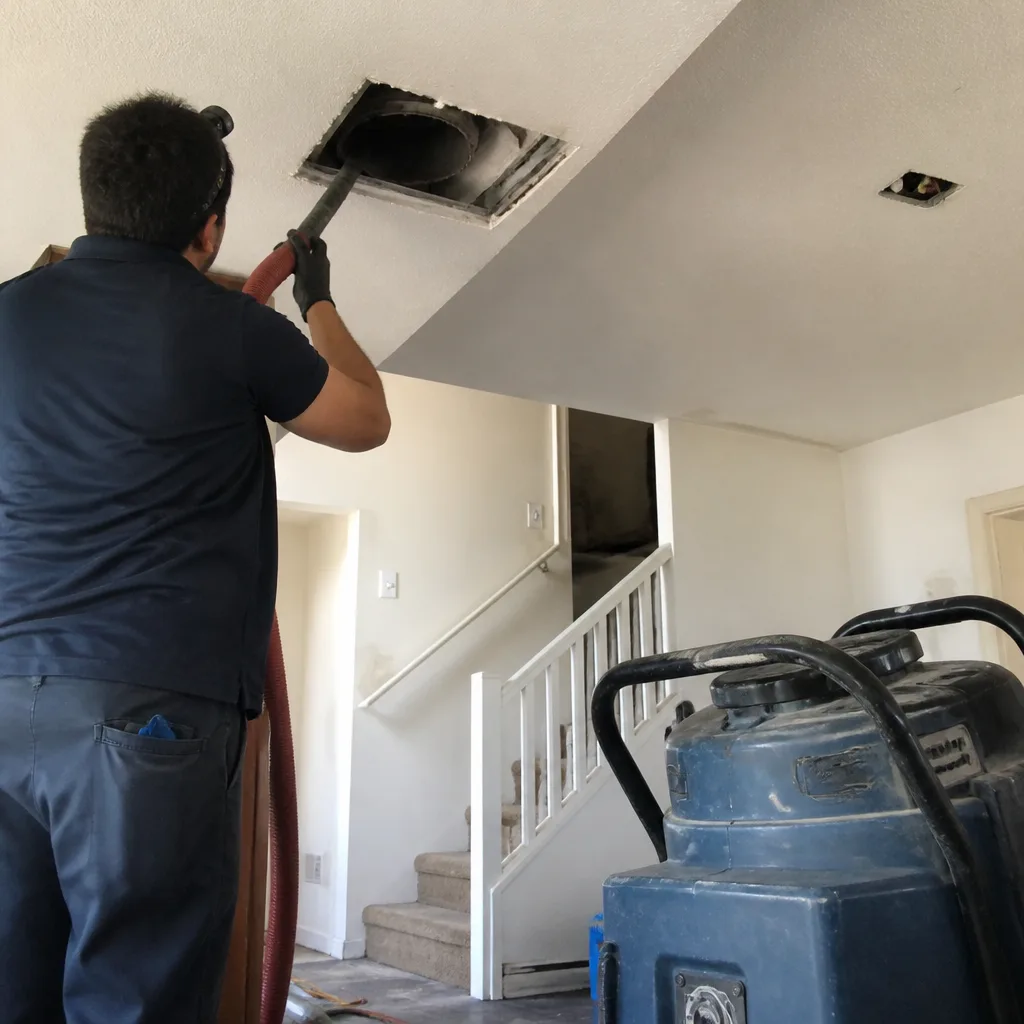 Before
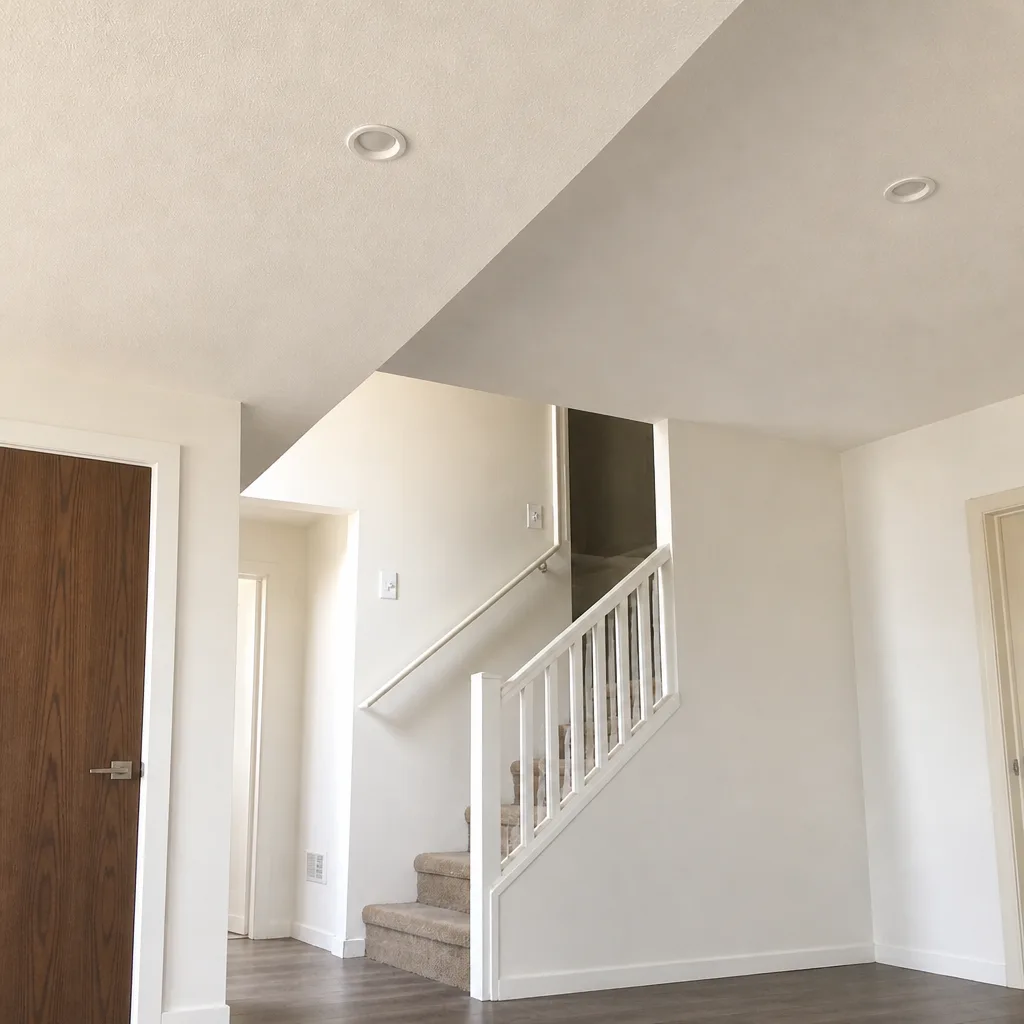 After
When to Call a Professional
Call for professional help if the system has run for more than a few minutes after a major dust event, if any water has visibly contacted duct jacket or liner, if you’ve found fresh rodent evidence in the attic or a return boot, if there has been a fire or significant smoke event, or if you’re seeing a persistent musty or smoky smell from the supply registers that doesn’t clear after a filter change. Those are all situations where a camera inspection and a professional-grade cleaning setup are the next step, not a shop vac. Highpoint Duct Cleaning offers free estimates in Spring Valley – call (866) 724-9559. We answer 24/7. Fast dispatch from 7am to 7pm, Sunday through Friday. We clean it. If we find damage, we fix it, in the same visit.
Frequently Asked Questions
You should check the filter and return grilles within the first hour, and if you see visible dust on the grille faces or the filter is saturating fast, schedule a professional cleaning within the first few days. Fine caliche particulate settles into low points in the run and is harder to remove the longer it sits. Call (866) 724-9559 for an exact quote – estimates are free.
No. Keep the system off until an inspector has confirmed the liner condition. Flex duct liner that has been wet can support biological growth within days in a warm desert attic, and running the fan circulates humid air through the living space. Turn it off, fix the leak source, and call for an inspection before restarting. Call (866) 724-9559 for an exact quote – estimates are free.
No. Duct cleaning alone will not solve a rodent problem, because the animals will re-enter. The correct order is exclusion by a pest professional first, then cleaning, then repair of any chewed or disconnected runs. Cleaning in the absence of exclusion is a temporary fix. Call (866) 724-9559 for an exact quote – estimates are free.
Partly. Cleaning removes loose soot and surface residue from rigid metal ductwork, but smoke odor bonded into fiberglass liner or duct board typically cannot be removed by cleaning. In those cases, replacement of the affected runs is the effective solution. A camera inspection of the liner condition is what determines which path a specific home needs. Call (866) 724-9559 for an exact quote – estimates are free.
A contractor handling post-event work should use a rotary agitation tool (a Rotobrush system is the benchmark), a high-powered negative-pressure vacuum (Nikro units are typical), and HEPA filtration at the collection point (Abatement Technologies is the standard). They should also offer camera verification before and after. If a contractor shows up with a shop vac and a spinning brush, that’s not the same job. Call (866) 724-9559 for an exact quote – estimates are free.
Yes, it’s one of the most useful things you can have on file. A baseline camera inspection and a written record of duct layout and material make insurance claims and post-event diagnosis faster, because the comparison is against documentation rather than memory. For Spring Valley property managers, a baseline on each unit is worth the modest investment. Call (866) 724-9559 for an exact quote – estimates are free.
The Bottom Line
Emergency preparedness for your duct system in Spring Valley comes down to three habits: know your duct layout before something happens, shut the system down the moment you suspect contamination, and get a professional inspection before restarting after any dust, water, rodent, or smoke event. Professional equipment matters here (negative pressure, HEPA capture, rotary agitation), and so does repair capability, because a damaged run discovered mid-cleaning needs to be fixed, not deferred. We specialize in Highpoint Duct Cleaning for exactly those reasons, and we serve homes across Spring Valley. If you’re not sure where you stand, call us. We’ll tell you honestly what kind of job you’re looking at.
Call (866) 724-9559 for a free estimate. We answer 24/7. Fast dispatch from 7am to 7pm, Sunday through Friday. One flat price per system, agreed before work starts, and before-and-after photos of your own ducts when we’re done. Our technicians have up to 9 years of experience, and every job is documented so you can see exactly what was cleaned and what was repaired.
Written by the team at Highpoint Duct Cleaning.