
Last updated November 14, 2026
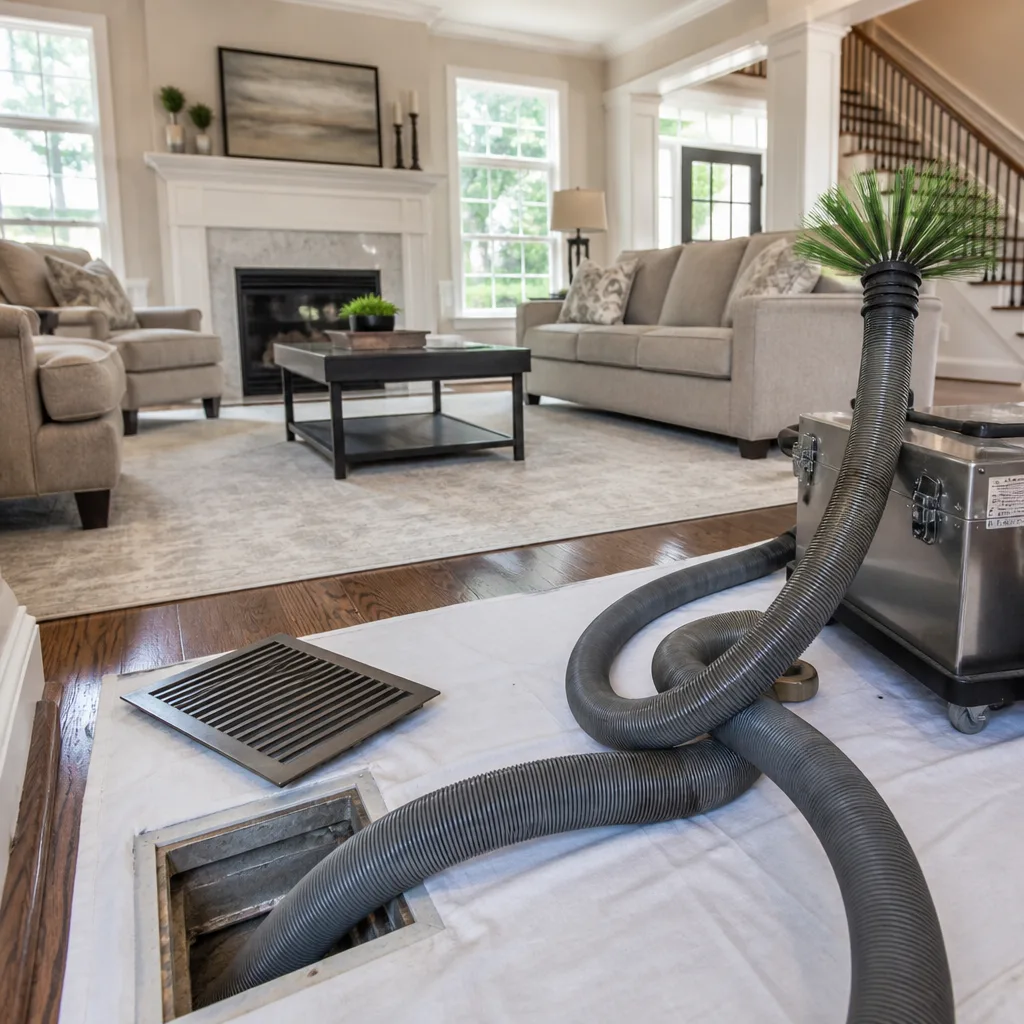 Whole-home duct cleaning
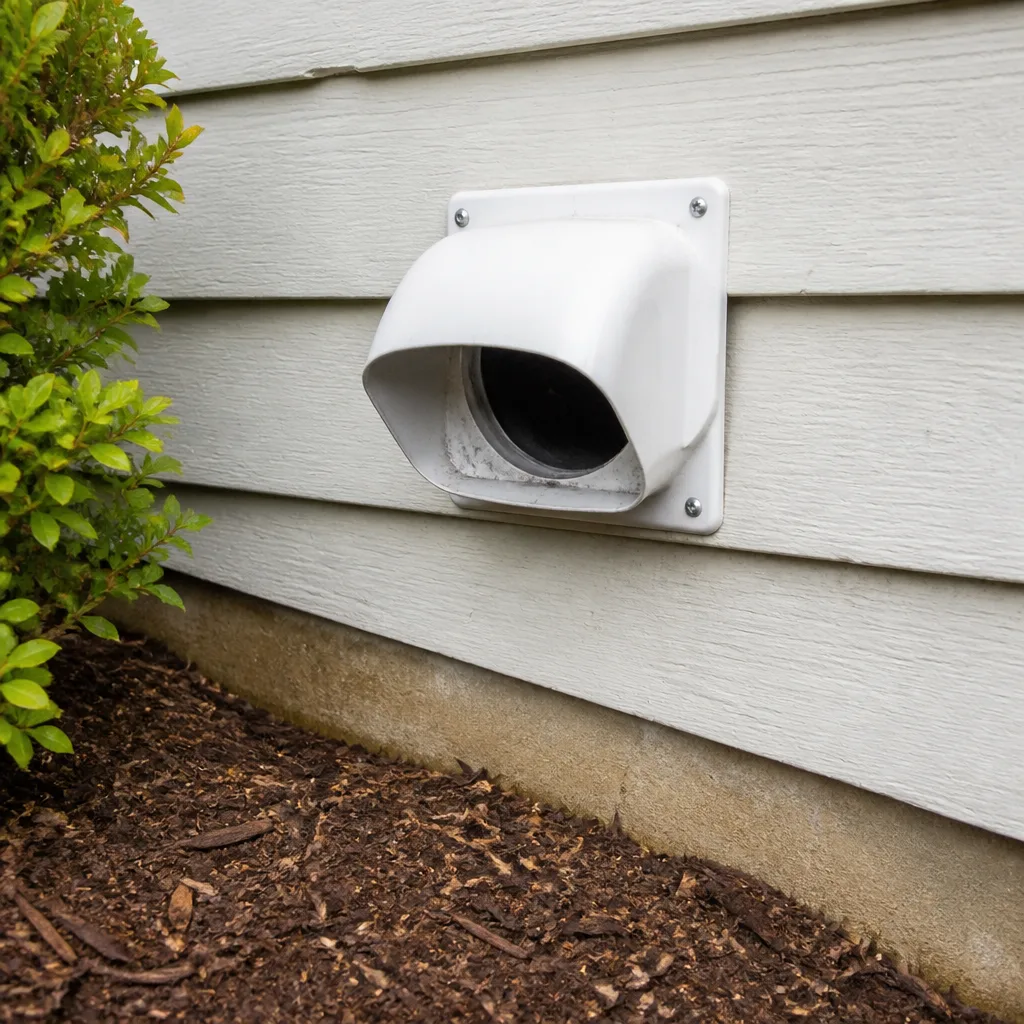 Dryer vent cleaning
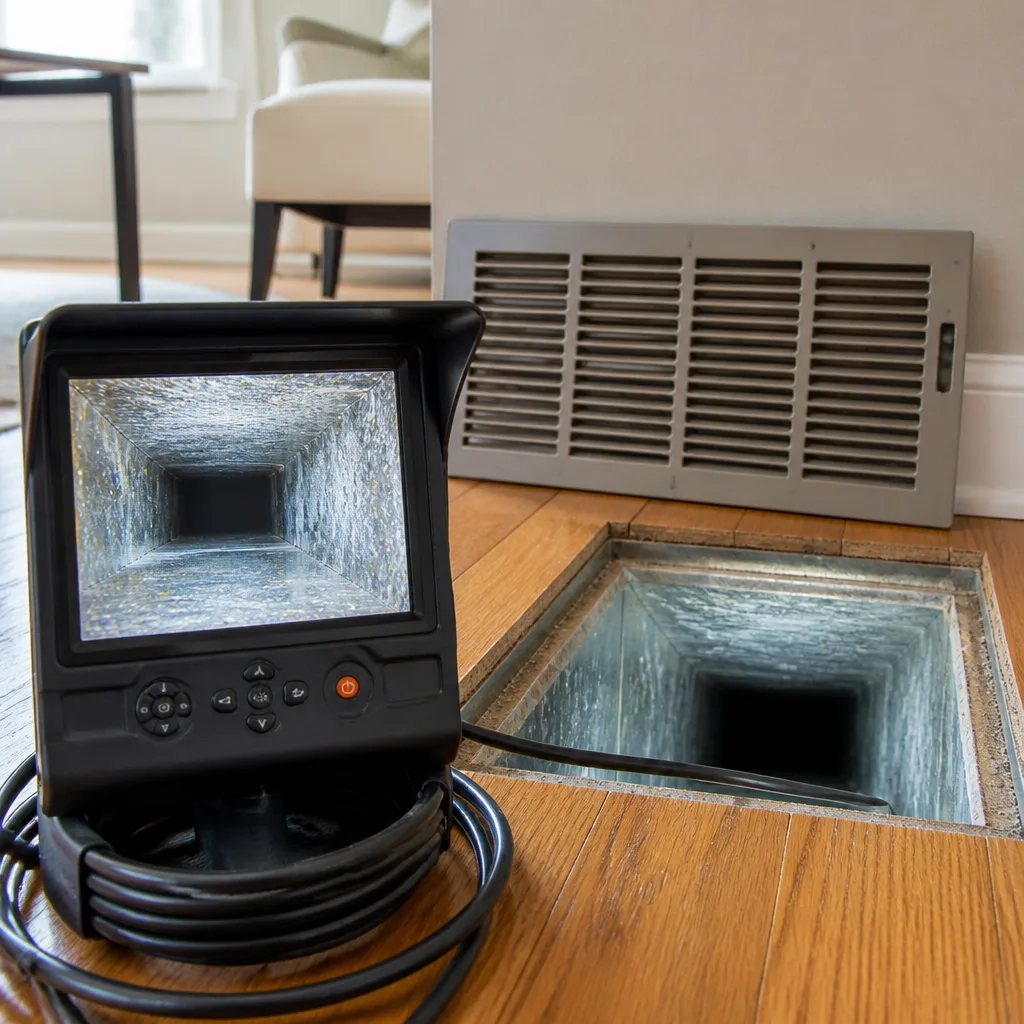 Camera inspection
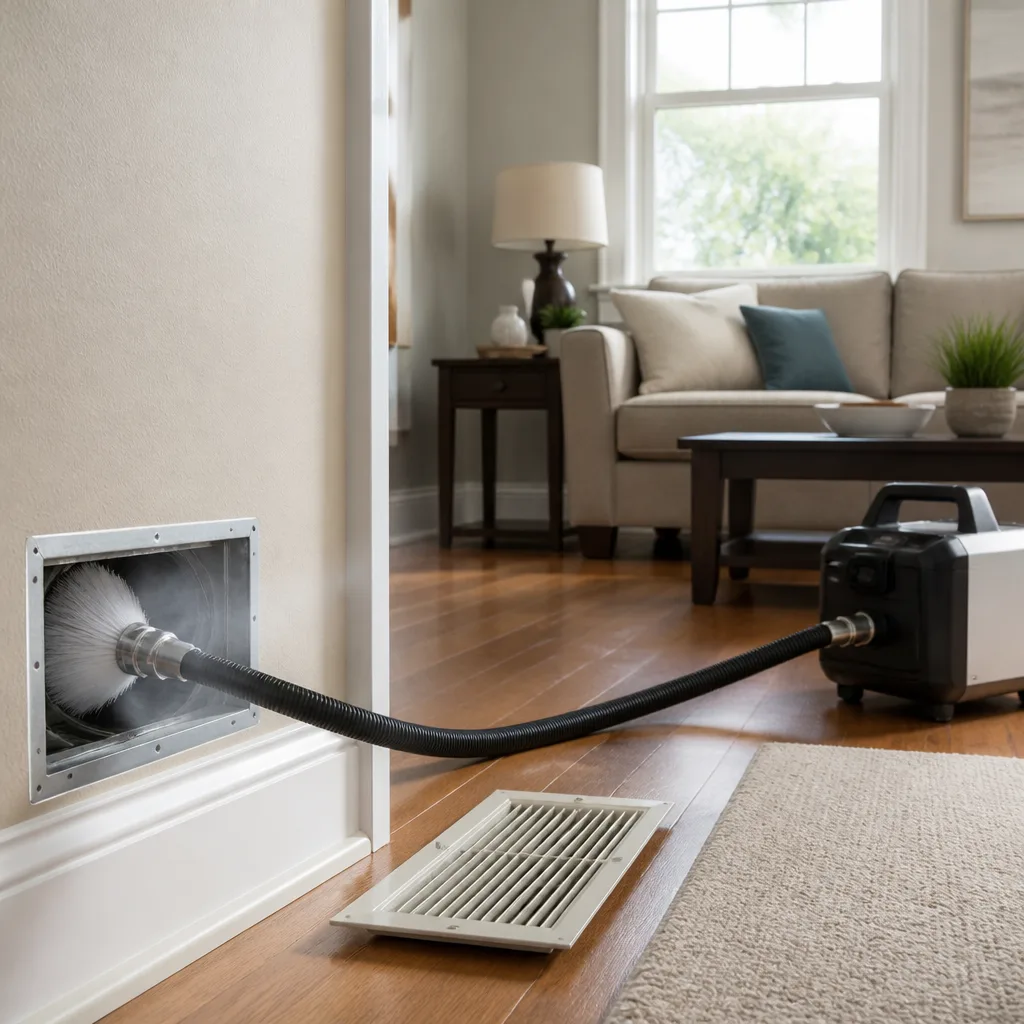 Sanitizing & deodorizing
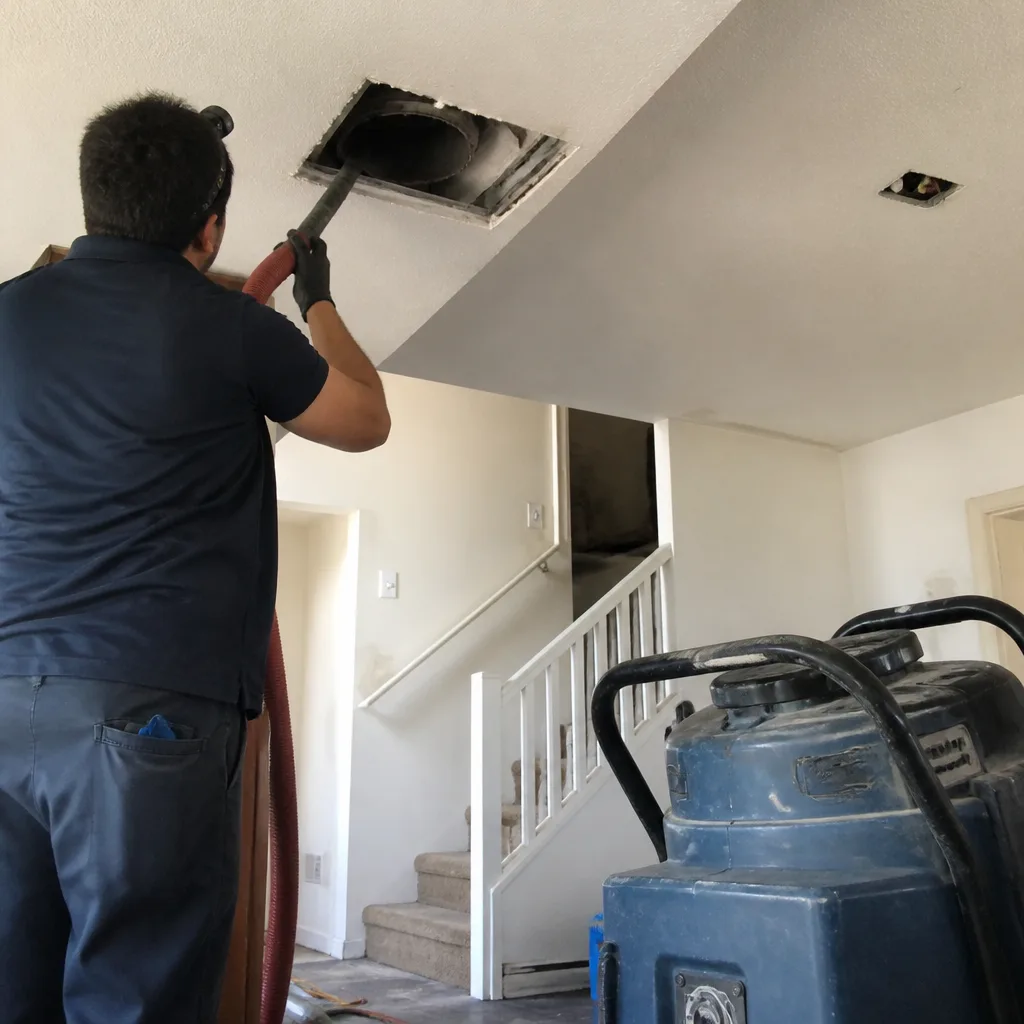
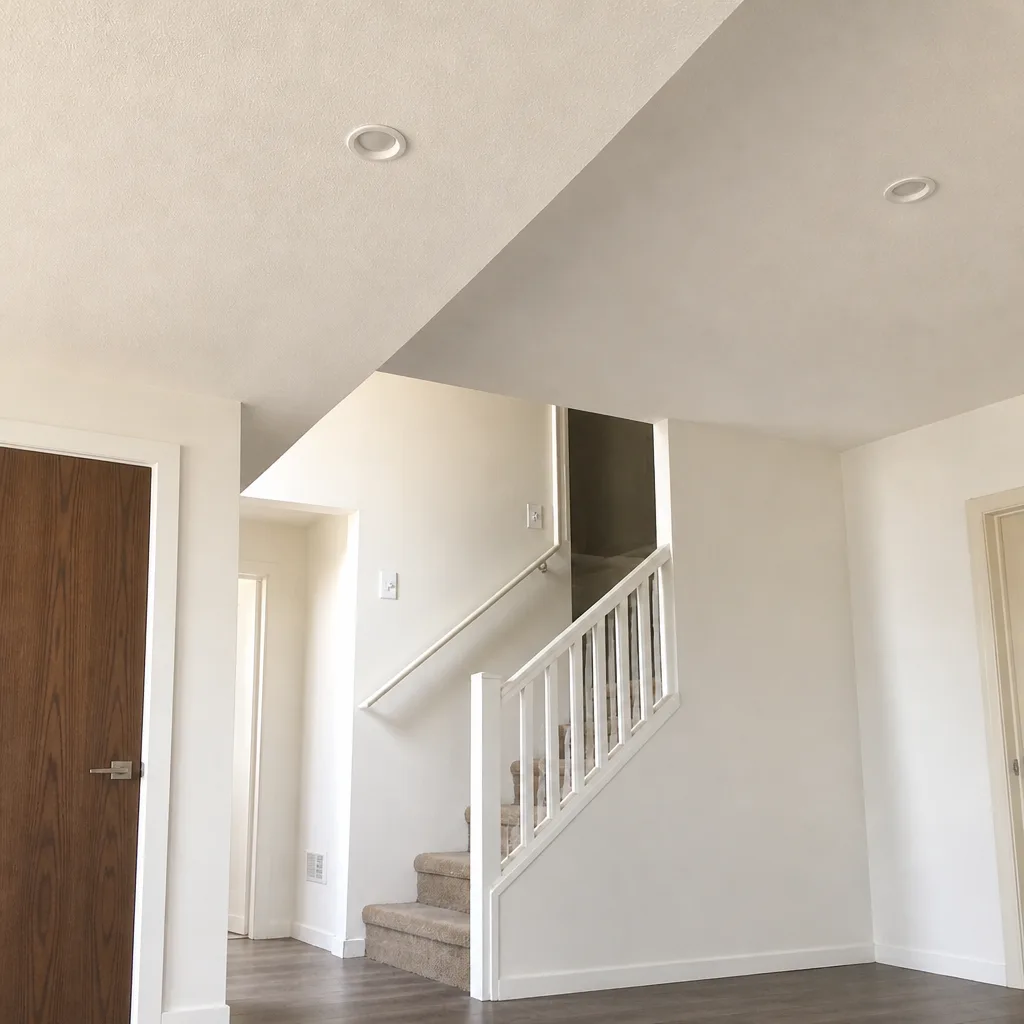
Whole-system duct and dryer vent check with before-and-after photos - you see exactly what came out of your vents
That "$99 whole-house special" is a bait ad - the real number appears once they are in your hallway, or the "clean" is a shop-vac at the register. We photograph the inside of your ducts before and after instead.
Air Duct Cleaning Troubleshooting in Spring Valley: Common Problems and How to Fix Them
If you’ve had your ducts cleaned twice in three years and still have dusty vents or uneven airflow, the duct itself, not the debris, is the problem. That’s the part most homeowners miss. Cleaning removes what’s inside the ductwork; it does nothing for a duct that’s torn, disconnected, undersized, or crushed behind a wall. In Spring Valley, where forced-air systems run hard through a dry desert climate, we see plenty of homes where the ducts have been cleaned more than once and the complaint never went away. This guide teaches you to read your system’s signals before you spend another dollar. You’ll learn to tell a contamination problem from a structural one, decode what different odors mean, and decide whether you need cleaning, repair, or a camera inspection first.
Quick Answer
Most air duct problems that won’t resolve after cleaning are structural: a disconnected flex run, a crushed section, a leaking joint, or undersized ductwork starving a room of airflow. You tell the two apart by checking airflow strength at the registers, looking for dust streaks or sagging duct, and watching whether dust returns fast after a professional cleaning. If airflow is weak, uneven, or dust comes back within weeks, you likely need duct repair or a camera inspection before you clean again.
Styles & brands we work with
- Whole-home duct cleaning
- Dryer vent cleaning
- Camera inspection
- Sanitizing & deodorizing
Table of Contents
- Is It a Contamination Problem or a Structural One?
- How to Test Airflow at Your Registers
- What Do the Odors Actually Mean?
- Why Some Rooms in Spring Valley Never Get Comfortable
- The Shop-Vac Failure Mode
- Clean, Repair, or Camera First? A Decision Tree
- What Professional Duct Cleaning Equipment Actually Does
- Desert-Climate Duct Problems Unique to Spring Valley
Is It a Contamination Problem or a Structural One?
Dust and debris are contaminants. Torn, disconnected, or crushed ducts are structural faults. The two produce different symptoms, and mixing them up is the single most common reason a homeowner pays for a second cleaning that changes nothing.
A contamination problem is fundamentally about what’s inside the duct. The system moves air; debris accumulates on the interior walls; the air quality in the home degrades. Cleaning with proper equipment fixes this. A structural problem is about the duct failing as a conduit. A section has come apart at a joint. Flex duct has collapsed. A hard-pipe run was sized wrong from the start. Cleaning does nothing here because the problem isn’t the walls, it’s the path.
Here’s how to tell them apart without any tools:
- Dust returns fast. If your registers and shelves are dusty again within two to four weeks of a professional cleaning, contamination wasn’t the whole story. A leak is pulling unfiltered air in from the attic, garage, or crawlspace.
- One register is weak, one is strong. Same-system registers in different rooms producing noticeably different airflow points to a collapsed, disconnected, or kinked run.
- Dust streaks around a register. Visible dark streaks at the edges of a supply boot suggest air escaping at the joint or a leak downstream.
- No improvement at all after a cleaning. If the cleaning happened and the room feels exactly the same, contamination wasn’t the primary issue.
- Sagging flex duct visible in the attic. Collapsed duct in the unconditioned attic space will cool poorly in the winter and lose airflow in summer.
If two or more of those markers show up, cleaning is the wrong first move. A structural inspection comes first. That’s what we mean by reading the system before calling anyone: you can do the check yourself, and it will save you from paying for the wrong job twice.
How to Test Airflow at Your Registers
You can gauge airflow strength with your hand and a little patience. You’re looking for differences between registers, not a specific number. This isn’t a calibrated measurement; it’s a comparative read of whether the system is delivering air evenly across the home.
- Turn the system on and let it run for at least ten minutes. A system that just kicked on is still pressurizing the plenum. Give it time to reach steady-state.
- Go to each supply register and hold your open hand about three inches from the face. Feel the force and the volume. You want to notice whether one feels distinctly weaker than the others.
- Do the same at each return register. The return should feel like it’s pulling air in. A weak return limits the whole system’s ability to circulate.
- Note which registers are weak. Are the weak ones all on the same branch (e.g., all the bedrooms on the second floor, all the runs off one trunk)? That points to a duct problem, not a debris problem.
- Open and close the damper (if accessible). Some registers have adjustable dampers in the boot. Confirm the weak register isn’t simply closed down. This is a common and easily-solved call.
- Check the filter. A clogged filter downstream of the return will starve the whole system. Replace it and repeat the test.
What you learn from this sequence is the difference between “the whole house feels underpowered” (likely a blower or filter or main-trunk issue) and “the back bedroom never gets air” (likely a branch-specific duct fault). In Spring Valley, where homes are tightly built and the attic gets very hot, a disconnected flex run in the attic often presents exactly as a single cold or hot room that no amount of cleaning can fix.
What Do the Odors Actually Mean?
An odor is a signal, and not every odor means the same thing. In a Nevada desert HVAC context, we separate them into three categories because each points to a different underlying problem.
Musty, damp, or earthy odor
Musty smells point toward moisture. That’s counterintuitive in a dry climate, but it happens for specific local reasons: a disconnected return pulling humid air from an unconditioned crawlspace, condensate from the cooling coil not draining properly, or a section of duct sitting on damp ground. In Spring Valley, where the outside air is dry but the system may pull from a humid enclosed space, musty ducts are almost always a moisture-intrusion or disconnection issue rather than simple debris. Cleaning the duct doesn’t fix the moisture source.
Burnt or electrical odor
A burnt smell is an equipment signal, not a duct signal. It points to overheating at the blower motor, a failing capacitor, or a component inside the air handler. Stop running the system and have an HVAC technician diagnose the equipment. A duct cleaning should never be sold as the fix for a burnt smell; if a company offers to solve it with cleaning, take your business elsewhere.
Chemical or solvent odor
Chemical odors point toward insulation breakdown, off-gassing from new duct material, or a pest-intrusion issue where something has gotten into the duct and its residue is airborne. In older homes, degraded duct wrap can release a faint chemical smell as the material ages. None of these are solved by vacuuming alone; they require identifying the source and repairing or replacing the affected section.
The mistake homeowners make is treating all three as “dirty ducts.” Cleaning a duct that has a moisture source or a burnt motor just returns the same smell within a week. Before you book a cleaning, identify which category the odor falls into. If it’s burnt, call an HVAC company. If it’s musty or chemical, an inspection will likely find a structural source, and that’s when air duct cleaning combined with repair becomes the right solution.
Why Some Rooms in Spring Valley Never Get Comfortable
The bedroom that’s always five degrees warmer than the hallway. The kitchen that never cools. The upstairs that bakes all summer. These are the most common complaints we hear from Spring Valley homeowners, and in most cases the cause is duct sizing or a disconnected run, not dirty ductwork.
Airflow is a physics problem. Every run has a diameter, length, and number of bends. If a branch was undersized during installation, it can never deliver enough air no matter how clean it is. That’s a design problem, and the honest fix is re-sizing or adding a run, not cleaning. If a flex duct has come loose at a collar joint inside the attic, which happens faster in hot, dry attics where the tape dries and fails, the air is being dumped into the attic instead of the room. Cleaning that duct won’t fix the room because the air never reaches it.
Three things to check before you assume it’s dirt:
- The weak room’s register is physically smaller. Undersized boot or register chokes the run. Confirm the register matches the duct behind it.
- Multiple rooms on one trunk are all weak. Look for a crushed or kinked section of that trunk in the attic or crawlspace.
- Airflow changes seasonally. A room that’s fine in spring but unbearable in July points to duct heat gain in a hot attic, which is a duct location and insulation problem, not a dirt problem.
In our experience, the majority of “uncomfortable room” calls in Spring Valley resolve to a repair, not a cleaning. That’s exactly why Highpoint offers Air Duct Repair as a named service: we can clean the system and fix the disconnected or damaged section in the same visit, so you’re not calling a second contractor to come back for the actual problem.
The Shop-Vac Failure Mode
A shop vac cannot properly clean ductwork. The suction is too low to extract adhered debris, the filtration is too coarse to capture fine particulate matter, and the tool cannot reach more than a few feet down a run. What it can do is stir things up, which produces a specific and predictable failure pattern.
Here’s what actually happens with low-suction equipment:
- Debris is redistributed, not removed. The light contact loosens dust off the duct walls. Some gets sucked out; much of it goes airborne inside the system. When the air handler kicks on, it gets pushed into the living space.
- Contaminants cross rooms. Without proper negative pressure and HEPA capture, debris from one side of the home can settle on the other. Homeowners sometimes report the problem is worse after a cheap cleaning, which is exactly what’s happening.
- The root symptom stays. The room was uncomfortable before, and it’s still uncomfortable after. The leak or disconnect was never touched.
Professional equipment is not marketing. It’s the difference between extracting and redistributing. Highpoint uses Rotobrush rotary brush systems to agitate and extract debris from lined and metal ductwork, Nikro high-powered vacuum units to maintain negative pressure across the system, and Abatement Technologies HEPA filtration on-site so contaminants are captured, not just displaced into the living space. If a company arrives with a shop vac and a coupon price, the results will reflect the tools. Professional-grade equipment, not improvised tools is not a slogan, it’s the dividing line between two genuinely different services.
Clean, Repair, or Camera First? A Decision Tree
Three outcomes are possible when you call: cleaning is right, repair is right, or the situation is unclear enough that a camera inspection comes before either. Here’s how the decision tree works in practice, whether you run it yourself or ask us to.
- Is the system delivering roughly even airflow across all registers? If yes, and there’s visible dust buildup or a known reason for contamination (remodeling, pest activity, recent purchase of a previously-occupied home), cleaning is the right starting point.
- Is one or more rooms starved of air? If yes, the first step is a visual inspection in the accessible attic or crawlspace for collapsed, disconnected, or crushed flex runs. Repair comes before cleaning.
- Does dust return within two to four weeks of a cleaning? If yes, you have a leak. A camera inspection will identify where.
- Is there a persistent odor that isn’t resolved by cleaning? If yes, the source is moisture, motor heat, or insulation breakdown. Camera inspection and targeted diagnosis come first.
- Are there long runs, tight turns, or ductwork buried in walls or ceilings? If yes, a camera inspection is worth doing because it’s the only way to see what’s actually happening in the sections no one can reach by hand.
- Is the system reasonably clean, delivering even air, and quiet? Nothing is broken. Cleaning is a periodic maintenance decision, not an urgent fix.
The honest answer in most Spring Valley homes where the complaint is airflow or recurring dust is that repair or inspection comes before cleaning. That’s the order we recommend because it saves money and because a cleaning performed over a broken duct wastes both the cleaning and the duct cleaning budget.
What Professional Duct Cleaning Equipment Actually Does
The equipment stack is the closest proxy a homeowner has for whether a duct cleaning will actually work. A few key pieces separate a real service from a cosmetic one.
- Rotary brush agitation. The Rotobrush system runs a rotating brush through the duct interior, scrubbing adhered debris off the walls. Adhered dust doesn’t lift with suction alone; it has to be broken loose first. This is the standard for lined and metal ductwork.
- High-powered vacuum extraction under negative pressure. Nikro equipment keeps the whole system under negative pressure during the work, so loosened debris travels toward the vacuum instead of into the room.
- HEPA capture. Abatement Technologies HEPA units trap fine particulate at the filtration stage. This matters because the smallest particles are the ones that stay airborne longest and the ones a shop vac can’t hold.
- Air-handling system context. Our technicians work with Honeywell and Aprilaire systems, so they read filtration, humidity, and airflow as connected parts of the same system, not as isolated components. Duct cleaning done without that context tends to miss the reasons the ducts got dirty in the first place.
- Post-cleaning protection. Guardsman protective treatments are available as an added layer after cleaning. Ask about them if you want to know what comes after the extraction step.
None of these are extras. They’re the reason a professional cleaning produces a different result than a low-bid service: the equipment determines whether the job is extraction or redistribution. If you want to know more about Highpoint Duct Cleaning and what we bring to a house, that’s the quickest place to start.
Desert-Climate Duct Problems Unique to Spring Valley
Spring Valley homes run systems through conditions that stress ductwork in specific ways. Dry heat plus a hot attic is a hard combination, and it produces failure modes you don’t see in wetter climates.
The first is tape and joint failure. Adhesive-backed duct tape and mastic dry out and crack in the low-humidity, high-heat environment of an unconditioned attic. Over time, connections that held up for years come loose, especially at flex duct collars. Disconnections inside the attic are one of the most common issues we see across Spring Valley, and they present exactly as the “one room that never cools” complaint.
The second is dust ingress. The desert atmosphere is dusty, and any leak in the system pulls that dust straight into the ductwork and into the living space. A house that isn’t regularly dusted can still show a fast return of dust on every surface if the return plenum has a leak pulling attic air in. This is the pattern that convinces homeowners to call for a second cleaning when a repair is actually what’s needed.
The third is flex duct collapse. In the very hot attic space, flex duct that’s been poorly supported sags over time and, in some cases, tears at the inner liner. Once the liner is compromised, the thermal insulation breaks down and the run delivers hot air instead of cool air during peak summer. This is a repair, not a cleaning.
The good news is that warm-season airflow problems reveal themselves fast. If you notice a room getting worse in late spring and better in fall, you’ve found the structural issue without any tools. That’s the diagnostic use of your local climate.
Common Mistakes to Avoid
- Cleaning a system you haven’t diagnosed. Booking a cleaning before you understand whether you’re dealing with contamination or structure is the fastest way to spend money twice. Run the airflow check first.
- Accepting a shop-vac cleaning as professional. If the equipment isn’t rotary brush and negative-pressure HEPA, the job will redistribute more than it removes. Ask what equipment will be used before you book.
- Ignoring a burnt smell. A burnt or electrical odor in a Spring Valley home means the air handler needs a technician, not a duct cleaning. Running the system until it’s diagnosed can make the problem worse.
- Assuming uneven temperatures mean dirty ducts. In most Spring Valley homes, uneven temperatures trace to duct sizing or a disconnected flex run. Cleaning won’t change the temperature in that room.
- Hiring a company that can’t repair what it finds. A disconnected duct discovered during cleaning is useless news if the next step is “call someone else.” That’s why repair is a named service for us: we clean it, and if we find damage, we fix it in the same window.
- Skipping the filter. A clogged return filter starves the whole system and produces symptoms that mimic duct problems. Check the filter before you call anyone.
- Treating the ducts in isolation. A duct cleaning without attention to filtration and airflow through the Honeywell or Aprilaire system in the house misses the reason the ducts got dirty. Your ducts are part of a system, not a standalone container.
See the difference
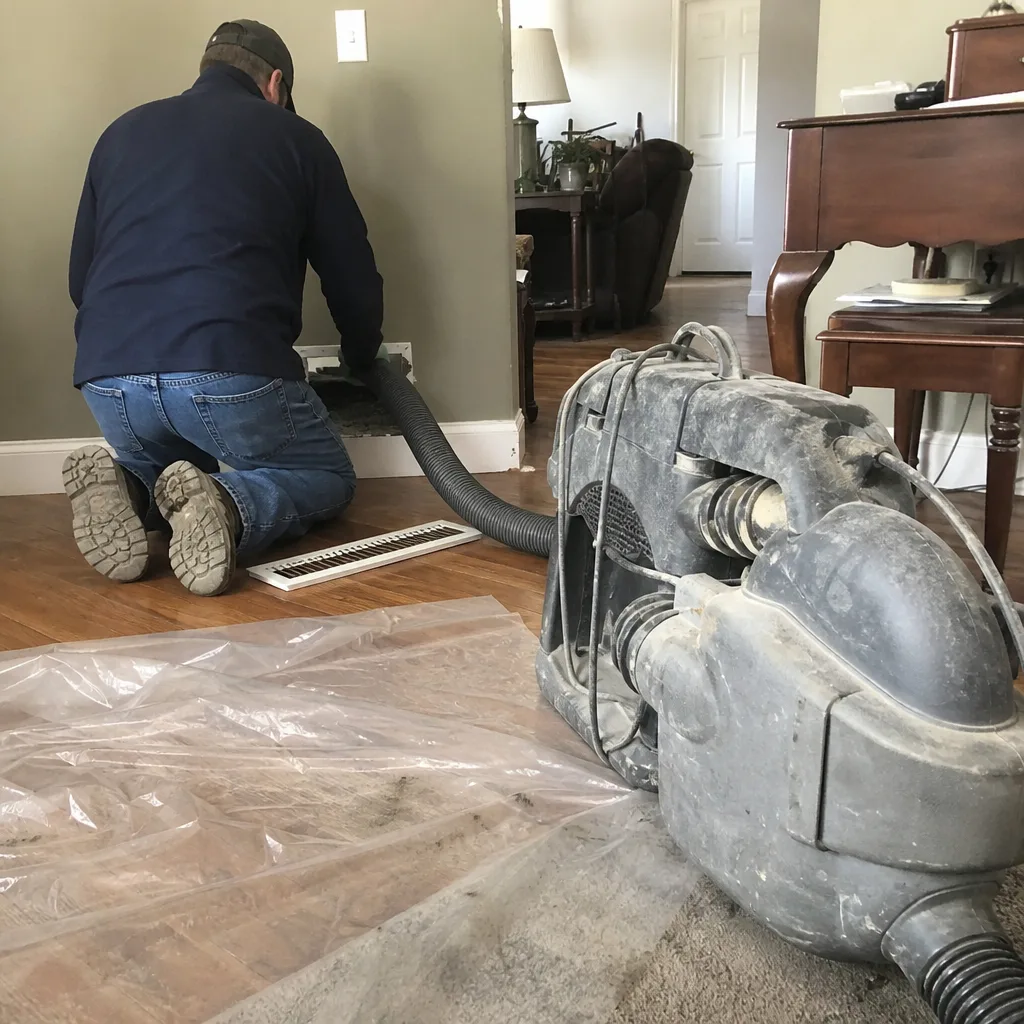 Before
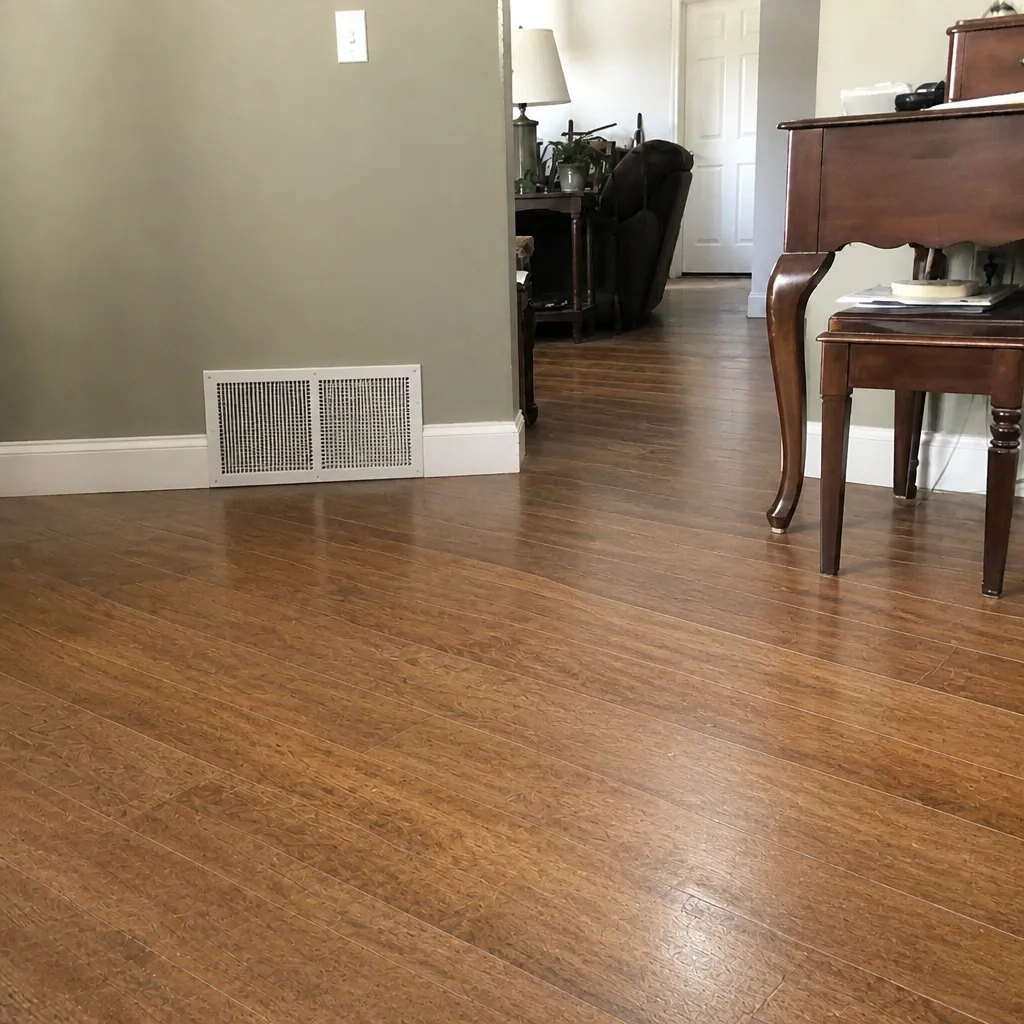 After
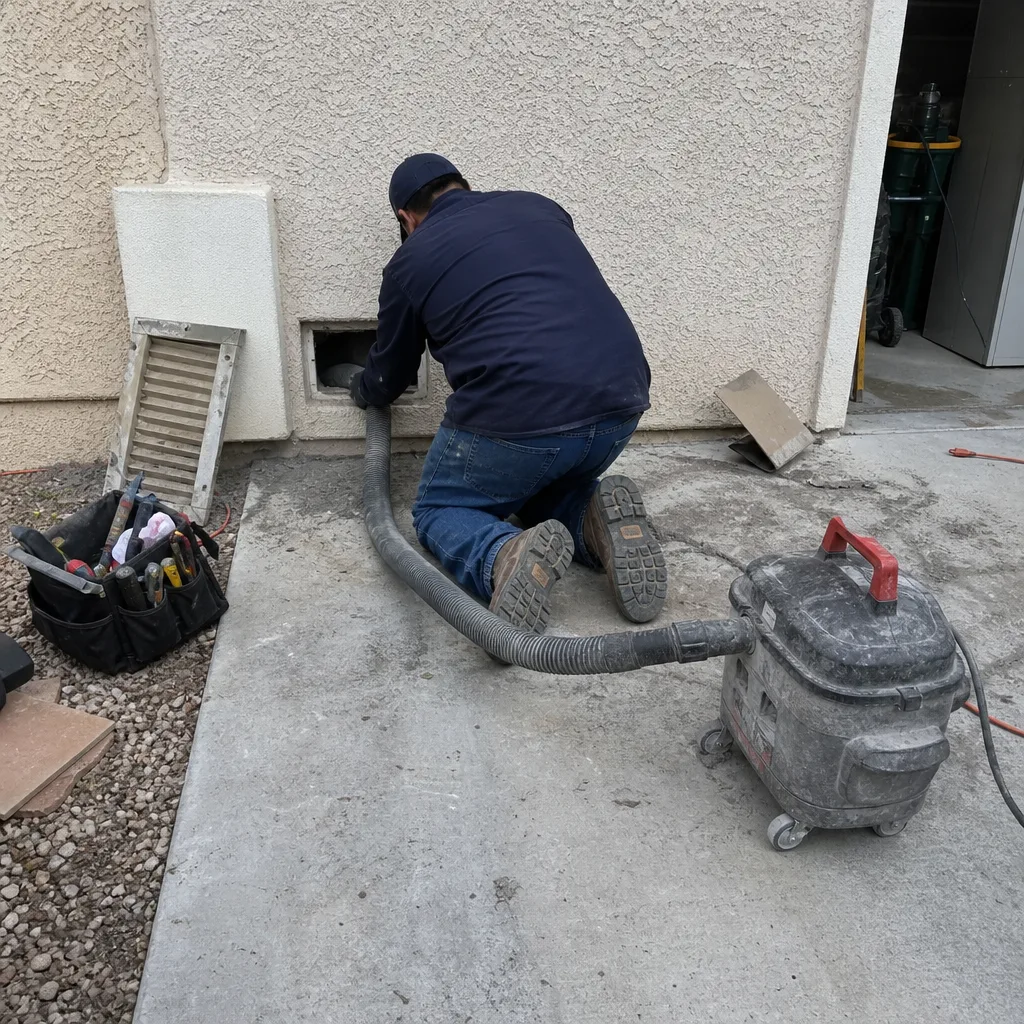 Before
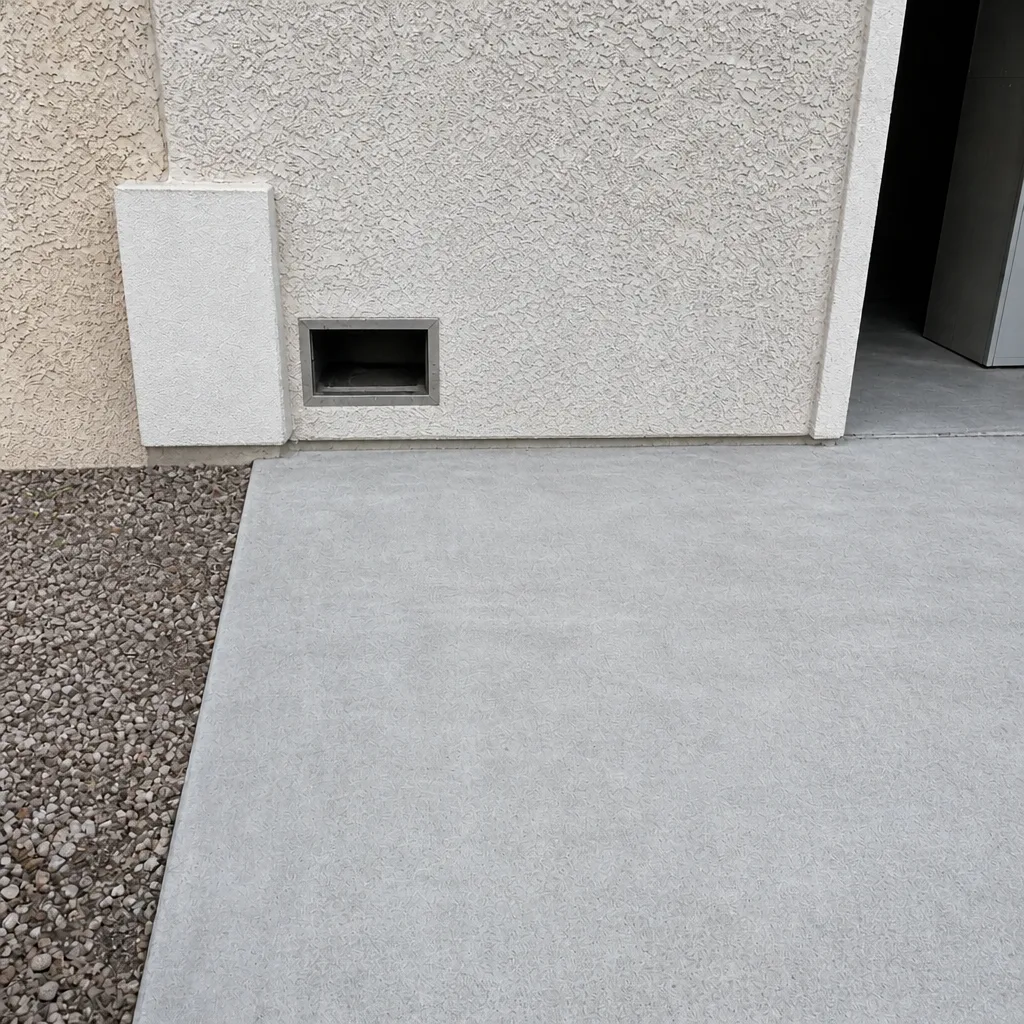 After
 Before
 After
When to Call a Professional
Some problems genuinely need a trained eye and proper equipment. Call us if you notice any of these: persistent musty or chemical odors that return after cleaning; airflow that’s weak or uneven in specific rooms; dust that reappears fast after a cleaning; visible sagging or torn flex duct in an attic or crawlspace; signs of pest intrusion inside the system; or a known remodeling project that released debris into the ductwork. In those cases the diagnosis matters more than the cleaning, and that’s the point we start from. Highpoint Duct Cleaning offers free estimates in Spring Valley. Call (866) 724-9559. We answer 24/7. Fast dispatch from 7am to 7pm, Sunday through Friday. When your system needs both cleaning and repair, one call handles both, and you’ll see before-and-after photos of your own ducts before we leave. If part of your home’s air system is the dryer vent cleaning side, that’s the other place lint buildup causes trouble, and it’s worth a look at the same visit.
Frequently Asked Questions
Air duct cleaning in Spring Valley is priced per system, not per vent, and a written estimate after an on-site assessment sets the final price. What matters more than any teaser figure is the equipment behind the job; a quote so low it beats every other bid usually means shop-vac equipment and no repair capability. Call (866) 724-9559 for an exact estimate, which is free.
Cheap quotes usually reflect low-suction equipment, per-vent pricing built to balloon once the technician is on site, and no capacity to repair anything found. A real cleaning runs rotary brush agitation, negative-pressure vacuum, and HEPA capture for the whole visit. If the price seems too good, ask what equipment is being used and whether repair is offered. Call (866) 724-9559 to compare estimates line by line.
You should get before-and-after photos of your own ducts, not stock images. That’s the standard we hold to on every Spring Valley job, and it’s the fastest way to verify that the cleaning happened inside the system rather than at the register. If a company can’t show you photos of your ducts, ask why before you pay. Call (866) 724-9559 for an estimate and a look at what the process includes.
There’s no universal interval. Homes with pets, recent remodeling, or a known contamination source may need it more often than a well-maintained system that isn’t producing symptoms. Spring Valley’s dusty air pulls through every leak, so a home with a disconnected duct will look “dirty” sooner. Fix the leak first, then decide. Call (866) 724-9559 for guidance specific to your system.
Rarely, and only if the room’s problem is airborne debris buildup rather than a duct fault. Uneven temperatures in Spring Valley most often trace to undersized runs, disconnected flex duct, or crushed sections in the attic. That’s a repair, not a cleaning. We diagnose which one you have before recommending a service. Call (866) 724-9559 to book an estimate.
The system is typically off during professional cleaning so debris isn’t drawn into the air handler and pushed through the house. It comes back on after the extraction and HEPA capture are complete. This is one of the reasons proper equipment matters; a low-suction job running with the system on can push loosened dust through the living space. Call (866) 724-9559 with any questions about the process.
The Bottom Line
The core lesson is simple: dust and debris are one problem, and a broken or undersized duct is another. Cleaning fixes the first; only repair fixes the second. Before you book another cleaning, run the airflow check at your registers, identify whether an odor is musty, burnt, or chemical, and watch how fast dust returns after your last service. If the symptoms point to structure, put repair or a camera inspection first. If they point to contamination and the system is otherwise sound, cleaning is the right move and worth doing with equipment that actually extracts. The decision order saves money either way.
Contact
If your Spring Valley home shows the signs we covered here, we’d rather diagnose the problem with you than sell you a cleaning you don’t need. Call (866) 724-9559 for a free estimate. We answer 24/7. Fast dispatch from 7am to 7pm, Sunday through Friday. One call, one crew, one standard.
Written by the team at Highpoint Duct Cleaning.